
Apple Maps Vs. Google Maps for Local SEO
Apple Maps and Google Maps are not just tools to find places or share direction with friends. They are a crucial component of local SEO. When it comes to local SEO, everything seems to be based on Google Maps search results. And there’s a good reason for this—Google maps makes 72 percent of all map usage, with the remaining percentage shared between Apple Maps and Waze. But does this mean that Google Maps are better than Apple Maps? This is what we shall look at in this post.
Android users have no other option but to use Google Maps. However, if you have an iPhone, you can use Apple Maps and Google Maps. Choosing between Google Maps and Apple Maps can be challenging as both serve a similar purpose, although there are some differences in their navigation tools and interfaces. This post looks at everything you need to know between Google Maps and Apple Maps and what each means for local SEO.
Apple Maps Vs. Google Maps – History
Google Maps were launched in 2005. Being the first service of its kind, they have made a name as the go-to mobile mapping service. On the other hand, Apple Maps were launched in 2012, although the service struggled with technical issues that made it almost unreliable. Some problematic issues experienced at the beginning included wrong directions and bugs that brought about usability issues. This was to Google Maps’ advantage; that continued to improve and excel.
However, as a tech giant, Apple later improved its service, especially with the release of iOS 13 and iPadOS 13. Apple Maps became even better when Apple started using its own data to provide navigation to its users, which resulted in more detailed and accurate maps. Both Google Maps and Apple Maps provide vital mapping services like driving directions, locating places, and walking directions. That said, here are the differences between the two.
Availability/Platform
Google Maps work on a cross-section of devices, including Android, iOS, iPadOS, and web browsers. No matter your device, you can still benefit from Google Maps as long as you’re familiar with them.
The case is entirely different for Apple Maps because they can only run on Apple devices: iPhone, Mac, iPads, and Apple watches.
The fact that Google Maps can run on Apple devices and not the other way round makes Google Maps superior in that regard.
Apple Maps Vs. Google Maps – Interface
Both Google Maps and Apple Maps offer a focused interface that’s easy to use. However, each platform presents information differently, as you’ll see below.
Apple Maps
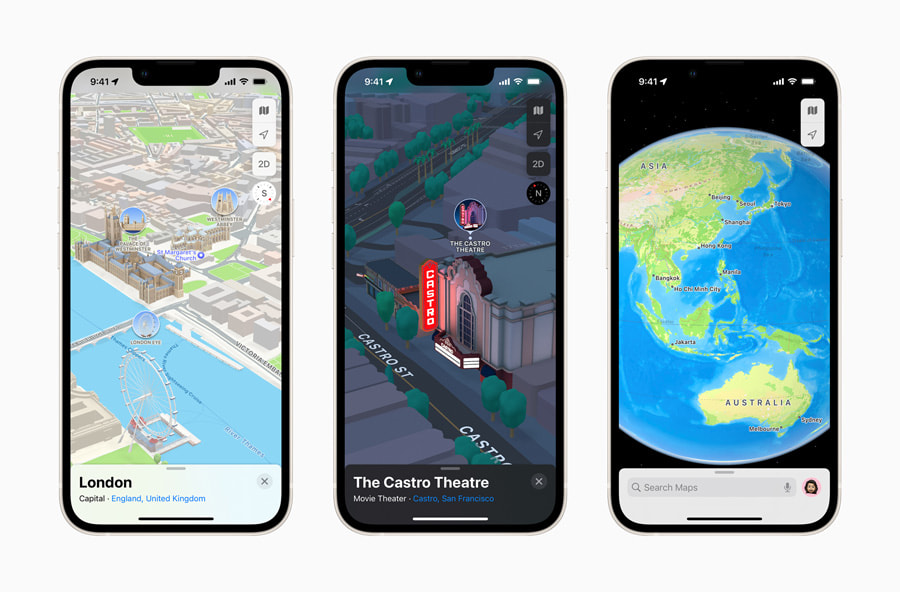
Apple Maps show more default locations with smaller texts and icons. Like Apple Maps, Google Maps shows many default locations but is not the same as those of Apple Maps as the text and icons are larger and eye-catching. If you have vision problems, you can experience challenges deciphering Apple Maps locations.
To search for a specific location with Apple Maps, use the search bar at the bottom of the screen. You’ll get a pop-up menu at the upper right that allows you to switch between Transit, Map, Satellite views, etc. In addition, Apple Maps come with custom icons to help with navigation.
Google Maps
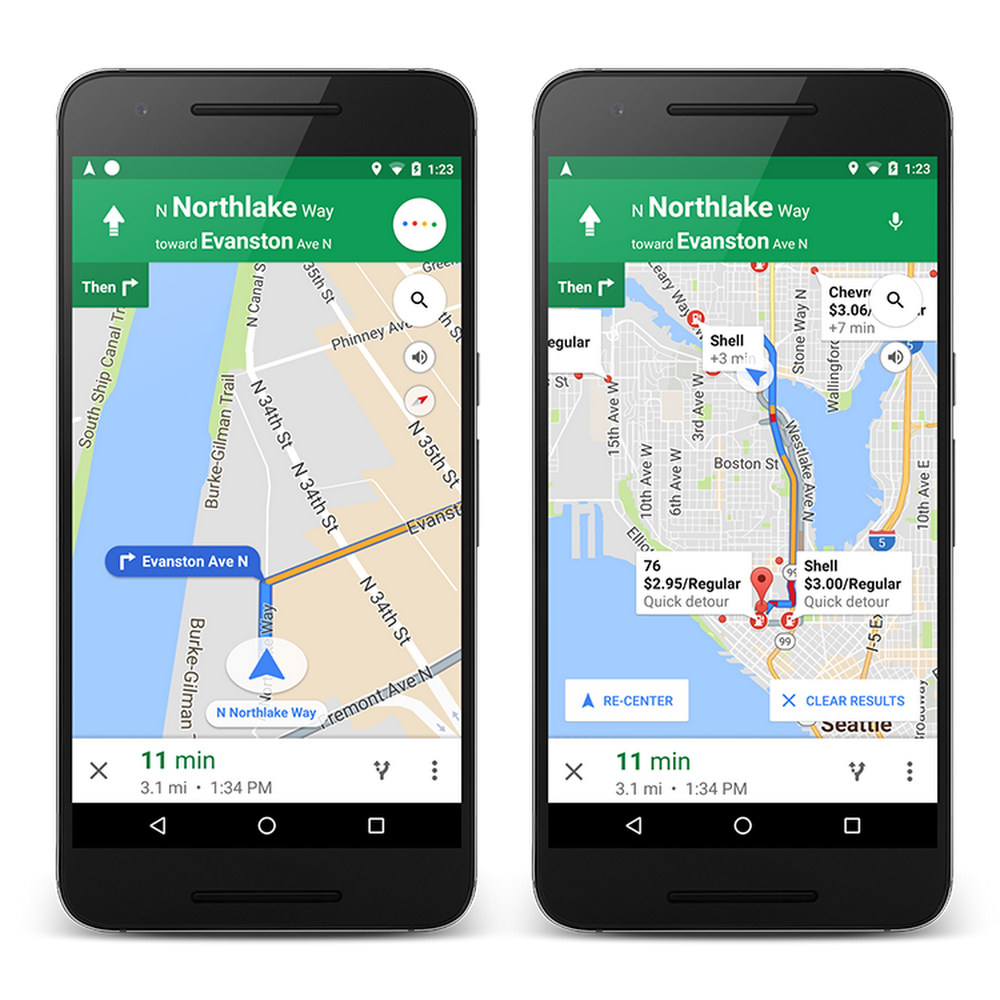
Google, too, has a search box and offers three view models: Default, Terrain, and Satellite.
Google Maps has tabs for Explore, Commute, Saved, Contribute, and Update. The Saved tab lists saved locations, while Commute shows the best route from one location to another.
Pull the tab at the bottom under My Places to access saved locations, frequently visited places, and recent searches on the Apple Map. It also offers the 3D option when viewing the map in satellite mode.
Map Design
Another to consider when comparing Google Maps vs. Apple Maps is the Map design. Apple Maps have opted for a minimalist map design, meaning you have to zoom in to view much of the information.
Of course, you’ll see more information when you zoom in Google Maps, but they show more information than Apple Maps when not zoomed in. However, both Maps show the essentials regardless of how you view the map. Still, the Apple Maps’ approach of showing less can provide a better user experience than Google Maps’ excess information.
Privacy
Privacy is an issue for most online users, including when using navigational tools like Apple Maps and Google Maps.
Apple and Google have different philosophies that govern data and privacy, so this is something to consider when deciding what to use for your Local SEO.
Apple has a reputation for maintaining data privacy. One way they achieve this is by keeping users’ data, navigation, and directions on your device instead of the cloud. Even better, the mapping information a user finds doesn’t show their Apple ID. Ideally, Apple doesn’t keep a history of what users search or the locations they visit.
Google also has a data privacy policy and various control options like Incognito mode that keeps user’s searches and locations private.
Navigation
How users navigate maps will determine the ease of finding what they’re looking for. Both Apple Maps and Google Maps follow a user’s progress, including journey distance, travel time, and current estimated travel time (ETA).
Both services alert users on what to expect on their route and suggest alternative routes if there’s much traffic on the current route or road closures. This is the case whether the user is cycling, driving, walking, or driving.
Google Maps allows for the option to add multiple stops to your route. While Apple allows for this option, it won’t allow you to change the route to pick something without starting a new route. Google has also updated its service to suggest routes that use less fuel and have fewer chances of accidents without impacting the ETA significantly.
Apple Maps Vs. Google Maps – Discovery
Besides providing direction from one place to another, navigational tools help find what’s around, including restaurants, schools, and other businesses that users may be looking for.
Google clearly shows this and provides a list you can scroll down to the end. The service contains buttons that help you choose anything you want and the Explore tab that gives a general overview of the area. In fact, improvements to this feature give users more specific recommendations of what they are searching for. For instance, if you are looking for a baby hoodie shop, you will be shown shops that deal with baby hoodies instead of a general baby cloth shop.
Apple Maps’ ‘Find Nearby’ feature works similarly to show users results relevant to what they are looking for. However, it doesn’t provide a full list as Google does. It offers a few options that change depending on the location. It also has a feature called ‘Guides’ that provides relevant editorial content to help users familiarize themselves with a particular location.
The Explore feature from Google Maps uses Google information to provide more information about businesses, including operating hours, contact information, etc.
Apple Maps has partnered with third-party services like TripAdvisor and Yelp to provide more information about the business but not as much as Google does. Additionally, Apple Maps has a ‘Curated Guides’ option (part of the iOS 15) that provides recommendations on where to go when in a specific city.
Street View
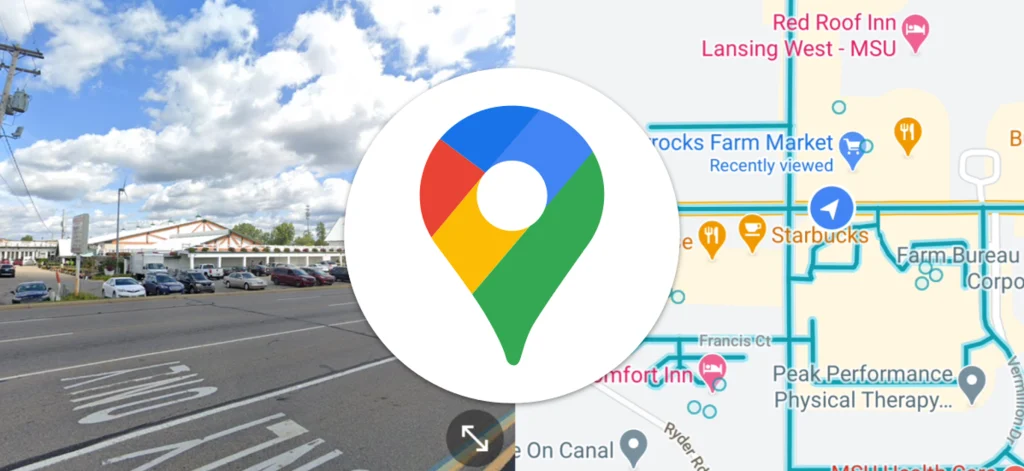
Users can also use the Street View feature to find their way when in an unknown location. This Google feature was launched in 2007 and has since expanded to different parts of the world. More specifically, this feature allows users to view a location from their point of view rather than the standard perspective.
To access it, users need to change the map type to the Street View option and choose the area highlighted in blue.
On the other hand, Apple Maps has ‘Look Around,’ an equivalent to Street View feature from Google Maps. This feature was launched in 2019 and is available in select countries.
To use this feature, select a location on the map and choose the ‘Look Around’ option. However, navigation isn’t available in full-screen mode—it can only be accessed in the split-screen mode.
The AR directions came with iOS 15, allowing Apple users to scan nearby buildings by raising their iPhones to determine their location.
Hands-Free Control
Tapping phones when driving is not just inconvenient but dangerous as well. Both Google Maps and Apple Maps have hands-free control, although they work differently.
To start with, Apple Maps is connected to Siri, meaning you can set it quickly. Siri, too, works with Google Maps, which means a few extra steps to set it up; otherwise, you’ll be directed to Apple Maps. That means you must specify that you want to use Google Maps when talking to Siri. Another option is to download and set up Google Assistant.
On the other hand, Android devices come with Google Maps and Google Assistant, meaning there are no unnecessary steps to set it up.
Google Maps Vs. Apple Maps for Local SEO—Takeaway
That’s how Google Maps compared to Apple Maps. As you can see, there are some areas where Google Maps does much better than Apple Maps and vice versa. While Google has been used for a long time, on the other side, Apple gained much ground, with billions of users worldwide. With such information, businesses should consider creating Apple Maps listings to increase exposure and expand the target audience margins. Of course, you still need to tap on the Google Maps potential because, as it stands, it enjoys about 72 percent of all map usage.
If you need help on how to claim and optimize your Apple Maps and Google Maps listing, we can help. Please get in touch with us below, and local SEO experts will help you claim your Apple Maps listing or optimize your Google My Business map listing.
Suggested

Our Ahrefs Health Score Went From 74 to 96. Here’s What Our AI SEO Agent Found.
Seven problems our AI SEO agent found on our own site, from leads GA4 never recorded to 195 pages linking through redirects, and how we fixed them.
October 8, 2026

How Our AI SEO Agent Cleared 1,186 Schema Errors in One Day
How our AI SEO agent and team took a Shopify store from 1,186 structured data errors, 12 404s and 155 broken links to zero in one day.
October 8, 2026

How to Integrate HubSpot and Tripleseat: Lessons From 9 Builds
A step-by-step guide to connecting HubSpot and Tripleseat: forms, OAuth 2.0, field and stage mapping, multiple locations, documents and monitoring, with real lessons from nine production integrations.
October 4, 2026
Answer-First Content: The Inverted Pyramid (∇) for AI Search
The inverted pyramid (∇) puts the answer first and the detail after. Here is how answer-first writing serves busy buyers and AI systems that quote short passages, with examples, common mistakes, and a checklist.
October 3, 2026

Retrieve-for-Train explained: how Google Research is speeding up AI search fan-out
Google Research’s Retrieve-for-Train method trains a small diffusion model to fan out search queries in one pass. Here is how it works, what it reports, where it stops, and our cautious read for brands.
October 3, 2026
Contact us
We value your privacy and won't share your email with others.
We'll only contact you with curated content.
