
Add as a preferred source on Google
We’ve all heard people talk about how amazing SEO is and that you need to partner with a digital marketing agency to capitalize on all of the fantastic benefits, but how do you really know if it’s worth it. The pandemic has brought many unwelcome challenges to people around the world, and while the common man or woman for that matter may be struggling the most, businesses are also suffering. Firms in the Los Angeles area and around the globe have been put into a dreadfully difficult position.

In today’s market, every decision counts and must be made with the utmost precision if a firm is to survive the chaotic blitz of the modern business environment. As a business owner or decision-maker who is pondering the potential benefits of investing in SEO by partnering with an AI search agency, you need the facts. Here you will find all of the information you could possibly require to make the best decision in weighing the ROI on SEO. Every business person knows that each investment requires a return, so let’s take a look at how to go about calculating the ROI on SEO.
What Can SEO Do For You?
So what is SEO anyway? While it has become increasingly difficult to find people who haven’t at least heard of SEO at one time or another, it is even harder to find people who fully understand it. Let’s start you off easy, SEO stands for, search engine optimization. If that didn’t help you out much, here’s a breakdown of SEO in a nutshell.
Deep down, most of you know what SEO is, you just haven’t associated the phenomenon with the definition. The reason why many of your competitors are ranking higher on search engines and coming up ahead of you in search results is that your competitors have a better understanding of SEO. This is actually good news because it means that this is a problem that you can fix, with a little help from a savvy digital marketing agency.
You know that blog you started? The one that you’ve been pouring your heart and soul into, staying up late on weekends to crank out blog posts for your business in hopes of giving your business a boost? You should know that even if you are producing exceptionally written content, it won’t do you a lick of good unless that content is laced with effective keywords.
Finding the right keywords to use and using them well is part of the magic behind SEO and how it works. That said, if you think that playing with keywords is all you need to do to leverage SEO in your favor, you’d be mistaken. There’s a lot more to it than that and if you really want to get the most value out of SEO, you’ll need to partner with an AI search agency like AlchemyLeads.
When you work with someone who really knows how to leverage it, SEO can revolutionize your business, bring in new customers, help you retain more long-term customers, and bury competitors under the search results. How do you grow organic revenue without paid ads? Organic revenue is four numbers multiplied together: organic traffic, conversion rate, value per conversion, and how often customers come back. Grow three of them by about 26% and revenue doubles, which is far easier than doubling traffic on its own.
Watch: 9 min video
How to Grow Organic Revenue Without Paid Ads: The 4-Lever Math
Chapters
Transcript
How do you grow organic revenue without paid ads? Organic revenue is four numbers multiplied together. Organic traffic, times conversion rate, times what each conversion is worth, times how often customers come back. You don't need to double traffic. Grow three of those by about 26% each, and your revenue doubles. I'm Sean Chaudhary, founder of AlchemyLeads. We grow organic revenue for B2B and ecommerce brands. In this video I'm gonna show you the math, the four levers, and a real case study. No ads anywhere. And it works whether you sell to other businesses or sell online, so every lever gets an example of each. Let's get into it. So let's do the math. Double sounds impossible until you split revenue into its parts. Most people hear double organic revenue and think, okay, I need double the traffic. And that takes a long time. You're betting the whole goal on one number, right? Here's the thing. One point two six, times one point two six, times one point two six. That's two. So twenty-six percent more traffic, twenty-six percent better conversion, and twenty-six percent more value per conversion. Multiply them, and revenue doubles. And to be clear, this is illustrative math, not a forecast. Doubling traffic is hard. Getting 26% better at three things is very doable. And three times 26% compounds to double. And each of those is a job you can actually get done in a year. And retention is the fourth lever. How often customers come back. Anything it adds is upside. So the double still holds even if retention doesn't move at all. Makes sense? Cool. Let's go lever by lever. Lever one. More of the right organic traffic. Start with pages ranking between four and twenty. They're close, they just need help. And here's the rule I've learned over twenty years: if a page is in the top three, don't touch it. Pages in positions four to twenty are already relevant. They just need help. A better answer, new sections, internal links, fresher examples. Pull them up in Search Console, filter to position four to twenty, and sort by impressions, high to low. Why leave the top three alone? Because when a page is winning, rewriting it risks the ranking for very little gain. I've seen it happen. So leave it alone. Your top three pages are already paying the bills. Protect them, and put your energy into the pages that are close. Then fill the gaps. Bottom-of-funnel topics your buyers search for that no page on your site answers yet. For ecommerce, think comparisons and buying guides. For B2B, application pages and how to choose. Those pages bring people who are ready to buy. Now, here's the traffic most people aren't counting. AI answers in ChatGPT and Google cite pages. Being cited sends visitors. But a lot of them arrive with no referrer, so they land in Direct instead of Organic. If you only watch the Organic line in GA4, you're missing growth. A lot of AI search traffic shows up as Direct. When your SEO is working, watch Direct climb with it. Watch both lines, basically. And these visitors are good. AI-referred visitors convert two to five times better than classic organic traffic, according to industry studies from Similarweb and Semrush. So being cited is worth real money. Lever two. Convert the traffic you already have. Before you chase new traffic, fix the pages that already get it. Your top ten organic landing pages are where a better conversion rate pays off fastest. So sort your landing pages by organic sessions and fix the top ten first. That's where the traffic already is. Every small lift there gets multiplied by real volume, right? Start there before you touch anything else. For ecommerce, put specs, shipping and returns above the fold. Add reviews. And make the add-to-cart path faster on mobile. Those are the basics, and they're easy to miss. For B2B, give every page a clear next step. A quote, a sample, a strategy session. Shorten your forms. And add proof near the form, like a review or a case study result. And check your speed on mobile. It's the quiet leak. Nobody complains about it. People just leave, and you never hear about it. Lever three. Make each visit worth more. Ten visitors ready to buy are worth more than a thousand who are just browsing. Point your content at the searches that come with a budget. That means shifting toward high-intent searches. Product pages, category pages, comparisons, and for my use case pages. Instead of writing more and more top-of-funnel blog posts. Those posts can bring traffic, sure. But the people searching product and comparison terms already have a problem to solve and a budget to solve it. For ecommerce, add bundles and accessories on product pages, plus Product structured data that matches what's visible on the page. For B2B, target the searches that bring bigger accounts, like industry and application pages. And measure RFQ quality, not just the count. Lever four. Bring customers back. SEO gets them in the door once. Email and retention get them to come back without paying for them again. Every organic visitor you capture by email is one you don't have to win from Google again. For ecommerce, that's reorder reminders, how-to emails after purchase, and review requests. And by the way, those reviews feed your product pages too. For B2B, it's content for existing accounts, expansion into other plants or locations, and referrals. Think about it this way. You worked hard to earn that first visit from Google. If you capture the email, the next visit is yours, and you don't pay for it again. So build the list from day one, right? Now, how do you measure all this correctly? For ecommerce, look at GA4 revenue by channel, and add Direct to your picture of organic, like we talked about. For B2B, connect your forms to the CRM, so organic leads can be followed all the way to pipeline and closed revenue. Then put it all in a twenty-four seven real-time dashboard on your own accounts. So nobody is waiting on a monthly update to know what's working. Your dashboard should answer one question fast. Is organic revenue going up? And set expectations. Most clients see initial ranking improvements within sixty to ninety days. Meaningful traffic and revenue growth typically happens at the three to six month mark, depending on site health, competitive landscape, and keyword difficulty. So here's proof. An automotive protective coatings manufacturer. Organic traffic grew four times, from three thousand to twelve thousand monthly visits in twelve months. With no paid advertising. And nine hundred sixty-nine new keywords landed on page one. That's what happens when you build content around what buyers actually search for, and keep at it month after month. And revenue was up two and a half times year over year. That's the number that matters, because traffic is only the first lever. The other levers turn that traffic into revenue. How did we do it? We fixed the Shopify store's technical foundation. We created content around what truck owners actually search for. And we earned about ten authoritative links a month. Four times the traffic, two and a half times the revenue, and not a dollar of paid ads. The manufacturer finally outranked the resellers selling its own products. Another one, a marine audio brand. Organic sessions up nine hundred seventy-eight percent, and conversion events up eleven hundred ninety-two percent. That's January first to September seventeenth, twenty twenty-six, compared with twenty twenty-five. Same playbook. Fix the foundation, build the pages buyers search for, and let it compound. So, quick recap. Four levers. More of the right traffic, a better conversion rate, more value per visit, and customers who come back. Grow three of them by twenty-six percent and your revenue doubles. Retention is the bonus. Here's your homework. Pull your pages ranking four to twenty in Search Console and pick five to improve. List your top ten organic landing pages and their conversion rates. And check how much of your Direct traffic grew alongside Organic. If you want us to run this math on your numbers and show you which of the levers moves fastest for you, book a strategy session at alchemyleads.com. Take care.
How to Calculate the ROI on SEO
In concept, calculating the ROI on SEO is remarkably similar to calculating the ROI on any other type of investment. Although there are certainly many factors to consider when executing such calculations, it all comes down to running the cost of your investment against the amount of money you gained from the investment.
In order to get a clear picture of just how much SEO can benefit your business and how much money it has contributed, you’ll need to use data analytics tools. If you want to get the most accurate depiction of your ROI on SEO as possible, you’ll have to take a look at how many visitors to your site you were getting before investing in SEO and how those views have affected your sales.
Once you compare these results against how many visitors you’re getting after investing in SEO and how much more money you’re making from those visitors, you will have a number to work with.
Keep in mind, this number alone will not give you a complete accounting of the ROI on your investment in SEO after starting to work with a digital marketing agency. This will be the first number you have to work with. You will need to run the same calculation each month and compare the numbers until you get an average over several months. This will give you more valuable data.
Ideally, you should enter this data into a program that can turn it into a chart so that you can visualize how much better your company has been doing since partnering with digital marketing agencies like AlchemyLeads.
Calculating the ROI on Specific SEO-related Goals
There are other ways to calculate the ROI on the kinds of SEO services that digital marketing agencies provide. Sometimes businesses are more interested in achieving specific goals rather than simply comparing site views and sales figures.
Savvy businesses know that in order to jump ahead of the competition, you can’t just try to sell everything in equal amounts. When you invest the same amount of advertising money on every single product and service you offer, you won’t sell much of anything and even if you do, you won’t make much on it because your advertising costs are so high. Likewise, you can’t just throw money at one thing and expect your business to suddenly rank higher on everything across the board.
Talented digital marketing agencies like AlchemyLeads know how to help companies get ahead by identifying and achieving specific SEO-related goals. Start small, go big, when it comes to SEO, everything is interconnected. If you start off intending to outrank your competitor on one of their flagship products, you can gain the upper hand. It’s like Jenga, when you find the right block and pull it out, the whole thing comes down, that’s how you can outperform your competitors without spending a fortune on advertising.
For example, if your website sells clothing, you can focus your SEO on outranking local competitors on the sale of a specific item such as expensive sweaters. From an SEO perspective, the goal looks like this; you want to rank 1st in your area for expensive sweaters.
Is it Worth it?
Returning to our example using the goal of jumping to the top of the search results for expensive sweaters, consider this. If you find that you have achieved that goal after working with a digital marketing agency, it’s safe to say that the ROI was worth it! Or was it? Keep in mind, just because your investment in SEO helped you achieve your goal doesn’t mean that you made a profit.
To get a better idea of how much you’re really getting back on your investment, you have to take a closer look at the costs. One thing to watch out for is the cost of finding the right keywords. Many of the online tools that businesses use to find their keywords are much more expensive than they should be.
There are many individual factors that you’ll have to collect and incorporate into your analysis in order to get an accurate determination on just how much investing in SEO has helped you. You’ll have to look at click-through rates, bounce rates, and many more indicators.
Click-through rates refer to a calculation representing the number of people who came to your website by clicking on a specific post of advertisement. This figure can help you determine the efficacy of each individual post or online ad. Click-through rates relate to your ROI on SEO in that when your click-through rates go up, so does your ROI!
Bounce rates are also important indicators. Your bounce rate is the number of people who leave your website after viewing only one single page. One could say that the bounce rate is a decent indicator of how effective your content is. One could also say that bounce rates can be used to determine whether a recent spike in the number of page views was artificial.
At the end of the day, there’s only one major indicator that can show whether your investment in SEO is worth it or not. The real value is in how many customers your SEO investment brought in and how many of those customers are long-term. If working on your SEO with a digital marketing agency brought in a lot of new and repeat business, you’ve got it made. Customers are the lifeblood of any business irrespective of size or specialty. Without customers, businesses deflate and implode invariably.
A digital marketing agency that can help you achieve specific SEO goals and bring in more long-term customers is the kind of secret weapon you’ve been looking for, or maybe it’s more like the secret formula. No one knows this better than the distinguished clientele of AlchemyLeads, one of the most highly effective and innovative digital marketing firms in the Los Angeles area.
Make SEO a Breeze with AlchemyLeads
Most business owners don’t have time to mess around learning the ins and outs of SEO and all of the secrets that make the magic happen. That’s where the digital marketing and SEO experts at AlchemyLeads come in, we’ve mastered SEO so that you don’t have to! Not every digital marketing agency can give you the same ROI on SEO as AlchemyLeads. The reason for that is multifaceted, is it because of our years of experience or world-class expertise? Or do we really have a secret formula after all? It’s a win-win for our customers either way.
For those of you who want the highest possible ROI on SEO, AlchemyLeads has the talent and the manpower to do it all, pick up the phone and give us a call!
Suggested
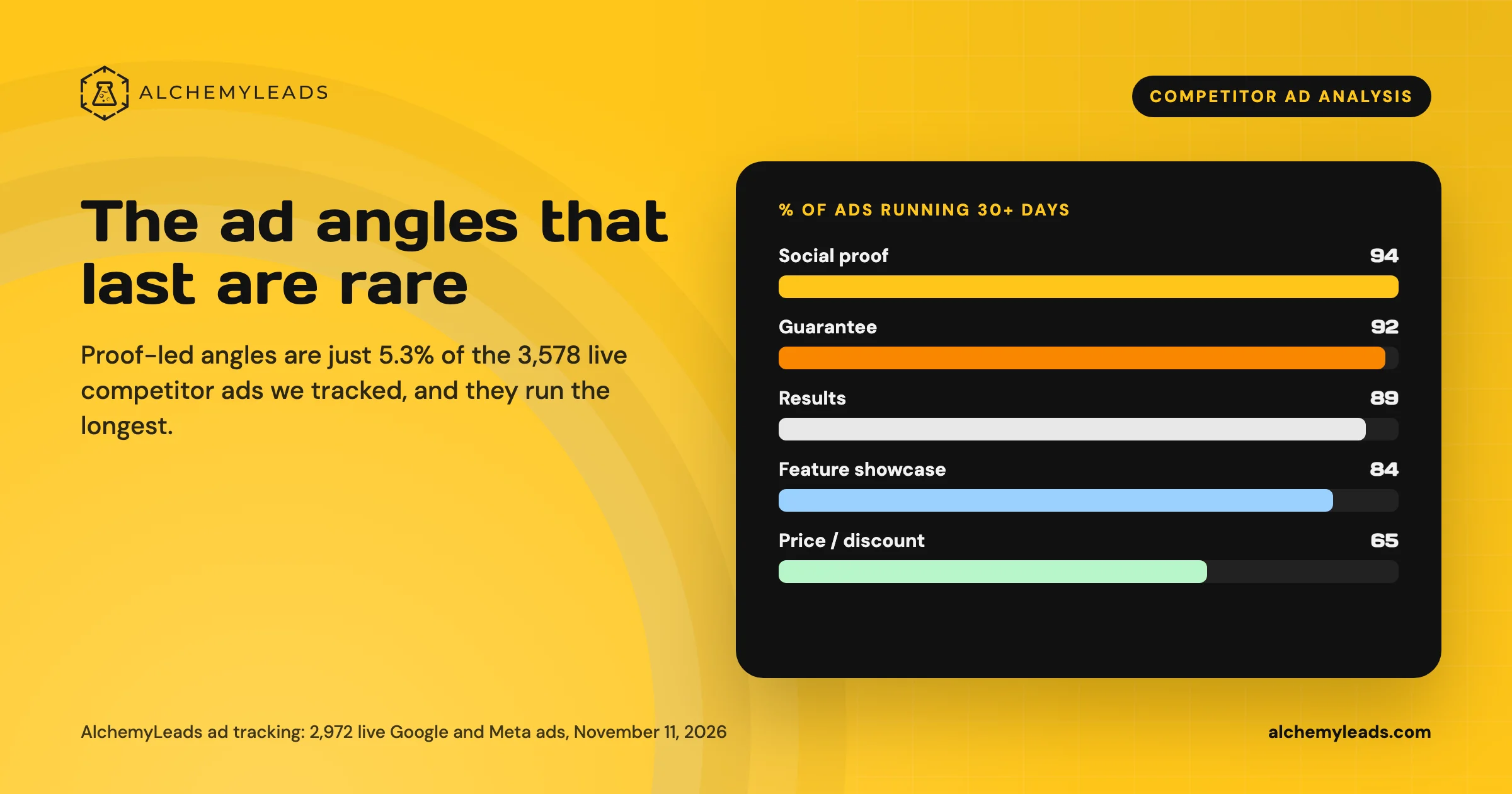
Competitor Ad Analysis: What 3,578 Live Ads Say About the Creative That Lasts
We tracked 3,578 live competitor ads on Google, Meta and LinkedIn. Proof-led angles are the rarest and run the longest. See the data and the playbook.
November 11, 2026
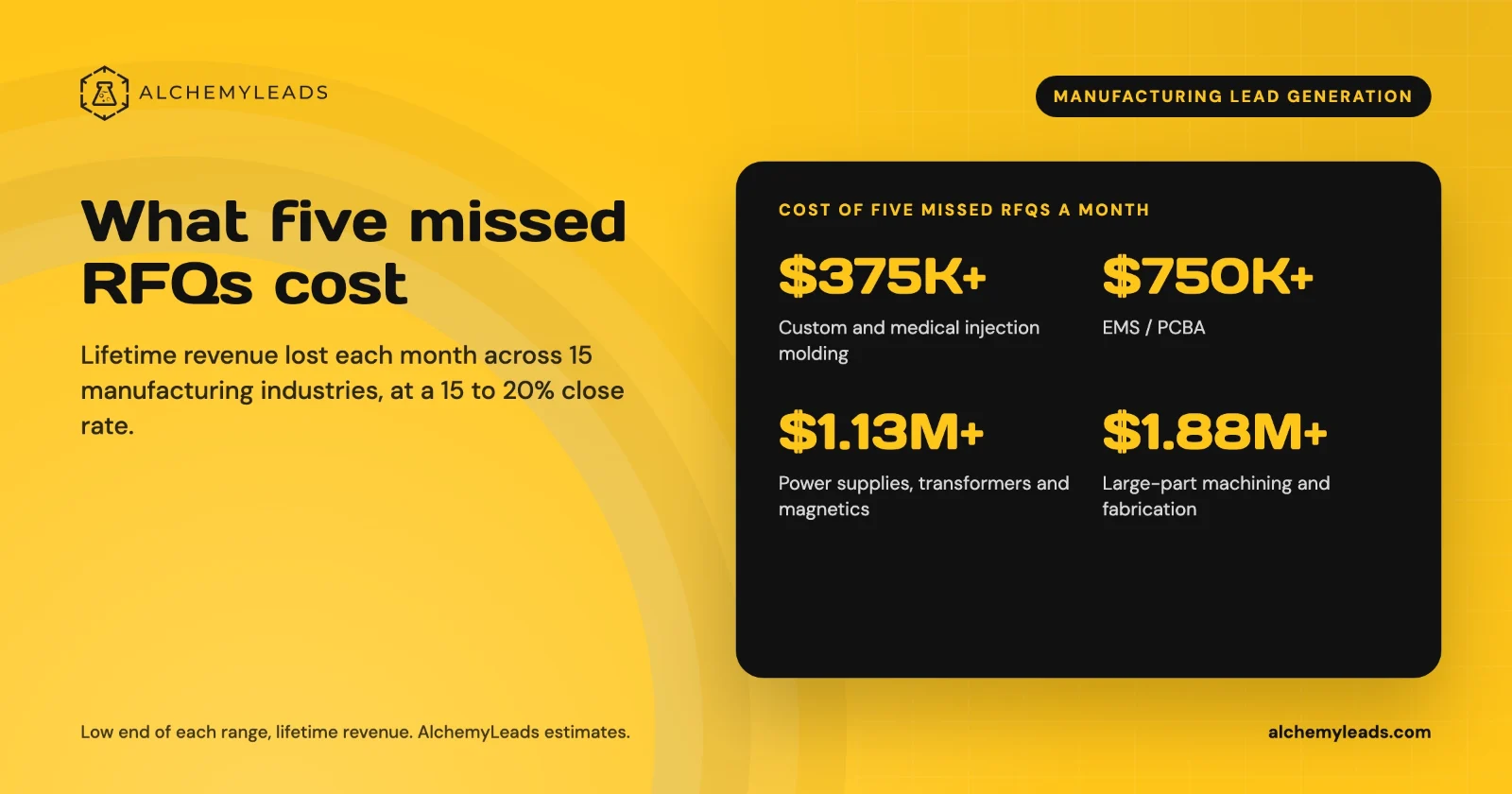
The Cost of Inaction in Manufacturing Lead Generation: What Five Missed RFQs a Month Cost in 15 Industries
What five missed RFQs a month cost across 15 manufacturing industries, with a cost of inaction calculator.
October 27, 2026
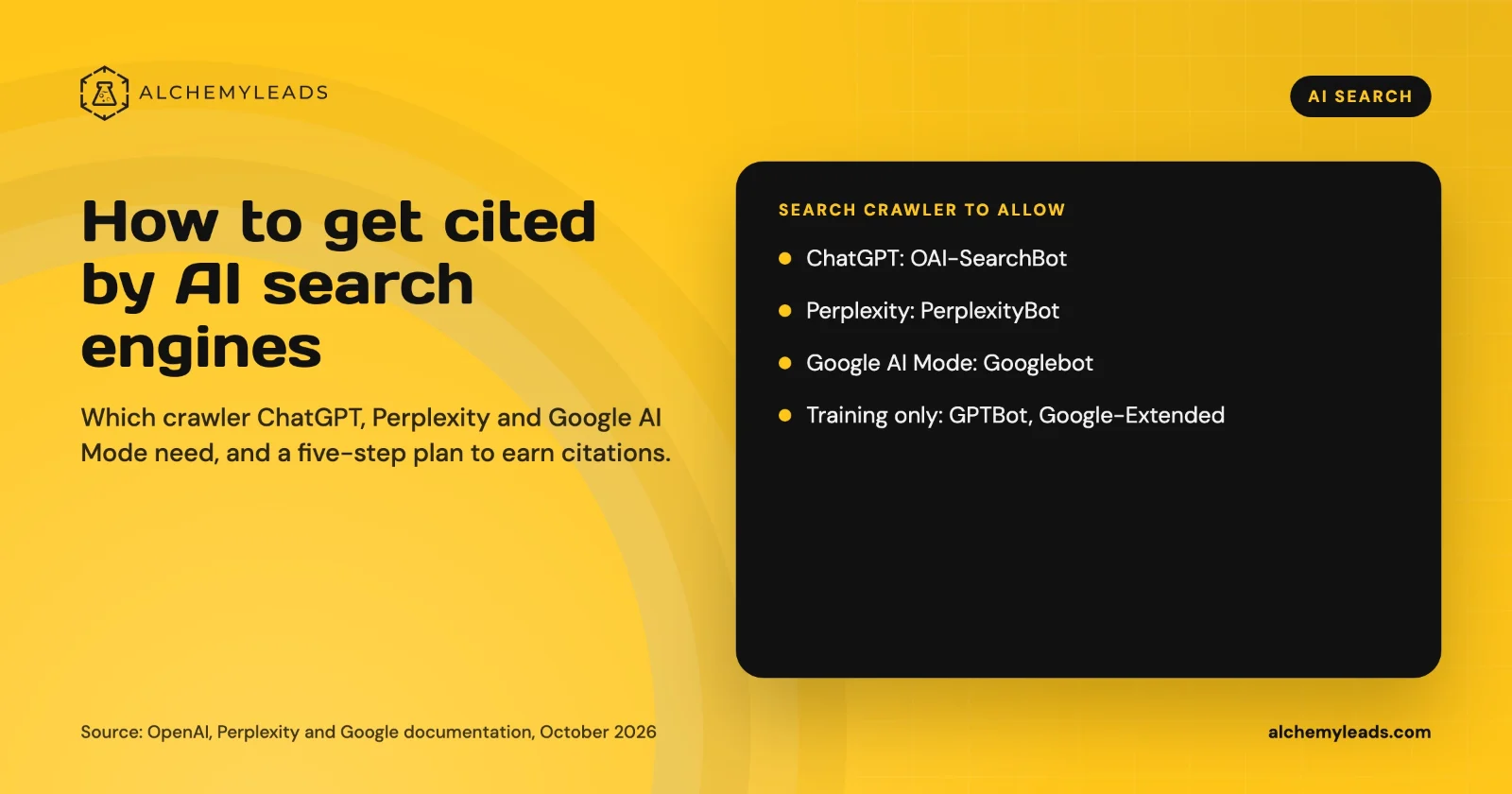
How to Get Cited by ChatGPT, Perplexity and Google AI Mode
How ChatGPT, Perplexity and Google AI Mode choose sources, which crawlers to allow, and a five-step plan to get your company cited, based on official docs.
October 26, 2026
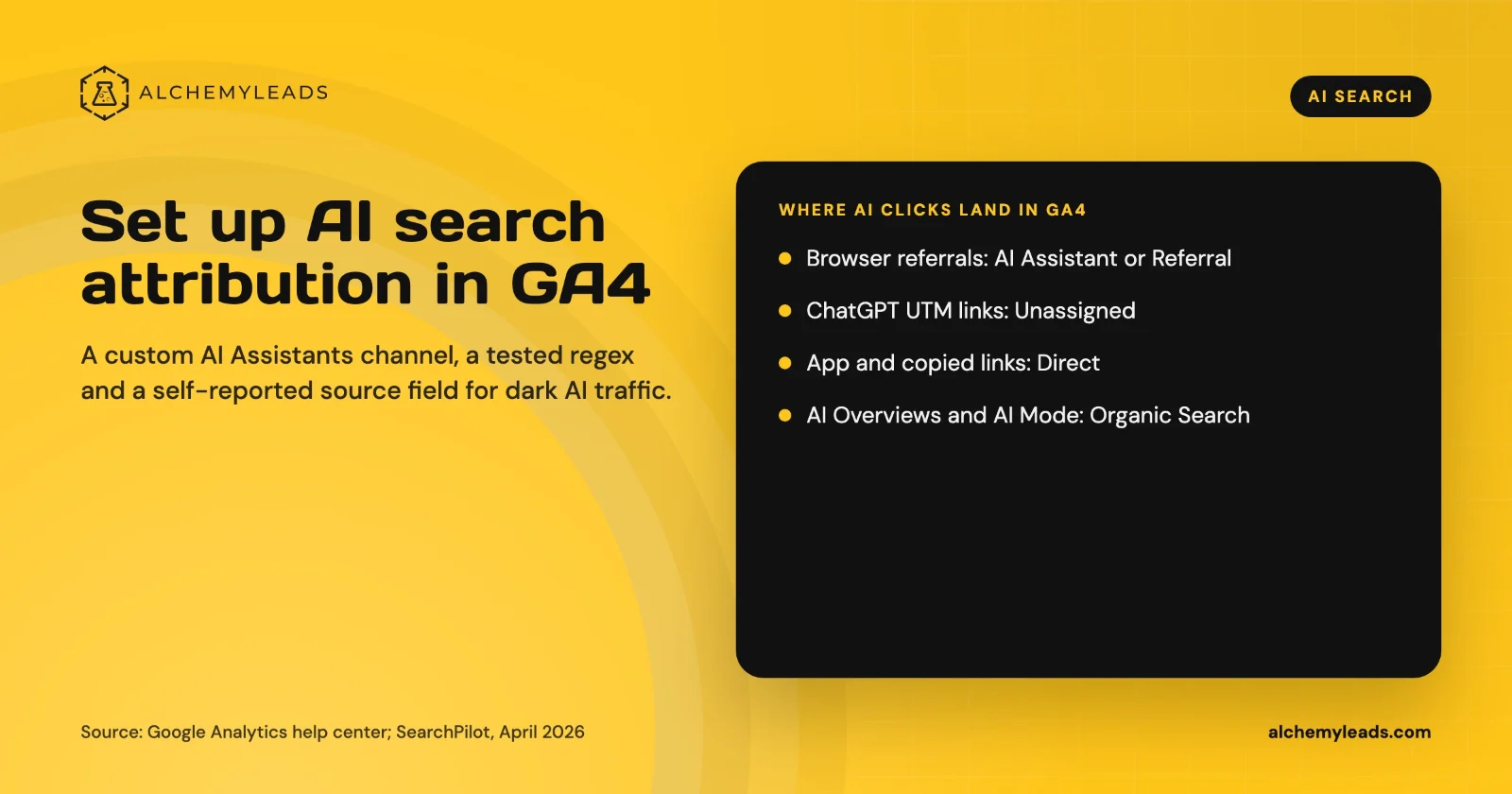
How to Set Up AI Search Attribution in GA4: A Step-by-Step Guide for 2026
Step-by-step GA4 setup for AI search attribution: an AI Assistants channel, a copy-paste regex, ChatGPT UTM fixes and a self-reported AI source field.
October 26, 2026

Voice Search in 2026: How AI Assistants Pick Their Sources
We first wrote about voice search in 2022, when the question was whether “Hey Siri” and “OK Google” would change how people shop. Four years later, voice is back in a bigger form. People now talk to ChatGPT, Gemini, Siri, Alexa+ and Copilot the way they talk to a knowledgeable friend, and those assistants answer by reading the web in
October 17, 2026
Contact us
We value your privacy and won't share your email with others.
We'll only contact you with curated content.
