
Add as a preferred source on Google
We think in terms of decades, not months.
The SEO landscape is constantly changing. From keeping up with Google’s algorithm changes to the current SEO trends, SEO agencies must be updated on the latest techniques to ensure they get results for their clients.
Besides keeping up with the latest Google algorithms, SEO experts and agencies should consider other emerging issues like artificial Intelligence (AI) that are taking the industry by storm.
As an SEO agency that has worked with clients for years, we understand most of the challenges that SEO companies face when serving customers. To us, SEO is more than helping our SEO clients rank on the first page of Google and outrank competitors. It is also more about educating our clients on our process and keeping them updated with what to expect and when to expect it.
We work with clients as strategic partners and earn the next month by delivering results in the last one. Clients stay because the work keeps paying off in qualified leads and pipeline.
95% of new clients since 2020 stayed longer than 12 months (38 of 40), and the average client relationship is 3 years 10 months. So, how do we manage to do this? This post covers how we keep SEO clients for the long term, and how to choose between a monthly retainer, an audit and hourly work.
Why Do SEO Clients Leave?
Before we look at the strategies we use to keep SEO clients for the long term, let’s first look at why SEO clients end relationships with an SEO agency.
The growth of an SEO agency solely depends on repeat clients. While you can sign up new clients when you lose the current ones, keeping good clients on board is the greatest asset.
However, many agencies cannot maintain these clients and lose them for several reasons.
According to research, a company can increase its profits by 25 to 95 percent by improving client retention by 5 percent. This makes client retention one of the crucial income-generating opportunities. The secret to achieving this is ensuring you meet clients’ expectations and keep them happy and satisfied. Below are reasons clients leave an SEO agency:
Not Setting Realistic Goals and Expectations
When clients come to us, our role as an SEO agency is to make them understand how SEO works and help them set realistic expectations. Most clients that come to us don’t know how SEO works: they only come with expectations.
Before we say yes to these clients, we take our time to educate customers on how SEO works and help them set realistic expectations. We don’t just say yes to clients’ expectations: we carefully evaluate them and only say yes to what we can deliver.
Of course, we may end up not working with some clients when we have an honest conversation about their expectations, but this is much better than overpromising and not delivering.
Unaligned Goals and Vision
Two people can only walk together when in agreement. This is especially true when it comes to SEO agencies and clients.
When clients look for an SEO agency, they have specific goals and visions that they need help to achieve. Without a clear understanding of the client’s business model and current situation, the agency may not succeed in helping the client achieve their goals.
The problem is clients won’t trust you if they feel you’re not listening to them or depart from their goals and vision.
We take time to understand a client’s brand from the start to avoid confusion. If we think the client has set unrealistic goals, we communicate this effectively to ensure the client understands why we should focus on a different goal.
No Proof of Results
Clients pay for results. As an SEO agency, you should be able to provide proof of results, or clients won’t sign up with you or stay with you longer. There’s no shortcut here.
When a client pays you a certain fee, they expect to make more money or at least achieve the set goal, like higher ranking in SERPs, more traffic, more quality backlinks, etc. If they don’t see any positive stats, they will leave.
Poor or No Communication
Communication is vital in any process, and the SEO process is no exception. Good communication between an agency and clients helps ensure clients know what to expect and how the process works.
We’ve seen a case where the SEO efforts from an agency are doing well and aligned with the client’s goals and vision. However, due to poor communication, the client isn’t satisfied. By using better SEO strategies and becoming better at communicating, SEO agencies can maintain SEO clients for longer and help them achieve better results.
Monthly SEO Retainer vs Audit vs Hourly: How the Engagement Models Compare
A monthly SEO retainer pays an agency a set fee each month for ongoing work. An SEO audit is a one-time project that tells you what to fix, and hourly billing pays only for the time used. Most agencies use a retainer for ongoing work: in an Ahrefs survey of 439 SEO providers, 78.2% charge by monthly retainer, 48.9% per project and 34.8% hourly (many use more than one model).
| Model | What you get | Best for | Watch out for |
|---|---|---|---|
| Monthly retainer | An ongoing team that plans, ships and measures work every month | Companies that want steady growth in qualified leads and pipeline from search and AI answers | Vague scope. Ask what ships each month and how progress is measured. |
| Audit or project | A one-time diagnosis and a prioritized plan, or one defined build such as a site migration | Teams with in-house people who can do the work, or a single defined problem | A plan nobody implements. Ask who will do the fixes after delivery. |
| Hourly | Time from a consultant or developer, billed as used | Small, well-defined tasks and technical development work | You manage the work and the hours, and strategy tends to get left out. |
SEO Audit vs Monthly SEO Retainer: Which Should You Choose?
Start with an audit when you need to know what is wrong and what to fix first. Choose a monthly retainer when you also need a team to carry out the fixes, publish content, earn links and measure results month after month. Many companies do both: an audit first, then a retainer built on its findings.
Search work compounds. Content, technical fixes and links keep paying off after they ship, and AI engines keep changing which sources they cite. A one-time project can’t respond to those changes, which is why ongoing programs are the norm for companies that rely on search for leads.
What Does an AI SEO Monthly Retainer Include?
An AI SEO monthly retainer pays for the ongoing work that gets your brand found and cited in Google and in AI assistants such as ChatGPT, Perplexity, Gemini and Google AI Overviews. A typical engagement starts with an audit, then runs a monthly cycle of fixes, content, digital PR and measurement.
Most AI SEO engagements include some mix of:
- An audit and roadmap: technical health, content gaps, and which buyer questions AI engines answer without mentioning you.
- Technical fixes: crawl access for AI bots, schema markup, site speed and indexing.
- Content: new and refreshed pages built to answer the questions your buyers ask AI assistants.
- Digital PR and link building: earning mentions and links on the lists and articles AI engines already cite.
- Measurement: AI citations, AI-referred traffic, and the qualified leads and pipeline that follow.
How We Run AI SEO Engagements
At AlchemyLeads, every engagement starts with an AI SEO diagnostic that takes 4 to 6 weeks from onboarding, mostly analysis of your own first-party data. From there we lead proven workflows every month, and you follow progress live on 24/7 real-time dashboards, with automated monthly updates, Slack or email notes, and quarterly strategy reviews.
Want to know when results show up? Our guide to how long AI SEO takes walks through each phase. For what these programs cost across the market, see how much an AI SEO agency costs.
Our Strategies for Keeping SEO Clients for the Long Term
Here are strategies we use to keep SEO clients with us for years:
Not Taking On Any Client
With so much competition in the SEO world, it can be challenging to turn down a client because “we’re not a good fit” or for other reasons not budget related. But having worked with different clients for the past few years, we can confidently say that AlchemyLeads doesn’t take on any clients.
Unfortunately, many SEO agencies don’t know this and learn this the hard way.
Taking on any SEO clients may seem like a good thing but have many downsides for both the client and the agency. For clients, this can mean they are less likely to get any tangible results and a loss of time and resources. On the agency’s side, this means a lost opportunity to showcase your skills which could open more business opportunities in the future. It is a loss-loss situation for the agency and the client.
To guarantee better results, we carefully select clients from industries we know we can deliver, like automotive, cleanrooms, automotive window tinting, SEO for 3PL, B2B SEO and SEO for Shopify and SEO for DTC companies.
More specifically, we have a soft eye for providing SEO to boring industries or industries that other SEO agencies would likely avoid. Our SEO experts, alongside our team of content writers, use their magic to ensure we provide valuable and exciting content for these “boring” companies for better reach and engagement.
Sports analogy: We pick which pitches to swing on, so that we can make good contact and get more home runs with less strikeouts.
Some of the red signs when admitting new SEO clients include the following:
- The impatient client: Organic SEO is a long-term strategy that takes time to produce results. We pass out on clients who lack patience and only want immediate results from our SEO campaign.
- Clients not willing to learn how SEO works: Our SEO process involves educating our clients on our SEO process and helping them set realistic expectations. If a client is unwilling to learn but wants to stick to their unrealistic expectations, we take that as a sign that we may not be a good fit. We only work with clients who trust our process and are willing to adjust based on our advice.
- Clients who switch SEO agencies within a short time: As we stated, SEO is a long-term game that requires time to deliver results. If we come across a client who has switched to numerous SEO agencies within a week or a month, we’re unlikely to proceed with them. Why? Because it’s evident that the client didn’t give those agencies time for their SEO efforts to deliver results and is likely to do that with us. But we can take on them if they can trust our process, allow us to set realistic expectations, and be more patient.
- A client who believes in black-hat SEO techniques: Another group of SEO clients that we avoid are clients who think that to rank in Google, you only need to fool search engines. At AlchemyLeads, we follow legitimate SEO processes and avoid any shortcuts interfering with our due process. If a client insists on following these shortcuts and doesn’t see value in our approach, we don’t take them in.
- A client who gets in our way: Although we encourage clients to familiarize themselves with the SEO process and learn the basics, we also believe that doesn’t qualify them as SEO experts. If a client constantly challenges our tactics because of an article or resource they found online, we will likely terminate their projects as this can lead to too much back and forth.
- Bossy or hostile client: Some clients are just hostile and won’t allow you to showcase your expertise. Anytime you suggest a solution, they criticize it without considering its impact on their website. Working with this kind of client will be difficult and may not lead to the desired outcomes.
By only taking clients that we’re a good fit, our SEO efforts can deliver results and remain with clients longer.
We Maintain Authenticity
Every brand or business has its convictions about SEO. Maybe it’s ranking higher on search engines, generating more leads, or increasing their income. Whatever a company wants to achieve from search engine optimization, partnering with the right SEO agency is the first step.
Like other areas of digital marketing, the SEO world is full of disinformation. As an SEO agency, we strive to be authentic and helpful to our clients and potential clients. After all, according to research 88 percent of consumers consider brand authenticity before deciding to invest in a company.
Below are ways we use to maintain authenticity as an SEO agency:
- We stand by our brand promise: We don’t just promise our customers for the sake of it. Once we sign in a new client, we make clear our promise to them. Is it more traffic? Higher ranking? Or generate more qualified leads and backlinks? We take time to understand custom expectations and promise what we can deliver.
- We make it about the clients: Although we value the tools and our services to customers, we don’t make it about ourselves. To remain authentic and win client trust, we make clients the focus and only use our tools and expertise to meet their expectations.
- Honesty: A common mistake that many SEO agencies make is telling a client one thing and doing the other. For us, we walk our talk and talk our walk. We don’t cheat customers or fail to communicate what we’re doing and the results to expect. This helps maintain authenticity and helps build trust, leading to long-term engagements.
- Effective communication: Besides being honest, we offer effective and regular communication to our SEO clients. Regular communication helps us understand clients’ challenges better and explain what the dashboards show.
- Encourage client feedback: We constantly seek to serve our SEO clients better. One way we achieve this is by encouraging customer feedback. This helps us find ways to improve our service delivery and position ourselves as caring and authentic.
Focus on Client Goals
We touched on this in the point above but want to repeat it on its own. No one understands a business like its owner. So, when we onboard a new client, we want to learn as much about their business as possible.
We ask each of our new clients to answer a set of onboarding questions that lets us understand their business model, their current marketing tactics, the results achieved, and what they want to achieve from SEO.
We also let our clients know we may need to make changes to their website (of course, with their knowledge) as part of our SEO optimization process. We ask them if they are willing to provide the necessary access and login details to enable us to carry out those activities.
Ideally, we want to make the process as transparent and beneficial as possible. Once we understand the client’s expectations and visions, we make it about them. Everything we do and every tool we use aims to achieve the client’s goals. This boosts our chances of achieving or surpassing the client’s goals and helps us maintain the client for many years.
Set Specific Deliverables
We set our SEO deliverables to ensure our clients know the exact tasks included in our SEO strategy. The deliverables vary depending on the specific website and the data we get from an SEO audit.
Some of the tasks we include in our deliverables include:
- Keyword research
- On-page optimization, including content, meta tag, and header tag optimization
- Technical optimization, including improving website performance and user experience, addressing technical website issues such as site structure, page speed, and mobile-friendliness
- Local SEO optimization activities like building local citations, optimizing your Google Business Profile, and local keyword research
- Content marketing, including content strategy development, creating and promoting content
- Off-page optimization strategies like backlink analysis, creating a backlinking strategy, etc.
Our process involves tangible and clear SEO deliverables that allow us to set clear goals and achieve measurable results.
Real-Time Dashboards and Regular Communication
Understanding our clients’ goals and sharing our strategy and deliverables is the start. We also make progress easy to see at any time.
Every client gets 24/7 real-time dashboards that show how the work ties to their business: qualified leads, quote requests, AI citations and pipeline. Automated monthly updates, Slack or email notes, and quarterly strategy reviews fill in the context, so nobody has to dig through traffic numbers to understand what changed and why.
We’re Honest About Numbers
Along with real-time dashboards, we provide honest numbers. We don’t just take in clients; we aim to create trust and long-term partners.
Instead of only providing numbers to our clients, we provide clear information about what those numbers mean. We let the clients know where and why the traffic is coming and whether the traffic is valuable or not. Even if the rise in traffic comes from spam bots, we’ll disclose that to our clients.
Being honest helps us build trust, makes the clients stay longer with us, and gives us more business.
Acknowledge and Offer Support
We strongly believe in the saying, “businesses work with people, not businesses.” We take time to appreciate our clients and make them feel valued. Whether it’s regular check-ins, discounts, or thank-you notes, we acknowledge our clients and pay close attention to their needs.
We also educate our clients about SEO to ensure they understand our process and the expected outcomes.
Use Data
SEO is about demonstrating your worth to a client. Sometimes this can be hard, especially if you lack the data to back it up.
We use data to show clients why they should stay longer to prevent an exodus from our agency. This includes highlighting our achievements and progress since we took the client’s project: it can be a spike in organic traffic or better rankings for high-value keywords.
We do this in a transparent manner and remain open to client feedback and suggestions.
Ultimately, we believe that SEO is a journey we should walk with each client uniquely according to their business models and goals.
Frequently Asked Questions
What is an AI SEO monthly retainer?
An AI SEO monthly retainer is a set monthly fee for ongoing work that gets your brand found and cited in Google and AI assistants such as ChatGPT, Perplexity and Google AI Overviews. It usually covers technical fixes, content, digital PR and measurement of AI citations, traffic and the leads that follow.
Is an SEO audit or a monthly SEO retainer better?
An audit is better when you need a diagnosis and have your own team to do the fixes. A monthly retainer is better when you need a team to carry out the work and keep improving results over time. Many companies start with an audit and then move into a retainer built on its findings.
What should an SEO monthly retainer include?
A clear scope of work, a roadmap tied to business goals, technical and content work that ships every month, link building or digital PR, and a live way to track progress such as real-time dashboards. Ask how the agency connects the work to qualified leads and pipeline, and what happens in a typical month.
Can I get done-for-you SEO without a monthly retainer?
Yes, for defined projects. Audits, site migrations and one-time technical fixes are often sold as fixed projects or billed hourly. Ongoing results from content, links and AI citations take steady work over months, so most agencies run that part as a monthly engagement.
How long does an AI SEO engagement take to show results?
It depends on your site, your market and how much work ships each month. Technical fixes and content updates can move AI citations first, while traffic, leads and pipeline build over the following months. Our guide to how long AI SEO takes breaks down what moves in each phase.
Suggested
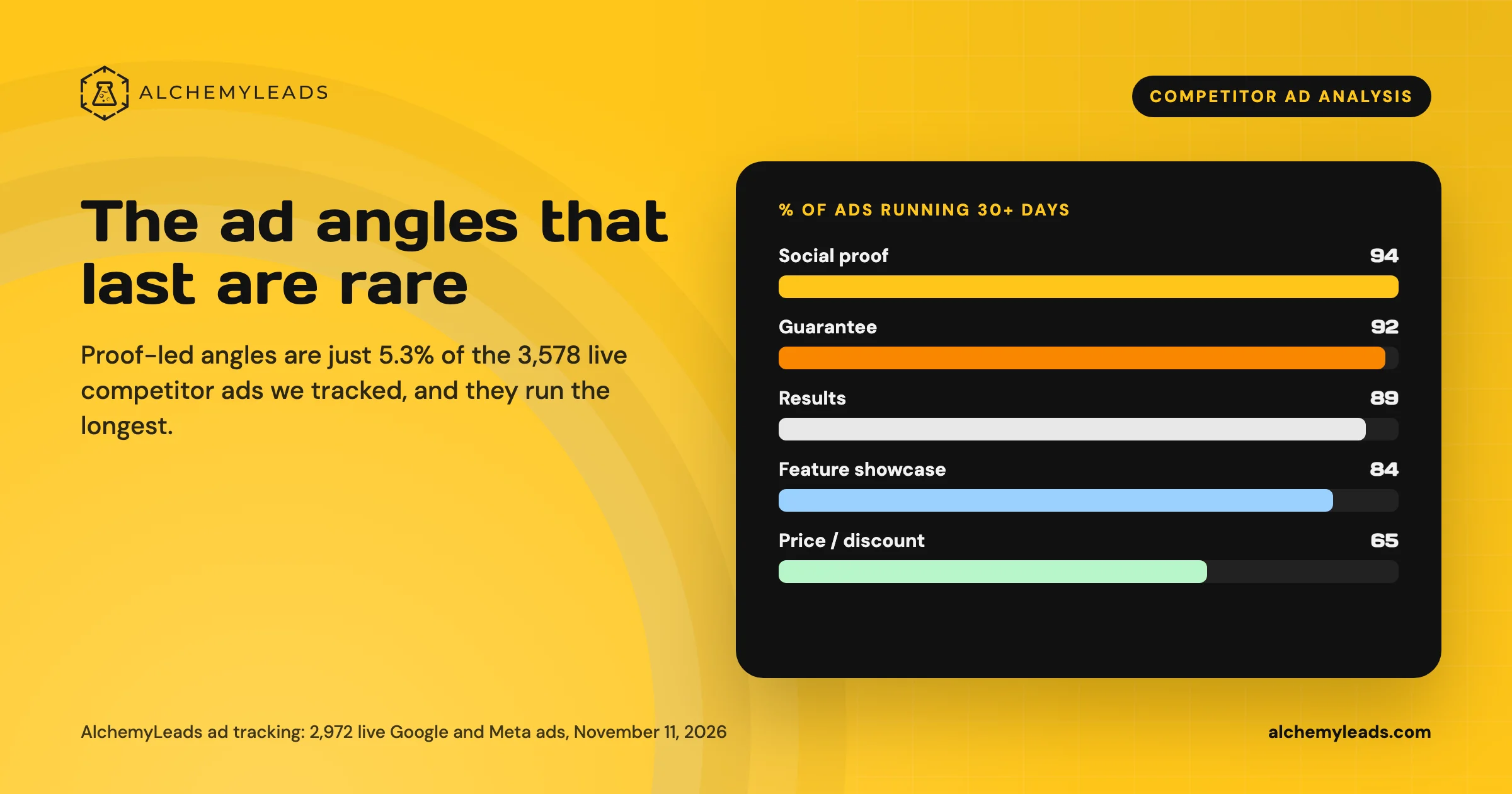
Competitor Ad Analysis: What 3,578 Live Ads Say About the Creative That Lasts
We tracked 3,578 live competitor ads on Google, Meta and LinkedIn. Proof-led angles are the rarest and run the longest. See the data and the playbook.
November 11, 2026
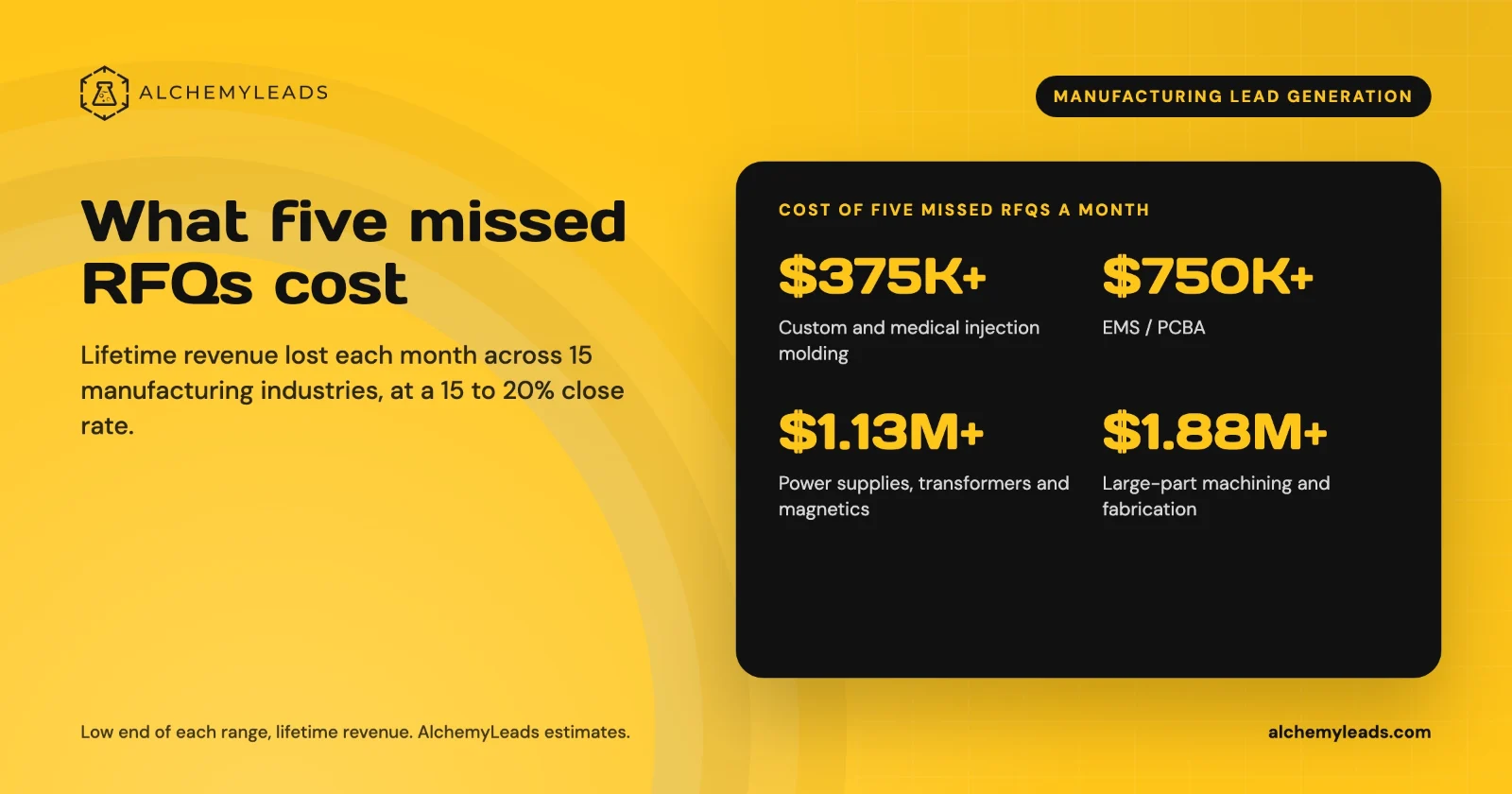
The Cost of Inaction in Manufacturing Lead Generation: What Five Missed RFQs a Month Cost in 15 Industries
What five missed RFQs a month cost across 15 manufacturing industries, with a cost of inaction calculator.
October 27, 2026
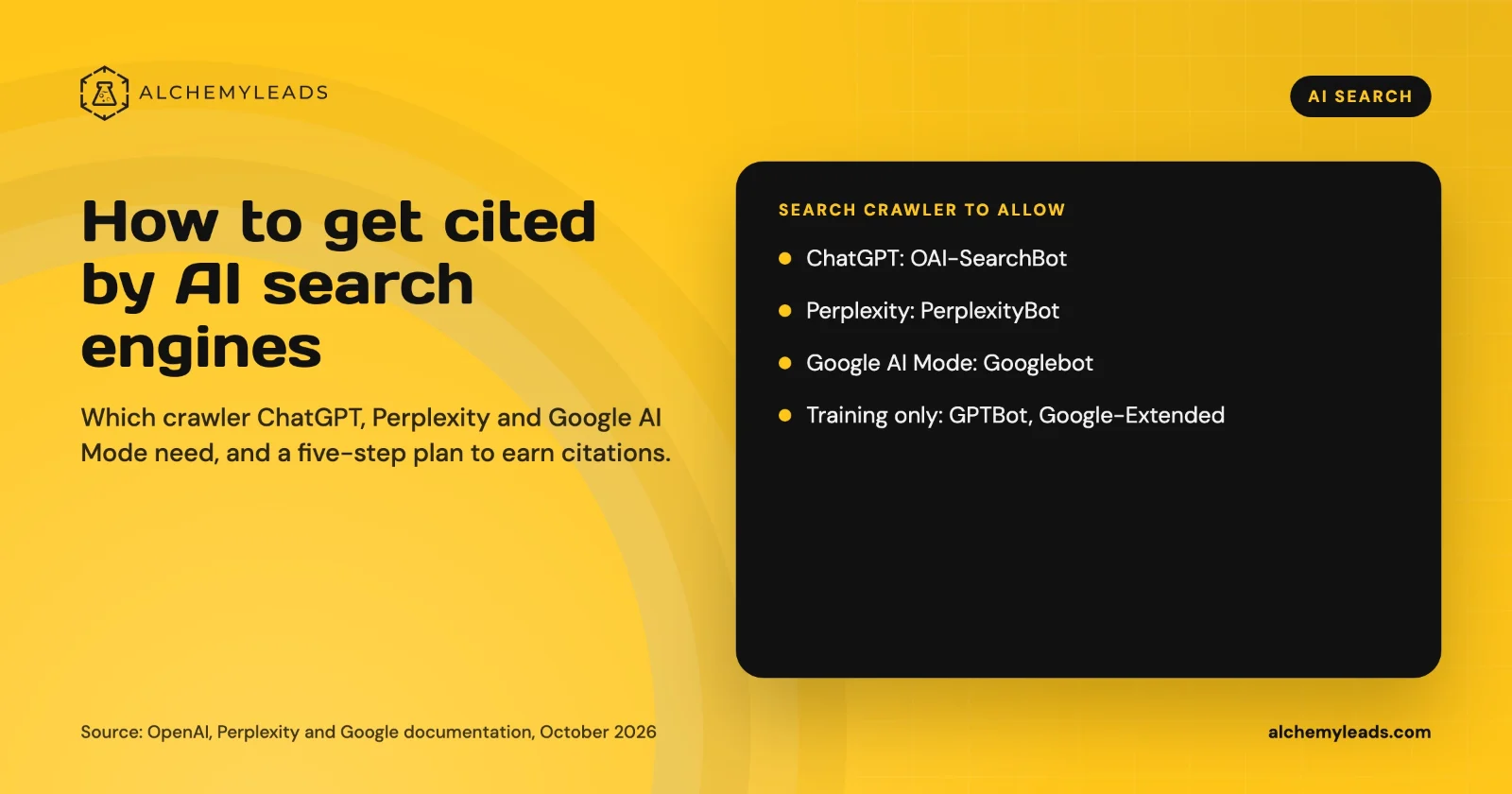
How to Get Cited by ChatGPT, Perplexity and Google AI Mode
How ChatGPT, Perplexity and Google AI Mode choose sources, which crawlers to allow, and a five-step plan to get your company cited, based on official docs.
October 26, 2026
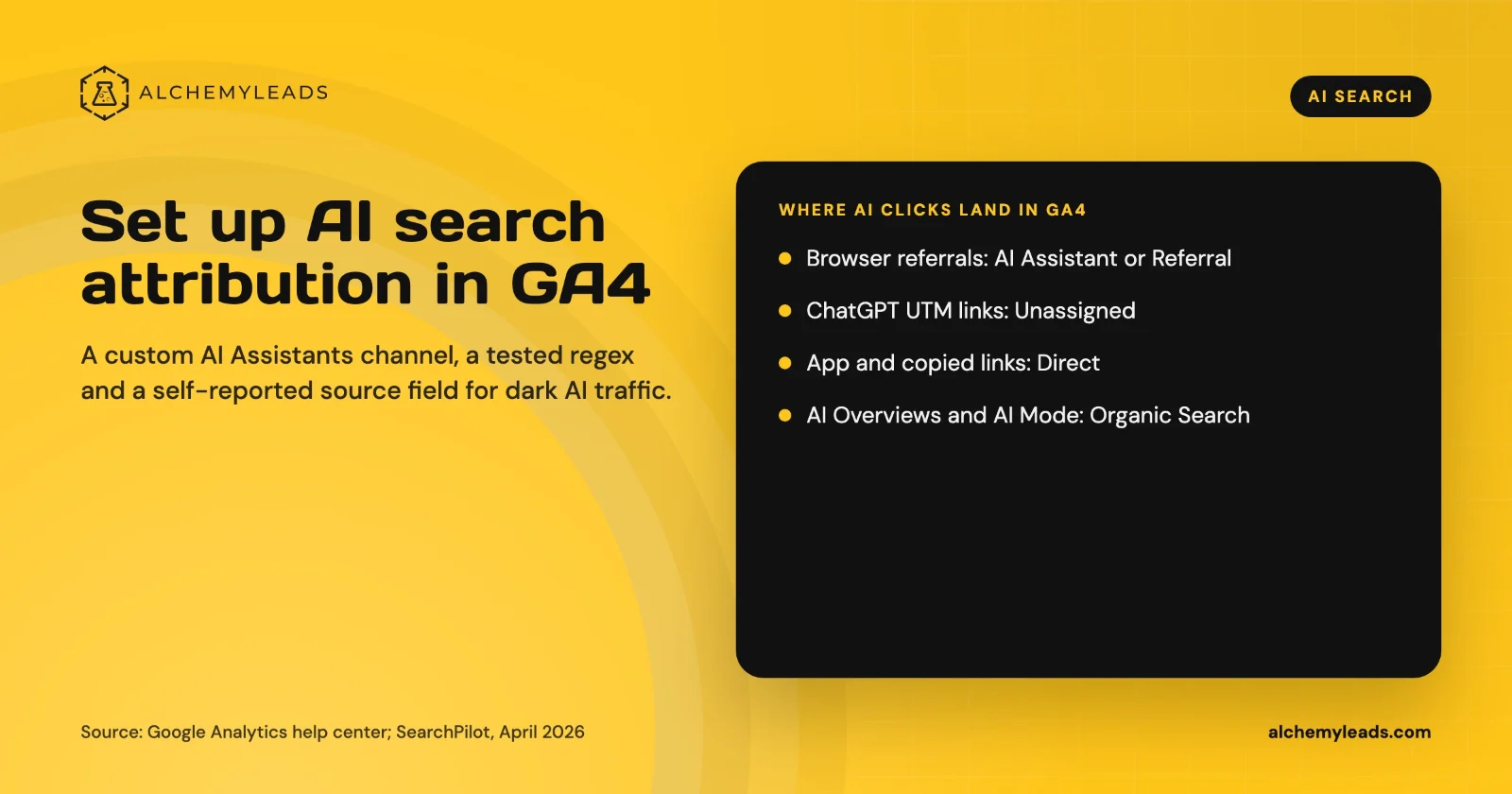
How to Set Up AI Search Attribution in GA4: A Step-by-Step Guide for 2026
Step-by-step GA4 setup for AI search attribution: an AI Assistants channel, a copy-paste regex, ChatGPT UTM fixes and a self-reported AI source field.
October 26, 2026
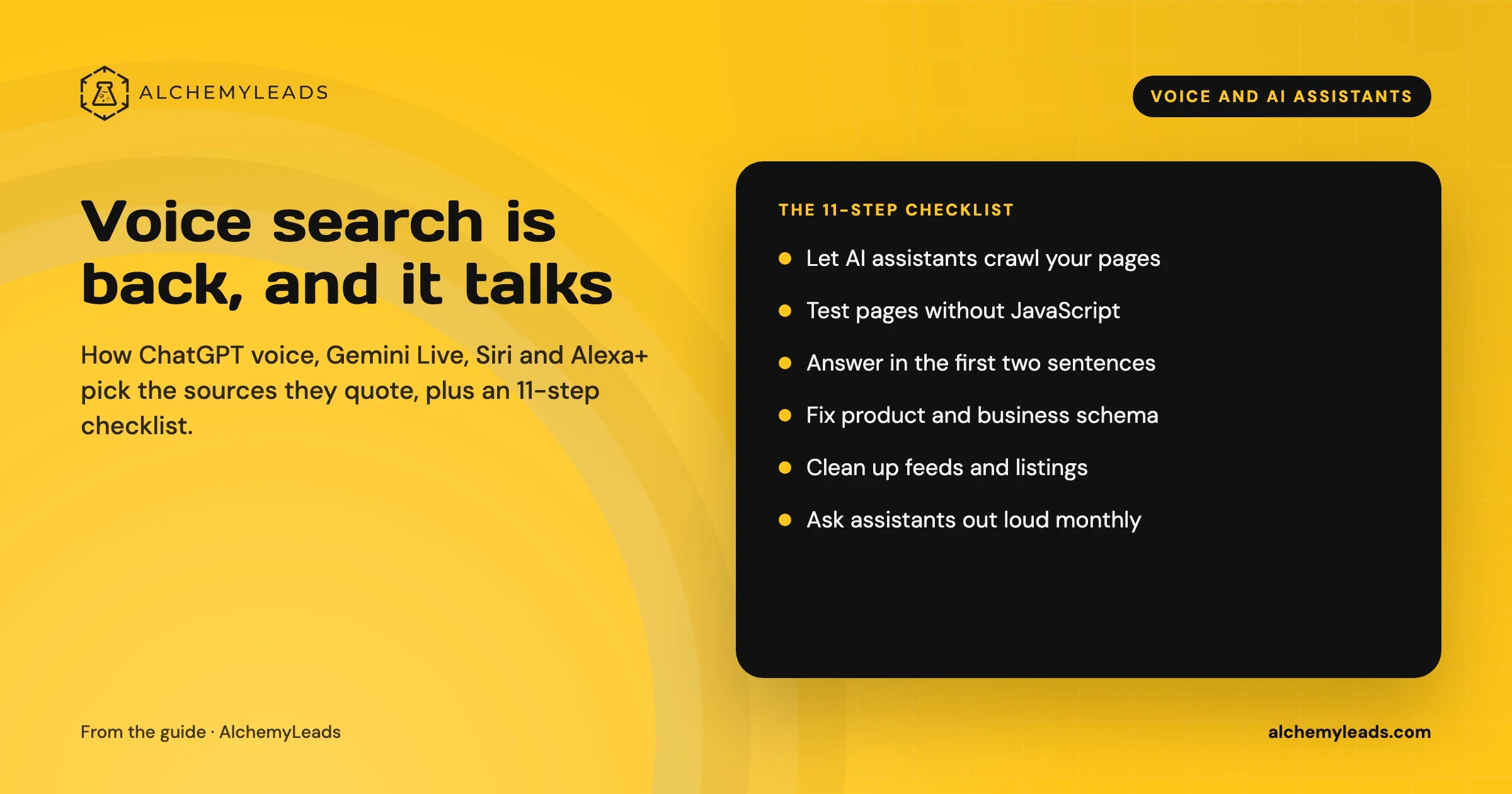
Voice Search in 2026: How AI Assistants Pick Their Sources
We first wrote about voice search in 2022, when the question was whether “Hey Siri” and “OK Google” would change how people shop. Four years later, voice is back in a bigger form. People now talk to ChatGPT, Gemini, Siri, Alexa+ and Copilot the way they talk to a knowledgeable friend, and those assistants answer by reading the web in
October 17, 2026
Contact us
We value your privacy and won't share your email with others.
We'll only contact you with curated content.
