
Are your web pages struggling to rank despite targeting all the right keywords? Many businesses are in the same boat as you—they’ve invested heavily in traditional search engine optimization (SEO) tactics yet failed to achieve meaningful rankings.
The problem isn’t your effort, however—it’s that search engines have evolved beyond simple keyword matching.
Semantic SEO transforms how search engines understand and rank your content. Rather than focusing solely on individual keywords, this advanced approach helps search engines grasp your content’s true meaning and context. For businesses ready to adapt, semantic SEO offers a clear path to better rankings and more relevant traffic.
Let’s explore how semantic SEO can revolutionize your approach to search optimization and drive real business results.
Understanding Semantic SEO
At its core, semantic search engine optimization is optimizing content to match user intent by creating contextually rich content that search engines can truly understand.
Instead of fixating on keyword density or specific keywords, semantic SEO prioritizes natural language processing (NLP), topical depth, and meaningful connections between related concepts.
Consider how humans communicate: we use different words to express similar ideas and rely heavily on context. Semantic SEO mirrors this natural approach by helping search engines recognize synonyms, related terms, and contextual relationships.
For example, if someone searches for “how to fix a leaky faucet,” semantic search algorithms understand this query relates to plumbing repairs, DIY maintenance, and specific tools or parts—even if those exact phrases aren’t used.
The Technical Foundation of Semantic SEO
Natural Language Processing (NLP) powers semantic search capabilities. This branch of artificial intelligence allows search engines to analyze and understand human language patterns.
Search engines can interpret user queries more accurately through NLP and match them with relevant content.
Search engines utilize knowledge graphs to create connections between related concepts and entities. These sophisticated databases help establish relationships between topics, making it easier for search algorithms to understand context and relevance.
For instance, when you search for “Apple,” the knowledge graph helps determine whether you’re looking for information about the fruit or the technology company based on associated terms and context.
Schema markup and structured data play crucial roles in semantic SEO by providing explicit signals about your content’s meaning.
By implementing structured data markup, you help search engines understand specific elements of your content—a product review, recipe, or business information. This technical implementation creates clarity for search engine crawlers, often leading to enhanced search results with rich or featured snippets.
Semantic SEO and User Intent
Understanding search context requires looking beyond the literal meaning of search queries. Users might phrase the same question in multiple ways, but their underlying intent remains consistent. Semantic SEO focuses on addressing this core intent rather than matching exact keywords.
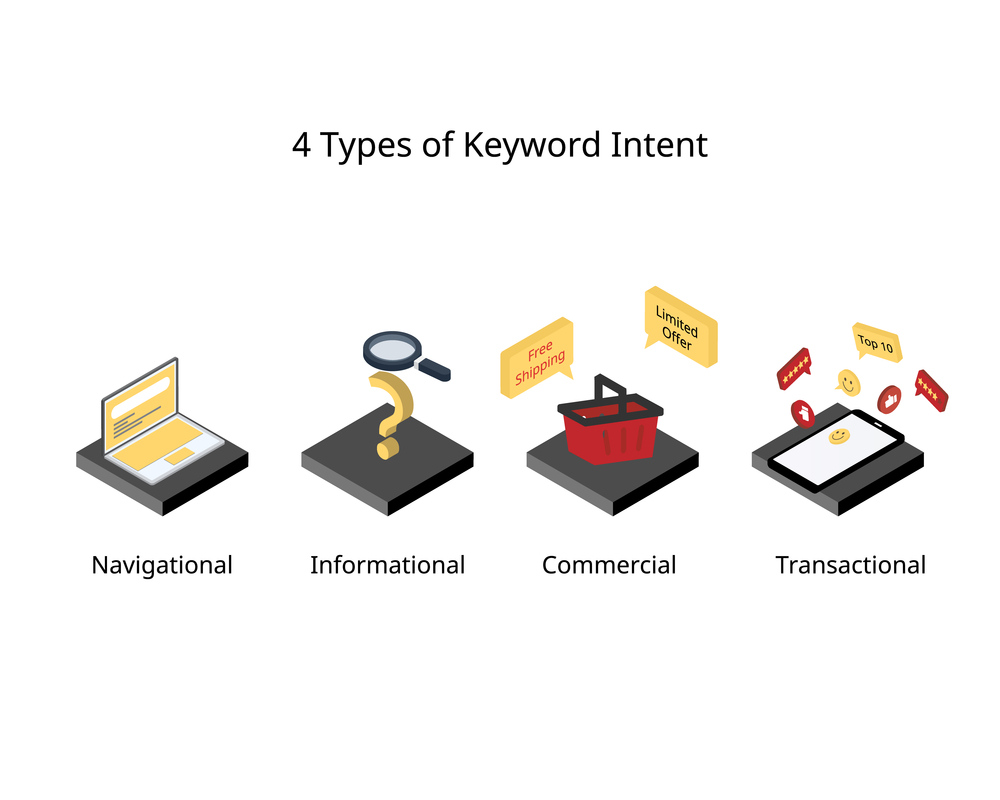
Search queries generally fall into three main categories:
- Informational (“how does solar energy work”)
- Navigational (“Facebook login”)
- Transactional (“buy wireless headphones”)
Semantic search algorithms can better determine which type of content will best serve a user’s needs by analyzing patterns in natural language and user behavior.
Creating content that aligns with user intent involves comprehensive topic coverage. Develop in-depth content incorporating related concepts rather than creating separate pages for similar keywords.
Topical Authority and Content Mapping
Building topical authority requires more than publishing isolated articles about related subjects.
Search engines like Google evaluate your expertise by examining how thoroughly you cover topic clusters across your website content. Creating comprehensive content clusters demonstrates deep subject matter knowledge and helps establish your site as an authoritative source.
Pillar pages serve as foundational content pieces that broadly cover main subjects. These in-depth resources act as hubs, connecting to more specific supporting content through strategic internal linking.
For instance, a digital marketing agency might create a pillar page about email marketing, with supporting articles covering specific aspects like subject line optimization, segmentation strategies, and automation workflows.
Supporting content pieces should explore subtopics in greater detail while maintaining clear connections to your pillar content.
This approach creates a semantic network that helps search engines understand the breadth and depth of your expertise. Each piece of supporting content strengthens your overall topical authority while targeting specific long tail keywords and related search queries.
Creating an effective topical map with help from semantic SEO allows you to generate content clusters that exhaust the topic and cover content with no stone left unturned. All these factors
Implementing Semantic SEO Strategy
Effective keyword research in today’s SEO landscape starts by identifying core topics, then expand into related concepts, synonyms, and natural language variations.
Keyword tools that analyze semantic keywords and related searches like SE Ranking help uncover the full spectrum of terms your target audience uses when searching for information.
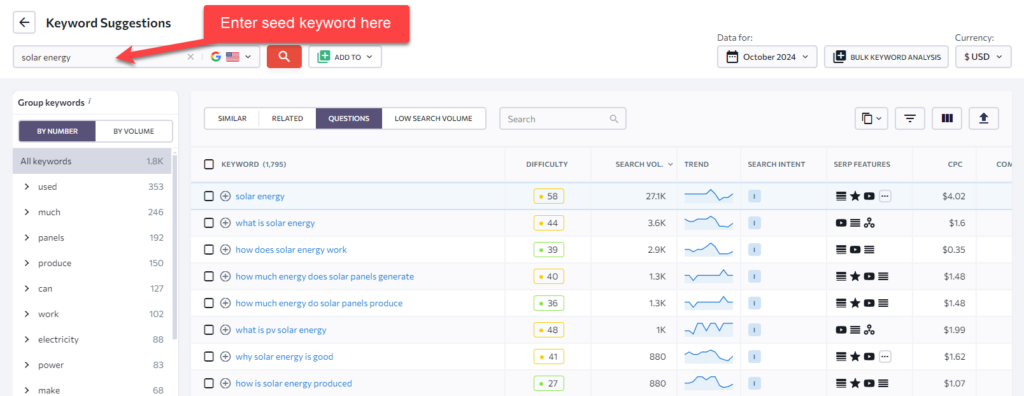
Content optimization techniques for semantic SEO focus on comprehensive coverage rather than keyword density.
Create detailed content incorporating relevant keywords while addressing user queries from multiple angles. This might mean including definitions, examples, step-by-step instructions, and expert insights within a single piece of content.
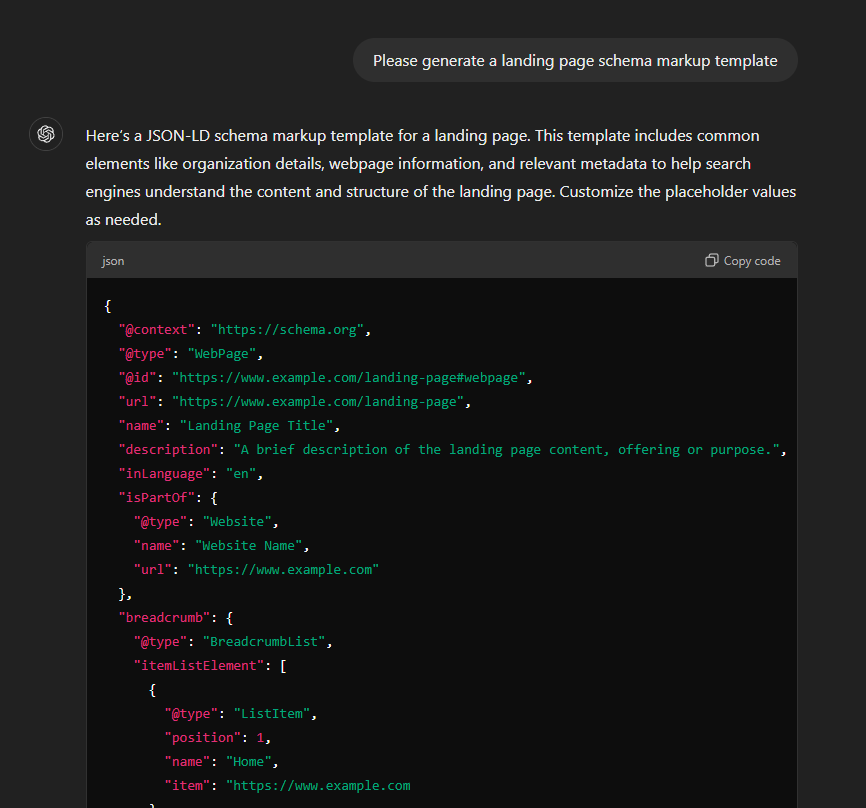
Finally, schematic markup provides additional context about your content type: an article, product page, or how-to guide.
You can ask ChatGPT to generate a schema markup template for the page so you can just fill it out with the necessary information afterwards.
Remember to maintain a clean site structure with logical internal linking patterns that reinforce topical relationships.
Advanced Semantic SEO Strategies and Concepts
To help optimize your site pages for their respective semantic keywords, below are tactics you must implement moving forward:
Entity SEO
Entity-based search optimization identifies and optimizes key concepts, brands, people, and places within your content.
Search engine algorithms use entity recognition to understand relationships between different elements in your content. Clearly defining these entities and their connections helps search engines better understand your content’s context and relevance.
A quick search on ChatGPT for entities to include in your content ought to do the trick.
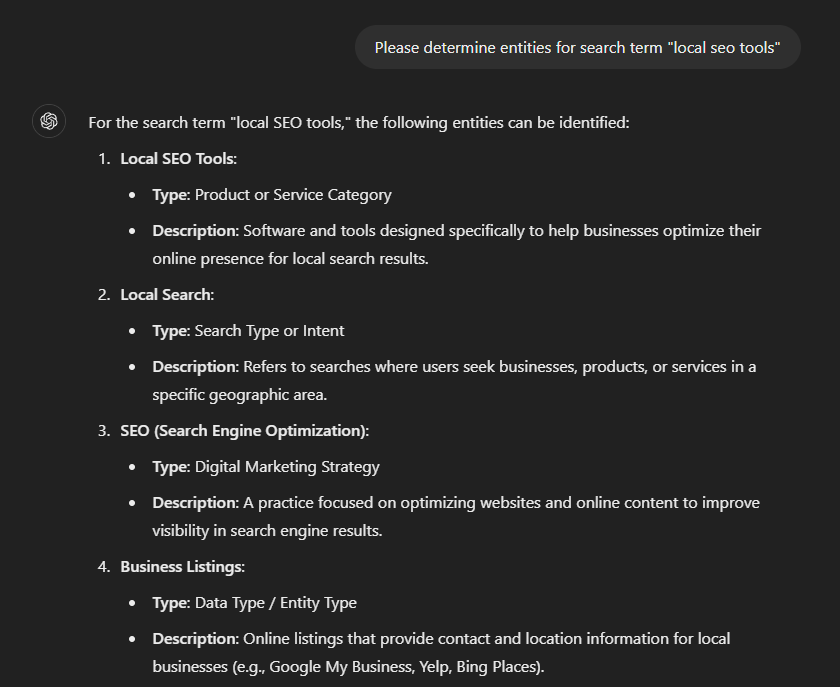
It will list down names of people, places, things, and other identifiable and distinguishable entities for the keyword that you can incorporate into its content.
Natural Language Processing
Natural language generation tools can assist in creating semantically rich content, but they should be used thoughtfully. While these tools can help identify related topics and generate initial drafts, human expertise remains crucial for ensuring accuracy, maintaining brand voice, and providing genuine value to your target audience.
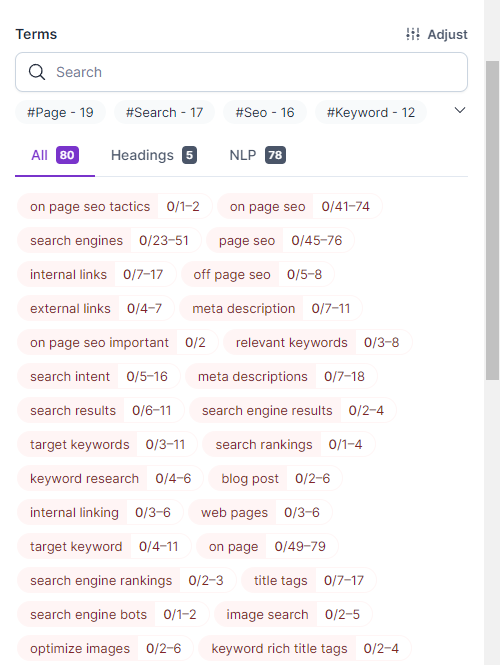
Doing this manually is very time-consuming, so it’s best to use Surfer SEO to help you extract natural language processing (NLP) keywords to include in the content.
Voice SEO
Voice search optimization becomes increasingly important as more users adopt smart speakers and virtual assistants. Voice queries tend to be longer and more conversational than typed searches. Optimizing for voice search means anticipating natural language questions and providing clear, direct answers that search engines can easily extract and present to users.
Conclusion
Mastering semantic SEO requires a shift from traditional keyword-focused strategies to a more holistic approach that prioritizes meaning, context, and user intent. By implementing the principles and techniques discussed in this guide, you can create content that resonates with both search engines and users.
Ready to enhance your website’s semantic optimization? Our Topical Mapping and Content Clustering Services can help you identify key topics, create comprehensive content clusters, and strengthen your site’s topical authority. Through expert analysis and strategic planning, we’ll help you develop a content structure that drives sustainable organic growth and better search visibility.
Take the next step in your SEO journey by exploring how our topical mapping expertise can transform your content strategy and improve your search engine rankings. Contact us today to learn more about building lasting semantic authority in your industry.
Suggested
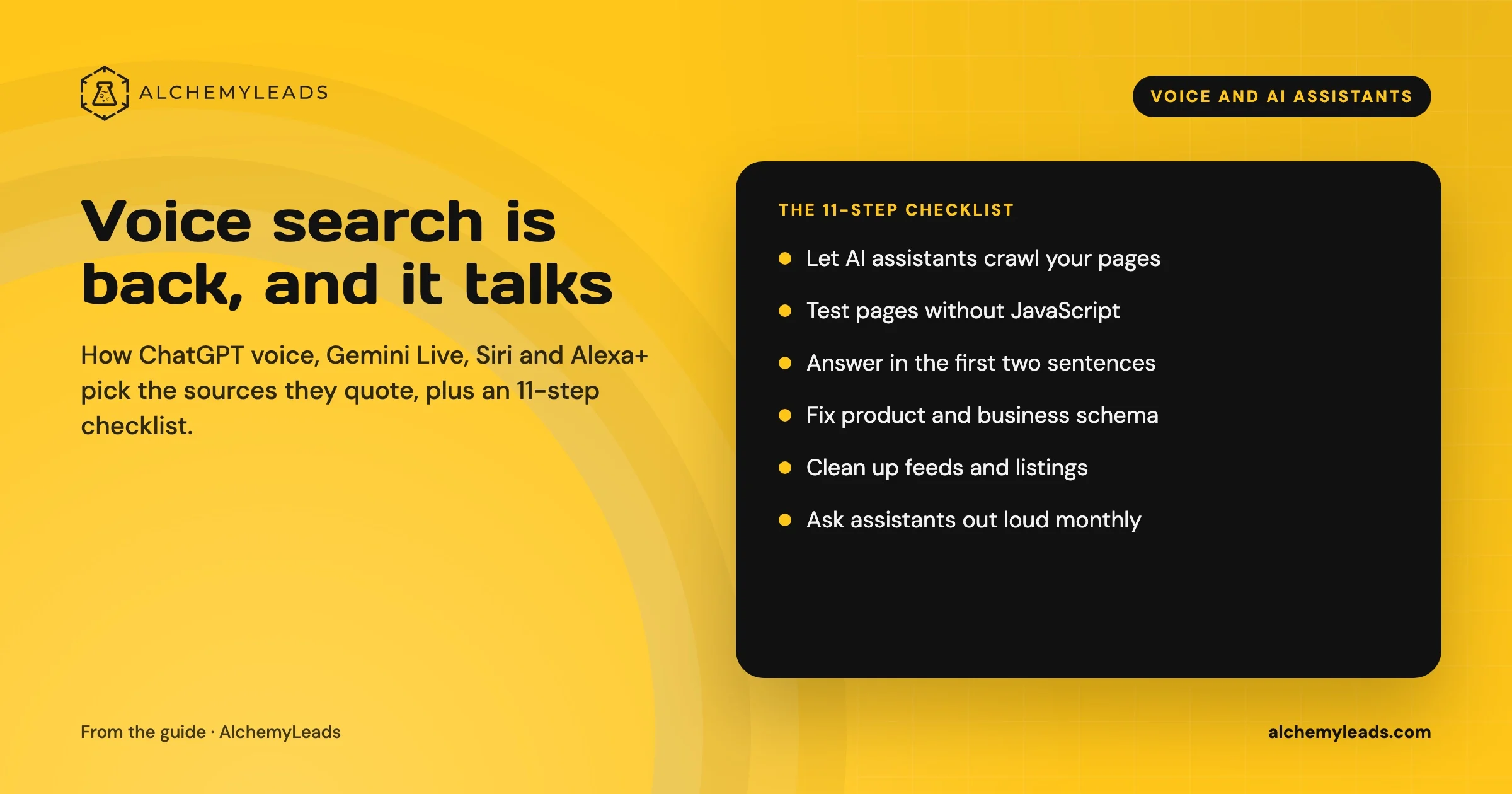
Voice Search in 2026: How AI Assistants Pick Their Sources
We first wrote about voice search in 2022, when the question was whether “Hey Siri” and “OK Google” would change how people shop. Four years later, voice is back in a bigger form. People now talk to ChatGPT, Gemini, Siri, Alexa+ and Copilot the way they talk to a knowledgeable friend, and those assistants answer by reading the web in
October 17, 2026
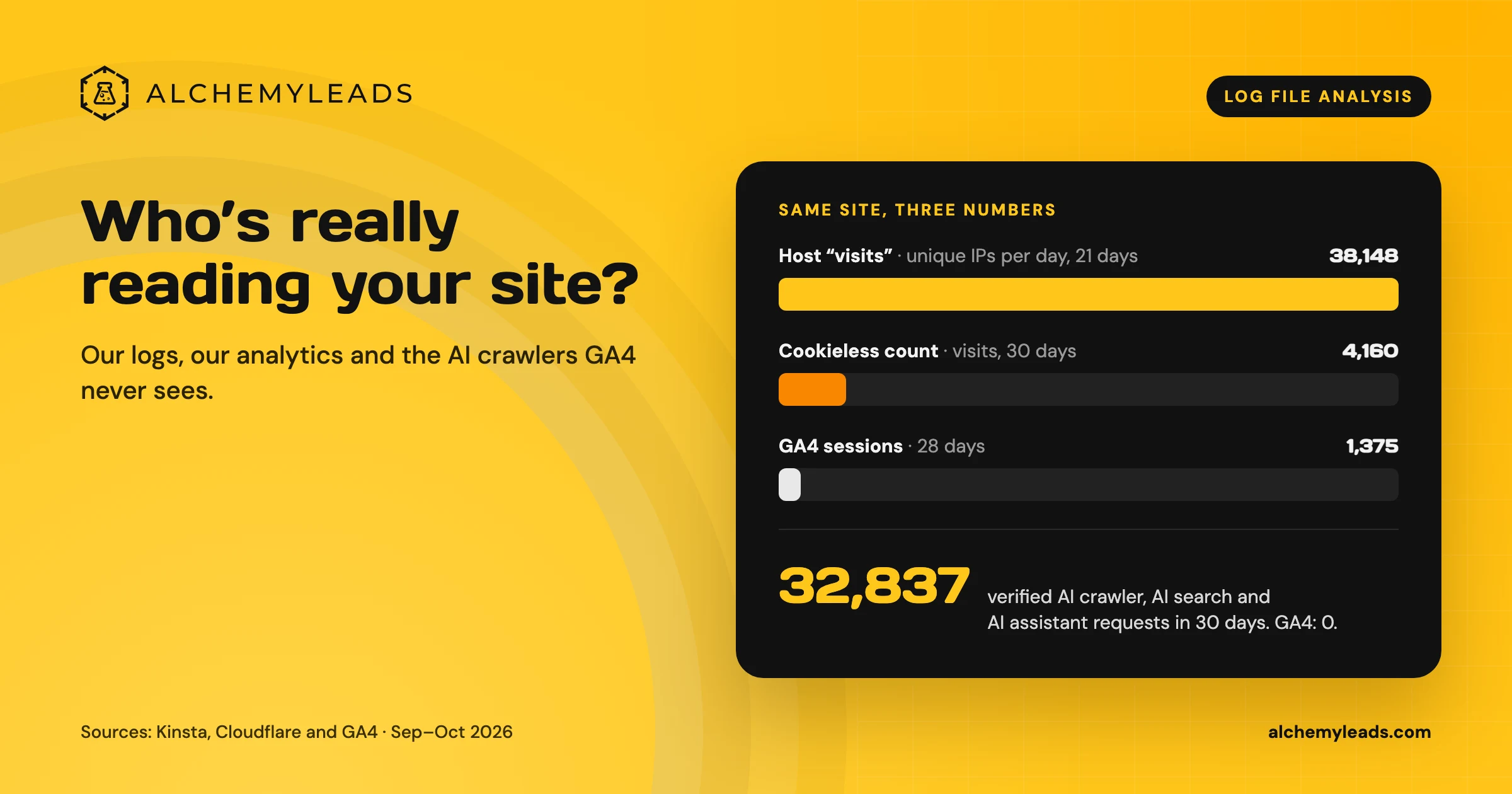
Log File Analysis for AI Search: Our Logs Showed 38,148 Visits. GA4 Showed 1,375.
Our host logged 38,148 visits. GA4 logged 1,375 sessions. We opened the server logs to see who was really there, and what AI crawlers read.
October 16, 2026
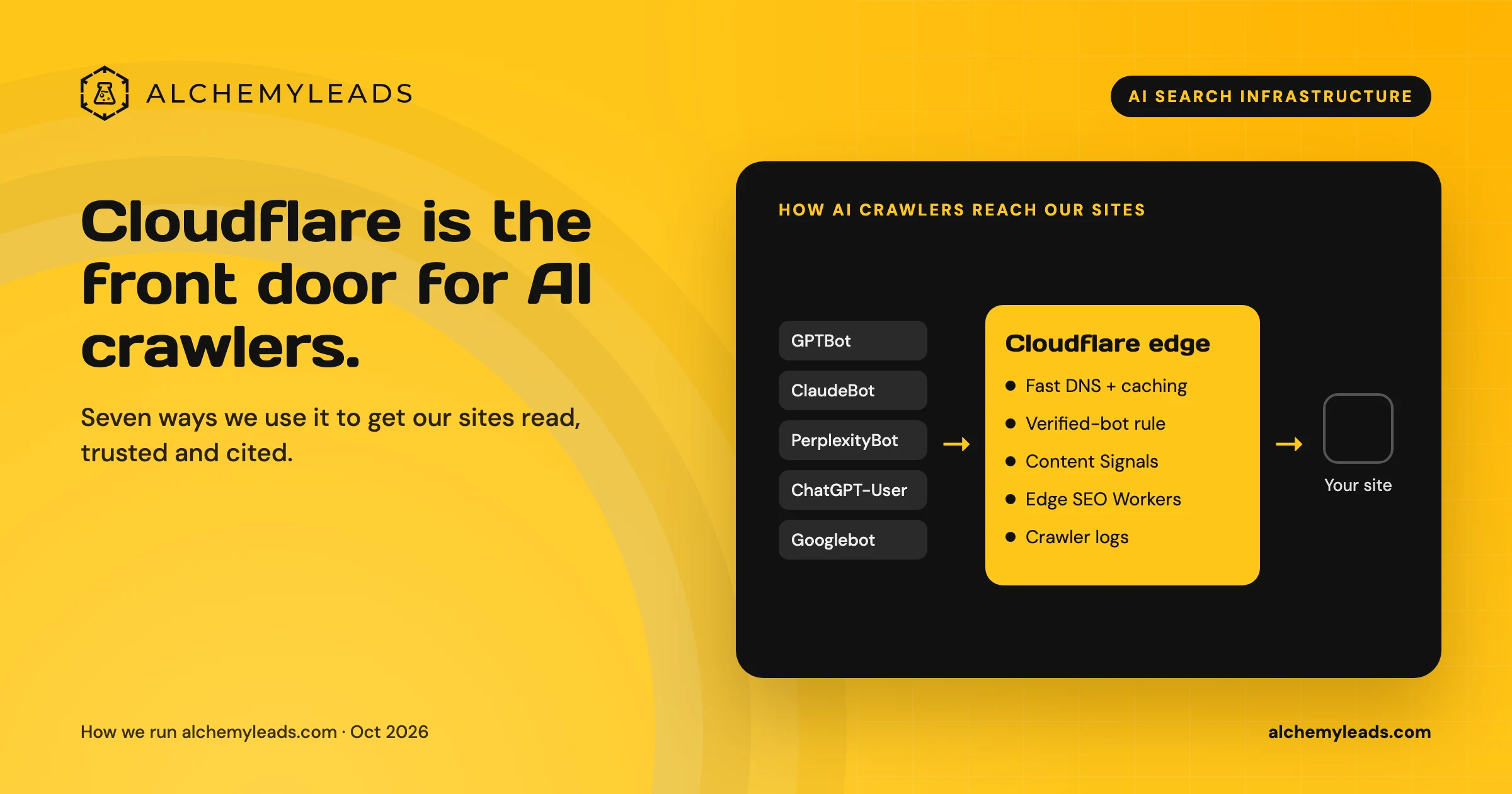
Why We Love Cloudflare for AI Search: 7 Ways We Use It for GEO and AEO
How we use Cloudflare DNS, bot rules, Content Signals and Workers to make our sites fast, crawlable and citable for ChatGPT, Claude and Perplexity.
October 16, 2026
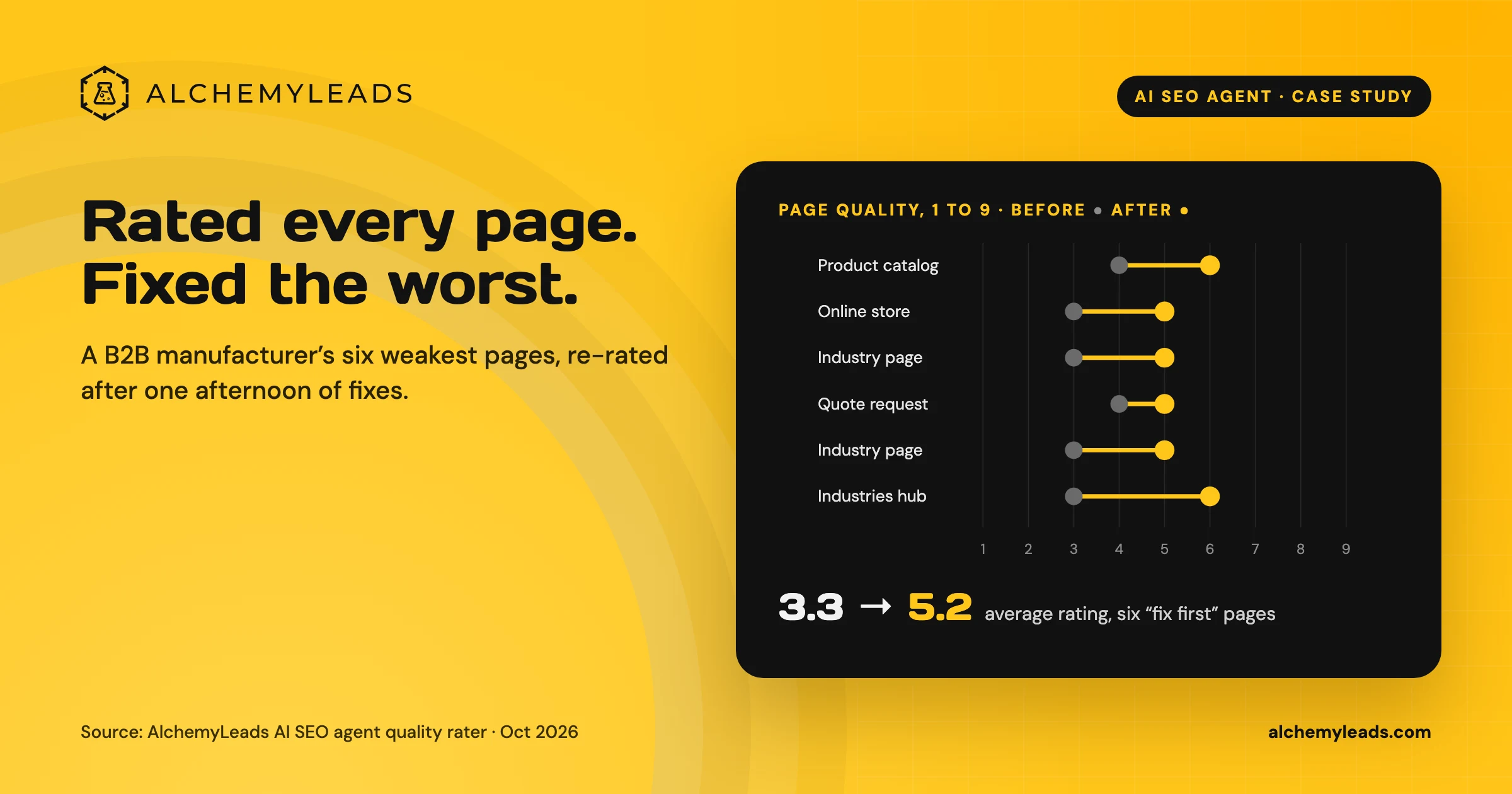
Our AI SEO Agent Rated Every Page on a Manufacturer’s Site, Then Fixed the Worst Ones in an Afternoon
Our AI SEO agent rated 40 pages of a B2B industrial equipment manufacturer’s site against a Quality Rater Guidelines-style rubric, joined the ratings to Search Console data, and lifted the six weakest pages from an average of 3.3 to 5.2 out of 9 in one afternoon.
October 16, 2026
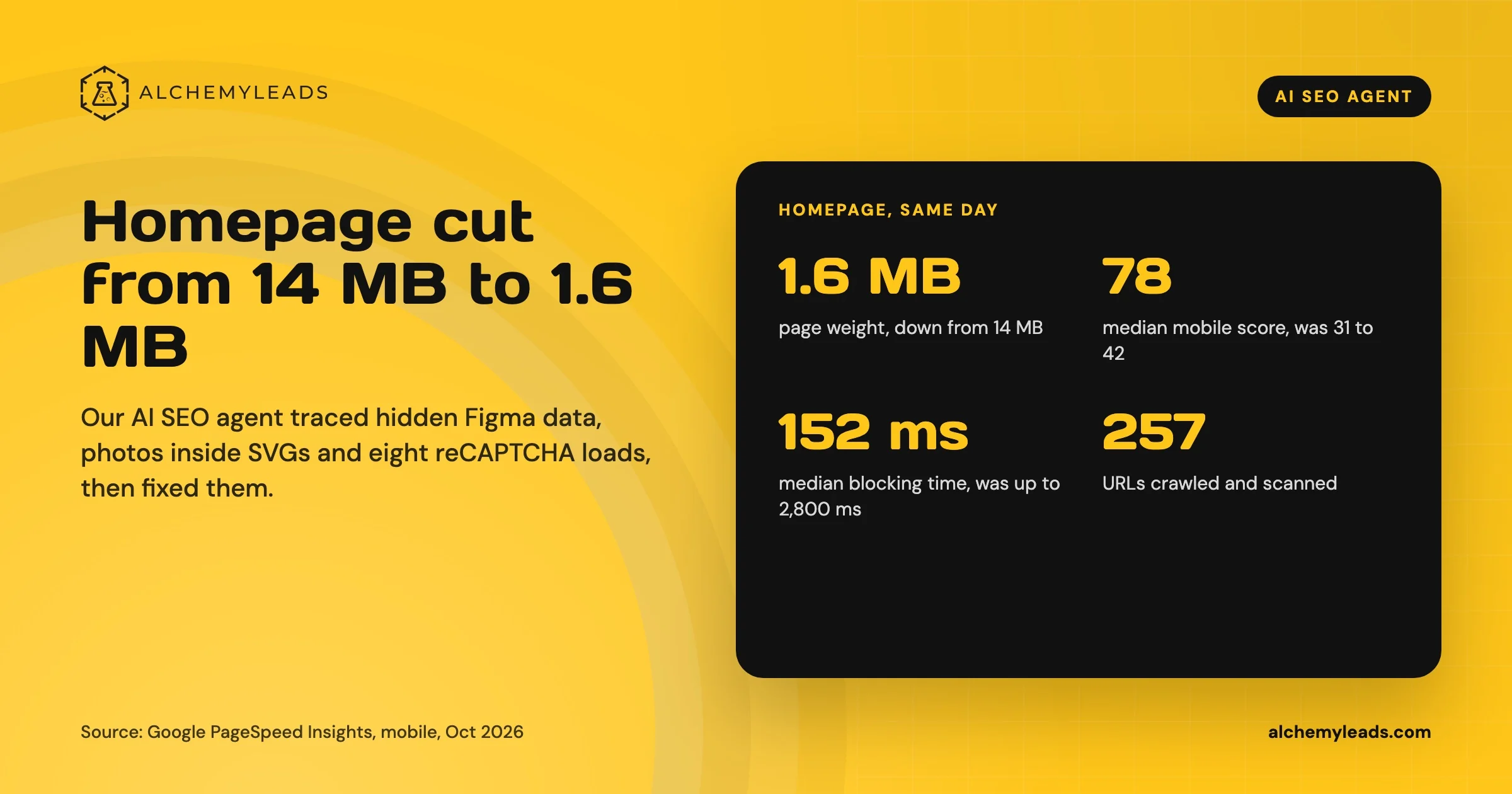
Our Homepage Went From 14 MB to 1.6 MB. Here’s What Our AI SEO Agent Found.
How our AI SEO agent cut our homepage from 14 MB to 1.6 MB: hidden Figma data, photos inside SVGs, a preloading video, eight reCAPTCHA loads, and the code behind each fix.
October 15, 2026
Contact us
We value your privacy and won't share your email with others.
We'll only contact you with curated content.
