
How to Use Content Hubs and Content Silos to Your Advantage for SEO and CMS Site Navigation
When it comes to SEO, there is a lot of ground to cover, and for the uninitiated, navigating its many complexities can be a real challenge. It can also give you a headache, yet we must use it lest we lag and get swept up by more technically proficient competitors. One of the most challenging SEO to learn and to master is the hub and spoke model. Here is a detailed guide outlining how to harness the benefits of the hub and spoke model for your business.
What Exactly Is the Hub and Spoke Model?
Although some slight variations in the definition of the hub and spoke model exist, the gist of it goes something like this. The hub and spoke model is a content strategy model that is used to drive traffic to a specific page. Essentially, you will create a series of other pages posted elsewhere that are designed to lead visitors to the page that you want to drive more traffic to.
There are many different variations to how this can be accomplished; however, the general framework of the hub and spoke model itself remains the same. For example, if you’re looking to drive more traffic to the women’s clothing category on your website, you can create blog posts that will be featured on third party sites laced with links that will lead customers straight to that page. Voila! Sounds simple right? In concept, perhaps, but in execution, things can get a little hairy.
Part of the reason why the hub and spoke model is so popular among businesses is that it gets results, at least when it’s implemented properly. Another reason why it’s so popular is because of the conceptual elegance of the model itself. When trying to understand this model for the first or even the second time, think of the visual representation of an actual physical wheel complete with a hub and several spokes. Each spoke in the wheel represents a piece of content that’s laced with a link that will take visitors to the page that you’re trying to increase traffic for.
Don’t try to pinpoint an exact designation for each spoke right away; you can use a combination of different types of content for each spoke as long as they are all designed to bring visitors back to the page that’s represented by the hub.
Think of it this way. One spoke can be an informative blog post on a third party website, and another spoke can be a video interview posted on YouTube, another spoke can be a podcast. In contrast, yet another spoke can be a social media post that links back to the hub page. The hub and spoke model offers you quite a bit of creative freedom. You can mix and match different forms of content on various platforms as long as they all lead back to the same page.
It’s important to note that there are several other SEO models with different names that are practically the same thing as the hub and spoke model.
One such model is called a PBN. Does that ring a bell to you? No? Well, no matter, there are so many acronyms flying around these days; it’s a wonder that anyone remembers anything. PBN stands for a private blogging network, a strategy in which third party sites are used to place blog posts that link back to your website. So PBN is a model designed to leverage content placed on other sites to drive more traffic to your own. Sound familiar now? That’s because PBN is designed around the same basic principles of the hub and spoke model.
Now you can see how SEO can get very confusing very quickly. It has its jargon, its terminology, and its specializations. If you wade too deep too fast, you’ll be in over your head in no time. Conversely, if you don’t wade in at all, your company will falter and have utterly miserable search rankings, bounce rates, click rates, and all of that jazz. So what are you to do? The smartest business leaders know how to shore up their weak spots and turn them into strengths. In this case, that would mean partnering up with a qualified digital marketing agency like AlchemyLeads to manage your SEO strategies for you.
Why It Is Crucial to Know the Hub and Spoke Model
Businesses today need to be familiar with the hub and spoke model if they wish to stand any chance of surviving in the modern market. Today’s market is hypercompetitive and technically oriented. When you find that a competitor of yours achieves consistent spikes in their sales and web traffic, it might seem like magic, but in all practicality, it’s probably just a little SEO alchemyleads. Technically inclined digital marketing agencies like AlchemyLeads knows just how much the hub and spoke model could affect sales because it’s what we do.
Some companies stubbornly try to learn it all by themselves, hoping to save a few bucks by managing their SEO strategies by themselves. Although it might sound like a good idea on the surface, there’s just one problem, and it doesn’t typically work.
Companies make all kinds of costly mistakes when they try to manage their SEO strategies on their own. For example, businesses that are still clinging to the idea that is utilizing long tail keywords alone as an SEO strategy are failing, and they’re sinking fast. Technology is continually changing, as is the way that Google ranks content in its behemoth of a search engine.
Problems like these are relatively common, as many businesses only read a few articles on SEO and think they have it all down pat. For better or worse, SEO is a massive field with lots and lots of highly technical and frequently updated information. Any digital marketing agency that knows their stuff will readily recognize the importance of implementing the hub and spoke model in any severe SEO strategy while most companies will not.
Key Benefits of the Hub and Spoke Model
One of the critical benefits of embracing the hub and spoke model and incorporating it into your overall SEO strategy is that you will have a significantly lower bounce rate. That’s because, by the time people click on your internal link bringing them to the page that you’re trying to promote, they will have developed a genuine interest in visiting that page, which will keep them there longer as opposed to finding by accident or accidentally clicking on an ad.
By leveraging the hub and spoke model and using it effectively, you can increase your range and cast a much wider web that will bring in a continuous stream of new visitors to your site. You should know that while it’s generally considered to be good practice to start out focusing on one hub and spoke configuration centered around one particular web page, there is no limit to how many separate configurations you can have.
What does this mean? It means that you can design several of these models, all working independently to bring in more web traffic to a number of different pages. For example, you can have a hub and spoke strategy in place to increase traffic for individual product pages and each page for all of the services that your business has to offer. The key to a useful hub and spoke based SEO strategy is to align your analytics vision with your individual business goals.
How to Work with Spokes
To make the hub and spoke model work, you’re going to need to create and manage your spokes. One of the most effective ways to build a collection of available spokes is to plan everything out ahead of time. It typically helps to create a visual concept map showing the hub, the spokes, and their relationship to the hub. A spoke’s connection to the hub can be based on short tail or longtail keywords, or even entire topics.
If, for example, your hub page is a contact page for construction services, your spokes should consist of content posted on third-party platforms revolving around topics related to construction. These pieces of content should maintain a consistent theme that urges against the DIY approach while making the recommendation to work with a licensed contractor.
This strategy will ensure that people reading up on construction projects will end up on your contact page. Furthermore, they will be under the impression that it is safer and smarter to enlist your services than to attempt to complete the project themselves.
Of course, you don’t have to run a construction company to use the same strategy. This strategy applies to countless different companies from a wide variety of fields and various industries.
Don’t Just Discover the Wheel, Master it, with AlchemyLeads
If the mechanics of the hub and spoke SEO strategy still doesn’t make much sense to you or sounds somewhat challenging to implement independently, get in touch with the digital marketing sorcerers of Los Angeles. AlchemyLeads knows the intricacies of SEO strategies like the hub and spoke model inside and out.
You don’t have to learn the intricacies of the hub and spoke SEO strategies by yourself to enjoy the benefits. Get in touch with AlchemyLeads and leave it to the masters!


Suggested

The Future of Natural Language Processing, Machine Learning & what it Means for Your Digital Business
One of the most important things to know about in today’s market is the future of natural language processing and machine learning. If that sounds like Greek to you, don’t worry, we’ve got your back. Running a business today is significantly more complicated than it was in previous years. As a modern business owner, not only are you expected to
September 10, 2026
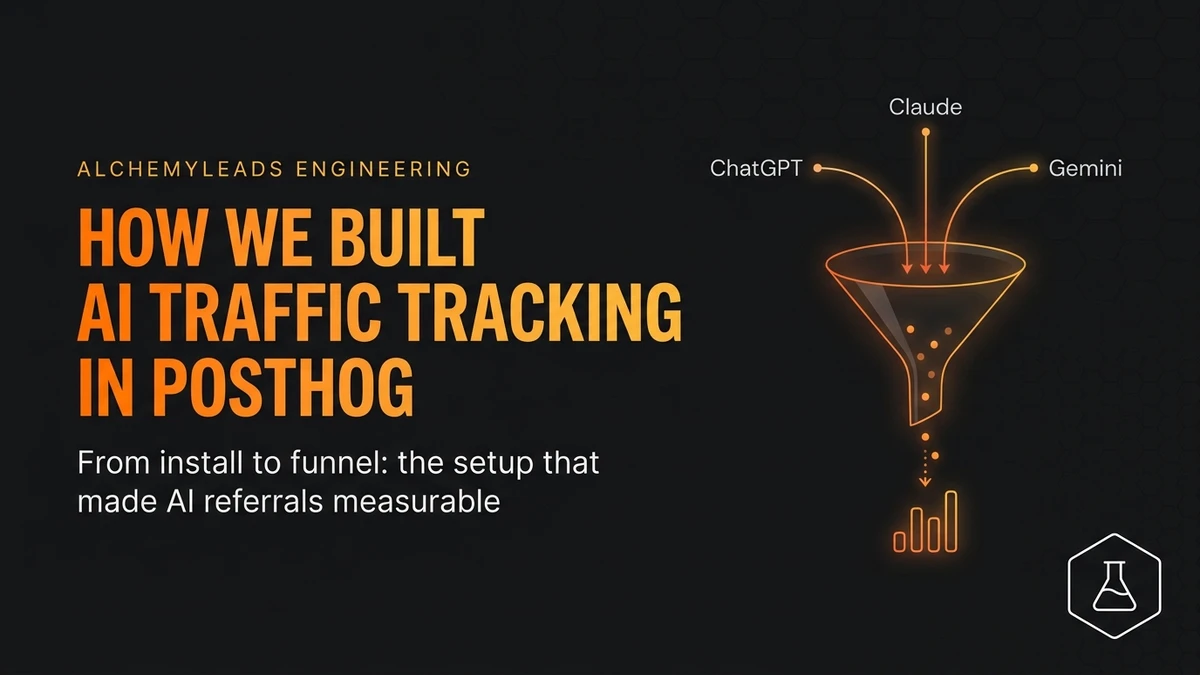
How We Built AI Traffic Tracking in PostHog, From Install to Funnel
Before PostHog, our AI traffic was a guess. We could see referral spikes in GA4 and a few “chatgpt.com” rows buried in source reports, but we couldn’t answer the questions that mattered. Which engines send us people? Which pages do they cite? Do those visitors do anything after they land? So we built the answer. This is the full walkthrough
September 3, 2026
Questions to Ask an AI Search Agency Before You Sign
You have two or three agency calls booked, and every agency on the list is using the same three words. GEO. AEO. Somewhere in the deck, LLM optimization. They all describe the same goal, which is getting your brand named when a buyer asks ChatGPT, Perplexity, or Google’s AI answers a question. But herein lies the problem: most agencies get bookings by relabeling
August 25, 2026
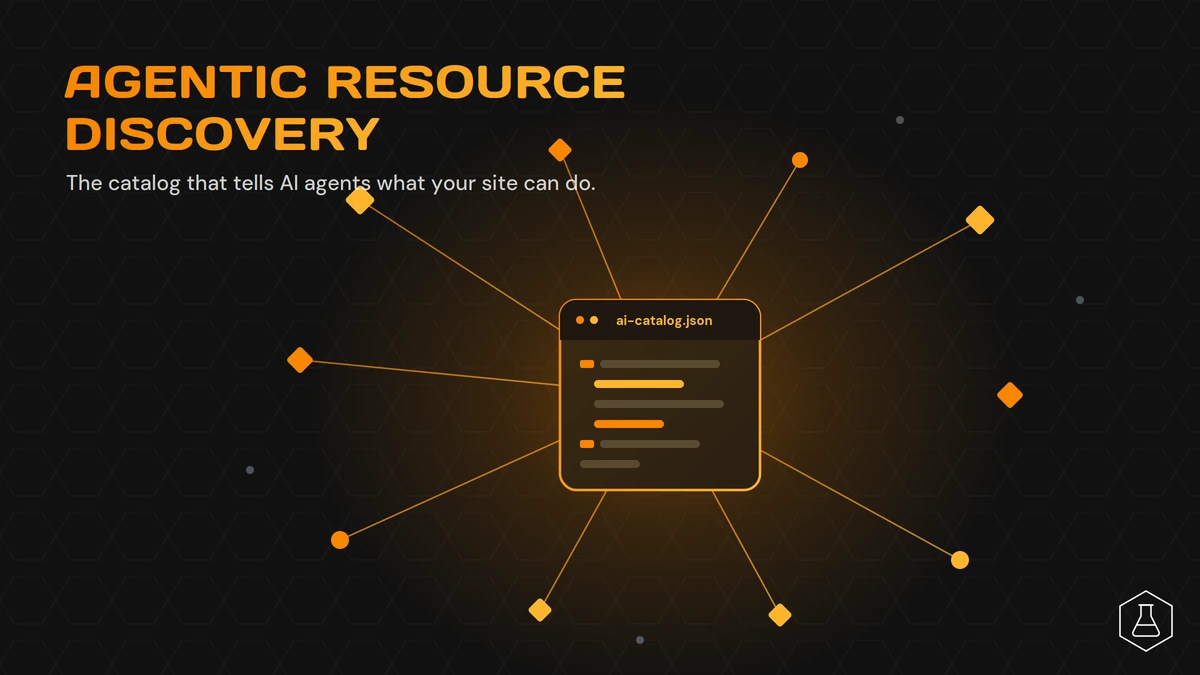
Agentic Resource Discovery: A Practical Walkthrough
Agentic resource discovery is the new standard that tells AI agents what your website can do for them. Most sites have no answer yet. They are invisible to the agents that will soon book, buy, and research for real customers. Here is the problem. Search is moving from people typing queries to agents acting on their behalf. If an agent
July 6, 2026
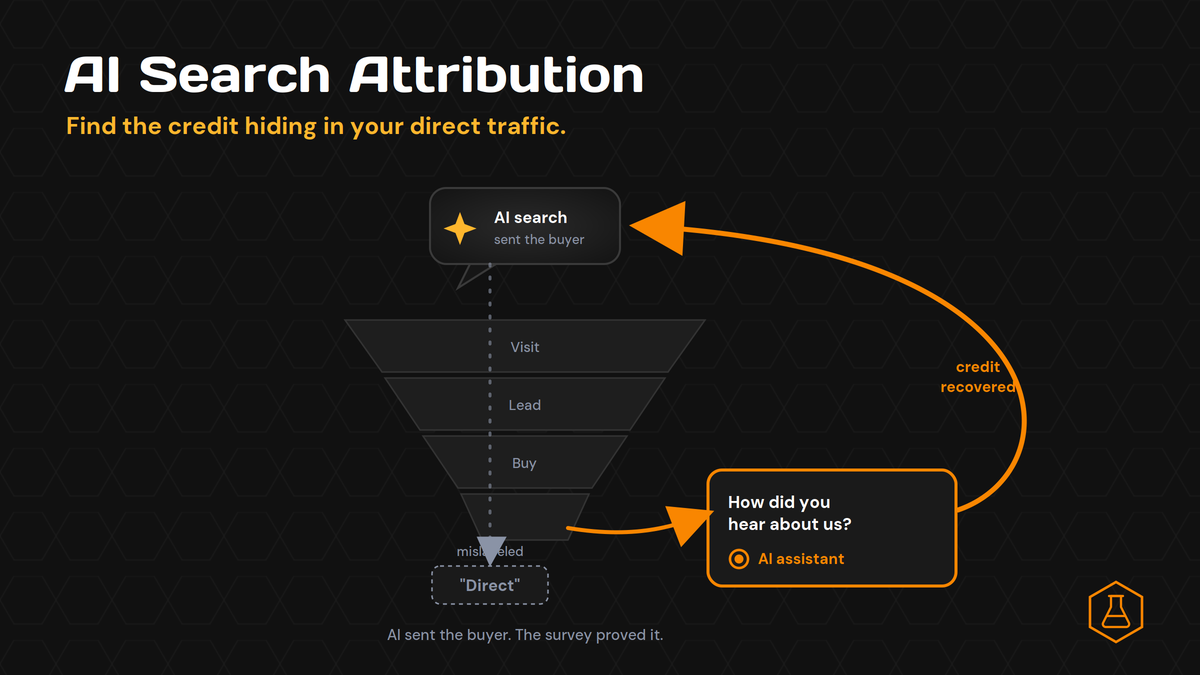
How to Solve the AI Search Attribution Funnel
Your AI search work is paying off. People are finding you in ChatGPT and Perplexity, your brand shows up in the answers, and demand feels warmer than it did last year. Then you open your analytics. The channel that grew is “Direct.” The report says AI sent you almost nothing. That gap is not a traffic problem. It is an
July 2, 2026
Contact us
We value your privacy and won't share your email with others.
We'll only contact you with curated content.
