
Voice search has dominated the digital world. Today, consumers around the world start their internet searches with phrases such as ‘Hey Alexa,’ Ok Google,’ or ‘Hey Siri.’ People have been using digital voice assistants in the past few years to check simple tasks such as turning on the lights, checking the weather, etc. We are now seeing tremendous growth in these technological advancements, which will impact eCommerce and SEO.
Today, voice search does not just involve digital assistants. People use voice search on smartphones and other mobile devices, smart TVs, and in-stores.
Retailers now use voice search in brick-and-mortar stores to enable customers to quickly learn about their stores, location, and their product details by speaking into an app. This post looks at how voice search impacts eCommerce and SEO.
Understanding Voice Commerce
Voice commerce refers to a set of technologies and systems that allow consumers to use their voices to find and purchase products online. This conversational interface aims at creating a more human experience by reducing the friction associated with traditional websites and apps.
When it comes to brick-and-mortar retail, customers enjoy human interactions with the sales representatives and are educated about the products they want to buy. With eCommerce, customers are left to search for this information themselves. This is where voice search comes in to add a sense of conversation to these computer systems.
Some popular voice assistants include Amazon’s Alexa and Apple’s Siri. These voice assistants allow users to ask questions to devices as we would talk to a real human being. This allows consumers to learn more about a company, its products, and enables them to build relationships with brands through voice via smartphones, smart speakers, and inside stores.
As these voice interactions become popular, eCommerce brands should make themselves accessible to get more users to buy their products.

Why is Voice Search on the Rise in eCommerce?
Before we look at the importance of voice search in eCommerce, let’s first look at these statistics:
- 72 percent of people with voice-activated speakers say they use their devices as part of their daily routine
- The smart speaker market size is expected to be over $US 30 billion by 2024
- 34 percent of people without a voice assistant would want to buy one
The increased preference and popularity of voice search among internet users suggests that online businesses should include voice search optimization in their marketing strategy. Ignoring this suggestion means losing an excellent opportunity to gain traffic and make sales. Here are voice commerce benefits that indicate that voice search is the future of eCommerce and SEO:
Better Customer Experience Through Personalized Online Experience
The personalized shopping experience is probably the single-most benefit of using the voice search feature in eCommerce. Voice-enabled solutions provide recommendations based on individual preferences to enhance the shipping experience.
For example, if a person uses AmazonFresh for their daily shopping needs and orders them via Alexa. Alexa would provide recommendations of items that match the user’s preferences. This is especially the case if the user has made the order repeatedly via the platform. These personalized experiences can help increase sales by about 20%.
Faster and Easier Searches
Voice search is quicker and more efficient than humans when it comes to typing. A person’s average typing speed is about 40 wpm, and this is mainly on a traditional QWERTY keyboard. The typing speed is much lower on a mobile device’s keyboard. On the other hand, a voice search feature allows you to process an average of 1000 wpm. This makes it faster and more convenient as it allows you to find the desired product quickly.
With voice search features, users can go shopping while doing other tasks such as driving, washing dishes, or even cooking, which could otherwise not be possible through typing. This makes it one of the quickest and most convenient forms of search.
Brand Awareness
Consumers don’t just want to buy from your brand; they want to connect with it and your products to make them part of their daily lives. The Younger generation quickly adopts new technology, making voice-activated assistants a valuable asset for your business.
Additionally, voice search will help identify your customer’s shopping behaviors and habits. Once your system becomes accustomed to these patterns, voice assistants will help customers search for something by offering proper recommendations. This makes the shopping experience enjoyable.
Easy to Collect Reviews
Customer reviews play a critical role in marketing. Luckily, collecting reviews has never been easier with voice search. Customers can give feedback easily and conveniently, which can later be used in product improvement and helping other customers.
Unlike typing long feedback, which is time-consuming, voice assistants ask specific questions and do not require users to log in.
Drawbacks of Implementing Voice Search in eCommerce
Like everything else good, implementing voice in eCommerce comes with some challenges. They include:
- Unclear Voice: One of the main concerns of voice search is the lack of context. If the user doesn’t convey his command properly while speaking into a device, the voice search might not recognize the correct speech. It might not process the command in time or not get the right product to the customer.
- Privacy concerns: Privacy is another issue regarding voice search as it requires users to speak to their devices. Customers need assurance that companies will provide privacy to the end-users. After all, many people will want to know the app will not share their info with a third party.
- User search behavior: While voice search will benefit customers in the long run, it might take time for some users to adapt to this voice search feature. Businesses need to improve the strategies they use for content marketing to accommodate users using voice search features.

Why do Businesses Need Voice Search Optimization Strategy?
Unless you are new to digital marketing and SEO, you know how important having a robust search engine optimization or content marketing strategy is. Well, it appears you need a voice search strategy for the same reasons you need an SEO strategy—increase your ranking and boost traffic to your site. As voice search continues to gain popularity, businesses need to think about how they can optimize results from voice search to attract customers in their local area. Here are reasons you need a voice search strategy:
More than 10 Billion Voice Searches Happen Every Month
- The volume of voice searches continues to increase every year—from just over a billion in 2018 to about 13 billion searches per month in 2021 (including searches only on mobile devices).
A Third of All Searches are Voice Searches
Gartner predicted that about a third of browsing sessions would be screen less by 2020. The truth is, voice search has become more popular, with the search volumes expected to rise, especially among the younger generation (18-24).
As people continue to adopt voice search, it is paramount to integrate it into your eCommerce business to stay ahead of your competition.
Voice Search Sales Account to Over $2 Billion
The total global eCommerce sales reached $4.28 trillion in 2020. Of this figure, $2 billion came from voice search. While this might seem insignificant, considering that voice search is a new development in eCommerce, it means this technology is growing quickly and effectively.
Voice Can Grow Ecommerce Revenue by 30%
Like most businesses, you wonder whether adopting voice search will affect your bottom line. The truth is many factors determine how effective a voice search will be. However, analytics think your overall revenue could grow by 30%.
How to Optimize Voice Search for Ecommerce?
Now you know that voice search for eCommerce is here to stay. This section looks at optimizing voice search for eCommerce for better business growth and performance. These tips include:
- Understand the difference between typed and spoken searches
- Aim for position 0
- Merge user journey with site structure
- Use a semantic strategy
- Optimize your page speed
- Use natural language
- Optimize searches for questions
Here are SEO voice search strategies to help improve rankings:
- Target long-tail keyword phrases
- Conduct keyword research for voice search
- Optimize for local presence
- Claim Google My Business listings
- Create conversational content
Wrapping Up
Voice search is the new normal and is bound to become bigger in the future. This technological development makes it easier for eCommerce stores to sell products and services and improves the shopping experience for customers.
If you have any questions about voice search in eCommerce and SEO, we are here to help. We shall help redefine your customer’s experience and boost your SEO standings to ensure you won’t miss any opportunity to boost your rankings for your eCommerce store.


Suggested

The Future of Natural Language Processing, Machine Learning & what it Means for Your Digital Business
One of the most important things to know about in today’s market is the future of natural language processing and machine learning. If that sounds like Greek to you, don’t worry, we’ve got your back. Running a business today is significantly more complicated than it was in previous years. As a modern business owner, not only are you expected to
September 10, 2026

How We Built AI Traffic Tracking in PostHog, From Install to Funnel
Before PostHog, our AI traffic was a guess. We could see referral spikes in GA4 and a few “chatgpt.com” rows buried in source reports, but we couldn’t answer the questions that mattered. Which engines send us people? Which pages do they cite? Do those visitors do anything after they land? So we built the answer. This is the full walkthrough
September 3, 2026

Questions to Ask an AI Search Agency Before You Sign
You have two or three agency calls booked, and every agency on the list is using the same three words. GEO. AEO. Somewhere in the deck, LLM optimization. They all describe the same goal, which is getting your brand named when a buyer asks ChatGPT, Perplexity, or Google’s AI answers a question. But herein lies the problem: most agencies get bookings by relabeling
August 25, 2026
Agentic Resource Discovery: A Practical Walkthrough
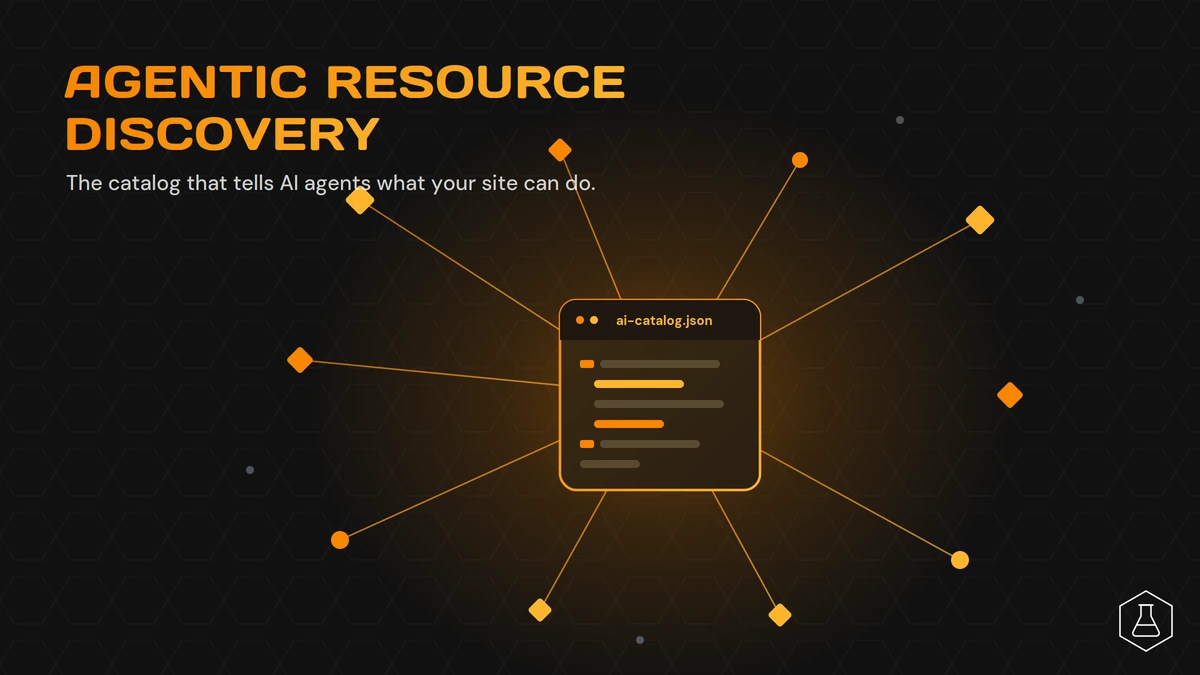
Agentic resource discovery is the new standard that tells AI agents what your website can do for them. Most sites have no answer yet. They are invisible to the agents that will soon book, buy, and research for real customers. Here is the problem. Search is moving from people typing queries to agents acting on their behalf. If an agent
July 6, 2026
How to Solve the AI Search Attribution Funnel
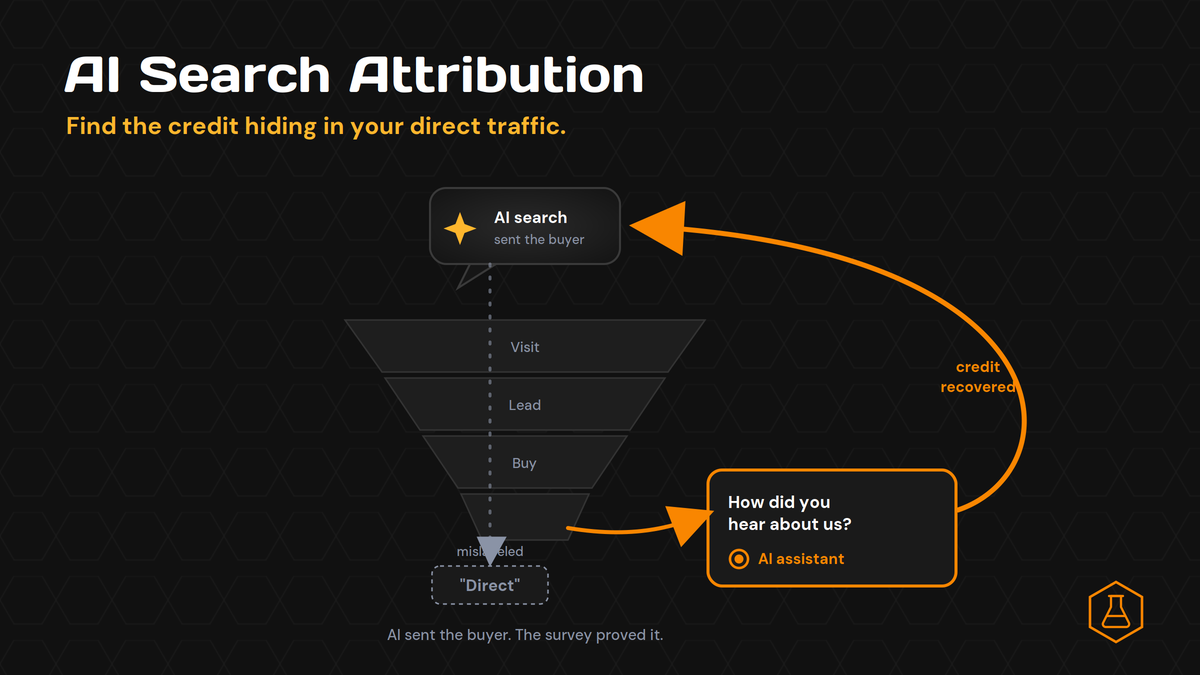
Your AI search work is paying off. People are finding you in ChatGPT and Perplexity, your brand shows up in the answers, and demand feels warmer than it did last year. Then you open your analytics. The channel that grew is “Direct.” The report says AI sent you almost nothing. That gap is not a traffic problem. It is an
July 2, 2026
Contact us
We value your privacy and won't share your email with others.
We'll only contact you with curated content.
