
Add as a preferred source on Google
The short version
We pulled GA4 data from 15 websites, January 1 to November 25, 2026. AI assistants got credit for 0.75% of about 3.47 million sessions. But AI visitors converted better than the site average on 8 of 12 sites that track conversions, up to 4.7x. ChatGPT got 93.4% of the credit because it tags its links, and even ChatGPT gets undercounted. Every AI platform sends more traffic than GA4 reports.
Is AI search traffic worth chasing in 2027? We pulled the numbers to find out. Every session from 15 websites we manage in Google Analytics 4, from January 1 to November 25, 2026.
Three findings stood out.
First, AI search traffic is tiny, but it converts. AI assistants got credit for 0.75% of about 3.47 million sessions. Yet on 8 of the 12 client sites that track conversions, AI visitors converted at a higher rate than the site average. On 6 of them, the rate was 2.2x to 4.7x higher.
Second, ChatGPT gets nearly all the credit. It sent 93.4% of AI-referred sessions. Gemini sent 3.4%. We think that’s less about who people use and more about who passes attribution. ChatGPT tags its links so analytics can see them. Google’s AI traffic mostly shows up as Google organic or Direct. And even ChatGPT gets undercounted, so every AI platform sends more traffic than GA4 reports.
Third, it’s growing. On 6 of the 11 client sites with enough AI traffic to compare, AI sessions grew between 26% and 278% from Q1 to August through October.
Here’s the data behind all three findings, and what to do about it before you set your 2027 budget.
What We Measured
First, some context.
These are 15 GA4 properties: 14 client websites plus our own. They cover industrial manufacturing, lab diagnostics, ecommerce, B2B services and events. Traffic ranges from about 6,000 to 1.29 million sessions over the period.
A session counts as AI-referred when GA4 credits it to an AI assistant, like chatgpt.com, gemini.google.com, perplexity.ai or claude.ai. Three limits matter:
- It’s a floor. GA4 only counts visits that arrive with an AI source. Everything else lands somewhere else, usually Direct.
- Google’s AI search features are invisible. Clicks from AI Overviews and AI Mode arrive as google / organic.
- November is partial. The window ends November 25.
Clients stay anonymous. No names, no domains.
Finding 1: AI Visitors Convert Up to 4.7x Better
GA4 tracks “key events,” the conversions each site sets up. Think quote requests, purchases and inquiry forms. We compared key events per 100 AI-referred sessions with the same rate for the whole site.
Twelve of the 14 client sites track key events. AI visitors beat the site average on 8 of them. On 6, they more than doubled it.
| Site type | Key events per 100 AI sessions | Site average | Multiple |
|---|---|---|---|
| Industrial cleanroom manufacturer | 1.65 | 0.35 | 4.7x |
| Specialty coffee equipment retailer | 16.82 | 4.18 | 4.0x |
| 3PL fulfillment provider | 3.51 | 0.98 | 3.6x |
| Aerial advertising company | 12.00 | 3.55 | 3.4x |
| Full-service event caterer | 39.05 | 17.93 | 2.2x |
| Aerospace gearbox manufacturer | 2.81 | 1.30 | 2.2x |
Why do AI visitors convert so well? Think about how they arrive. Someone asks ChatGPT for the best cleanroom builder or the right espresso machine. The answer does the research for them. By the time they click, they’ve already compared options and picked you. That’s a warm lead, not a browser.
Our numbers line up with industry studies from Similarweb and Semrush, which put AI-referred conversion at 2 to 5x classic organic traffic.
Engagement backs it up. AI visitors had a higher engagement rate than the site average on 11 of 14 sites.
Where AI Didn’t Win
Four sites saw AI convert at a lower rate. Most had a clear reason. One manufacturer sells through dealers, so the sale happens off-site and its AI visits logged zero key events. A clinical lab diagnostics manufacturer saw many AI visits land on product resource pages, which lab staff read for reference, not to buy. A large ecommerce store already converts at a very high rate site-wide, so AI landed just below it.
So here’s the takeaway. AI search is 0.75% of traffic. On most sites, it’s some of the best traffic you get.
Finding 2: ChatGPT Is the Best at Attribution
Here’s the portfolio, January 1 to November 25, 2026.
| Platform | AI-referred sessions | Share of AI sessions | Sites with traffic |
|---|---|---|---|
| ChatGPT | 24,445 | 93.4% | 15 of 15 |
| Gemini | 889 | 3.4% | 15 of 15 |
| Perplexity | 556 | 2.1% | 14 of 15 |
| Claude | 230 | 0.9% | 13 of 15 |
| All others | 47 | 0.2% | 7 of 15 |
| Total | 26,167 | 100% |
“All others” is Duck.ai, Meta AI, Copilot, Grok, Mistral and Poe combined.
ChatGPT sent about 27 sessions for every one from Gemini. Does that mean ChatGPT has 27 times the users? No. OpenAI announced 900 million weekly ChatGPT users in February 2026, >per TechCrunch. Google reported 950 million monthly Gemini app users in its >Q2 2026 earnings remarks. Weekly and monthly counts aren’t the same measure. ChatGPT likely has more active users. But not 27 times more.
Why ChatGPT Shows Up and Google Doesn’t
Our read: ChatGPT is simply better at passing attribution.
ChatGPT adds a tag, utm_source=chatgpt.com, to the links in its answers. Since mid-2025 that tag has appeared on its “More” source links too, not just citations, >Search Engine Roundtable reported. That tag tells GA4 exactly where the visit came from, even when the browser drops the referrer.
We checked this on our own site. GA4 keeps only one source per visit, but PostHog, the product analytics tool we run on alchemyleads.com, logs the tag and the referrer separately. Here’s every ChatGPT visit it recorded from August 26, when we installed it, to November 25.
| ChatGPT visits to alchemyleads.com | Sessions | What GA4 sees without the tag |
|---|---|---|
| Clicks on our ChatGPT ads: tag, no referrer | 55 | Direct |
| Clicks on our ChatGPT ads: tag and referrer | 2 | ChatGPT |
| Answer links: referrer only | 11 | ChatGPT |
| Answer links: tag only, no referrer | 5 | Direct |
| Answer links: tag and referrer | 2 | ChatGPT |
Look at the ad clicks. 55 of 57 arrived with no referrer at all. The tag was the only thing that told us they came from ChatGPT. Strip it, and every one of those paid visits shows up as Direct.
On answer links, most carried a referrer, and 5 of 18 arrived with only the tag. That’s a small sample from one site. But it shows why ChatGPT wins on attribution: it sends two signals, and nearly every visit carries at least one.
Every AI Platform Underreports
Here’s the bigger lesson. ChatGPT labels its links better than anyone, and it still sends visits with no referrer. Five of our 18 answer-link visits had only the tag to identify them. A platform that tags its links less often loses visits like those to Direct. ChatGPT just loses fewer.
So read the 0.75% as a floor for every platform, not only Google. Gemini, Perplexity, Claude and Copilot likely send more traffic than GA4 reports. ChatGPT looks dominant partly because it’s the easiest to see.
Google’s AI traffic has no equivalent. AI Overviews and AI Mode clicks arrive as google / organic by design, mixed in with classic search clicks. That’s not a guess. And Google says AI Mode alone has passed 1 billion monthly active users. In an AI referral report, all of that counts as zero.
The Gemini app is the open question. We think a meaningful share of its clicks lose their source and land in Direct. We can’t prove that from GA4. But we’ve watched the same thing happen twice:
- AI Mode, May 2025. AI Mode links carried a “noreferrer” tag at launch, and GA4 logged those visits as Direct until Google fixed it, >Search Engine Journal reported.
- ChatGPT, October 2026. For about a week after a model update, ChatGPT links opened without a referrer and without the tag. One analyst reported ChatGPT visits down about 31,000 a day and Direct up about 26,000 a day on the same pages, >per Search Engine Roundtable. It turned out to be a bug, and the tags came back.
That second case is the clearest proof we have. Same visitors, same pages. Take away the label and the traffic doesn’t vanish. It moves to Direct.
The Gemini Trend Makes the Case Stronger
Across the 14 client sites, Gemini sent between 59 and 98 sessions every month this year. Flat. Meanwhile, Google said Gemini’s daily active users tripled over the past year. And ChatGPT’s share of our AI sessions kept climbing.
| Month (2026) | AI sessions, 14 client sites | ChatGPT share | Gemini sessions | Gemini share |
|---|---|---|---|---|
| February | 1,836 | 88.5% | 98 | 5.3% |
| May | 2,684 | 93.1% | 84 | 3.1% |
| August | 2,592 | 94.9% | 74 | 2.9% |
| October | 2,957 | 96.4% | 61 | 2.1% |
A product with fast-growing usage shouldn’t send flat traffic. Unless the traffic is going somewhere GA4 doesn’t call Gemini.
Fair is fair: other factors may add to the gap. Gemini is built into Android, Gmail and Docs, where much of the use is writing, not vendor research, and it may show fewer links per answer.
Finding 3: AI Traffic Grew Up to 278% This Year
We compared Q1 (January to March) with August to October. Among the 11 client sites with at least 50 AI sessions in Q1, 6 grew between 26% and 278%.
| Site type | AI sessions, Q1 | AI sessions, Aug to Oct | Growth |
|---|---|---|---|
| Clinical lab diagnostics manufacturer | 131 | 495 | +278% |
| Aerospace gearbox manufacturer | 71 | 148 | +109% |
| Specialty coffee equipment retailer | 838 | 1,475 | +76% |
| Large ecommerce store | 2,489 | 4,051 | +63% |
| Marine audio brand | 1,102 | 1,388 | +26% |
The sixth grower, an established audio company, nearly doubled, from 128 to 237 (+85%).
Across all 14 client sites, AI-referred sessions rose 49.7% in that time, from 5,722 a quarter to 8,568. And remember Finding 2. That’s only the AI traffic GA4 can see. The real growth is likely bigger.
Which Pages AI Sends People To
Homepages and “(not set)” landing pages took about a fifth of AI sessions. “(not set)” is a GA4 quirk, a session with no recorded landing page. Past those, AI sends people to pages that answer a specific question:
- Product pages. On ecommerce sites, AI visitors land deep in the catalog.
- Buying and how-to guides. Cost breakdowns, classification explainers, calculation guides and vehicle-specific upgrade guides.
- Technical resources. Product manuals, instructions-for-use pages and resource hubs.
- Local service pages. City-level pages for a service business with several markets.
Those are the same pages that convert. Our guide on how to get cited by ChatGPT, Perplexity and Google AI Mode covers how to build them.
How to Measure Your Own AI Search Traffic
You don’t need a paid tool to start. Here’s what we’d do this quarter.
- Build an AI channel in GA4. Group AI referrers into their own channel so they stop hiding in “Referral” or “Unassigned.” Our walkthrough on AI search attribution in GA4 has the setup.
- Compare AI conversion rates to your site average. This is the number to bring to budget meetings, not session counts.
- Watch Direct traffic to deep pages. Nobody types a 60-character product URL from memory. Here’s what real direct traffic in Google Analytics looks like, and how the dark funnel in AI search hides inside it.
- Check Search Console’s AI features report. It shows impressions from AI Overviews and AI Mode. If those climb while GA4 shows nothing, the clicks are in google / organic.
- Check your server logs. Logs catch visits analytics misses. We used Cloudflare to track dark social traffic, and the same approach works for AI.
- Ask leads directly. A “How did you hear about us?” field catches “ChatGPT told me” in a way GA4 never will.
What This Means for Your 2027 Plan
AI search is under 1% of measured traffic. It converts up to 4.7x better. It grew as much as 278% this year on the sites we track. And the real volume is bigger than GA4 shows, for every AI platform, with Google’s AI traffic hiding the most.
So judge AI search by conversions, not sessions. Keep earning ChatGPT citations, because that traffic is visible and it converts. And don’t write off Google’s AI surfaces just because they don’t show up in a referral report. That’s likely where most of the hidden traffic lives.
That’s the work we do in AI SEO and GEO: getting your pages cited across ChatGPT, Gemini, AI Overviews and AI Mode, then measuring the results with your own first-party data.
Frequently Asked Questions
How much traffic does AI search send to websites?
In our GA4 data from 15 websites, AI assistants got credit for 0.75% of about 3.47 million sessions from January 1 to November 25, 2026. That’s a floor. GA4 only counts visits that arrive with an AI source, so visits without one land in Direct or Google organic.
Do visitors from AI search convert better?
On most sites, yes. On 8 of the 12 client sites that track key events, AI-referred visitors converted at a higher rate than the site average. On 6 of them, the rate was 2.2x to 4.7x higher.
Why does ChatGPT get most of the AI referral traffic in GA4?
ChatGPT adds utm_source=chatgpt.com to the links in its answers, so GA4 can identify the visit even when the referrer is missing. Clicks from Google AI Overviews and AI Mode arrive as google / organic, and AI visits that lose both the tag and the referrer land in Direct.
Can GA4 track traffic from Google AI Mode and AI Overviews?
No. Clicks from AI Overviews and AI Mode arrive as google / organic, mixed in with classic search clicks. Search Console’s generative AI features report shows their impressions, which is the closest view available.
Want to see what AI search is really worth to your site? We measure AI traffic and conversions with your own first-party data, then get your pages cited across ChatGPT, Gemini, AI Overviews and AI Mode. Book a strategy session.
Suggested
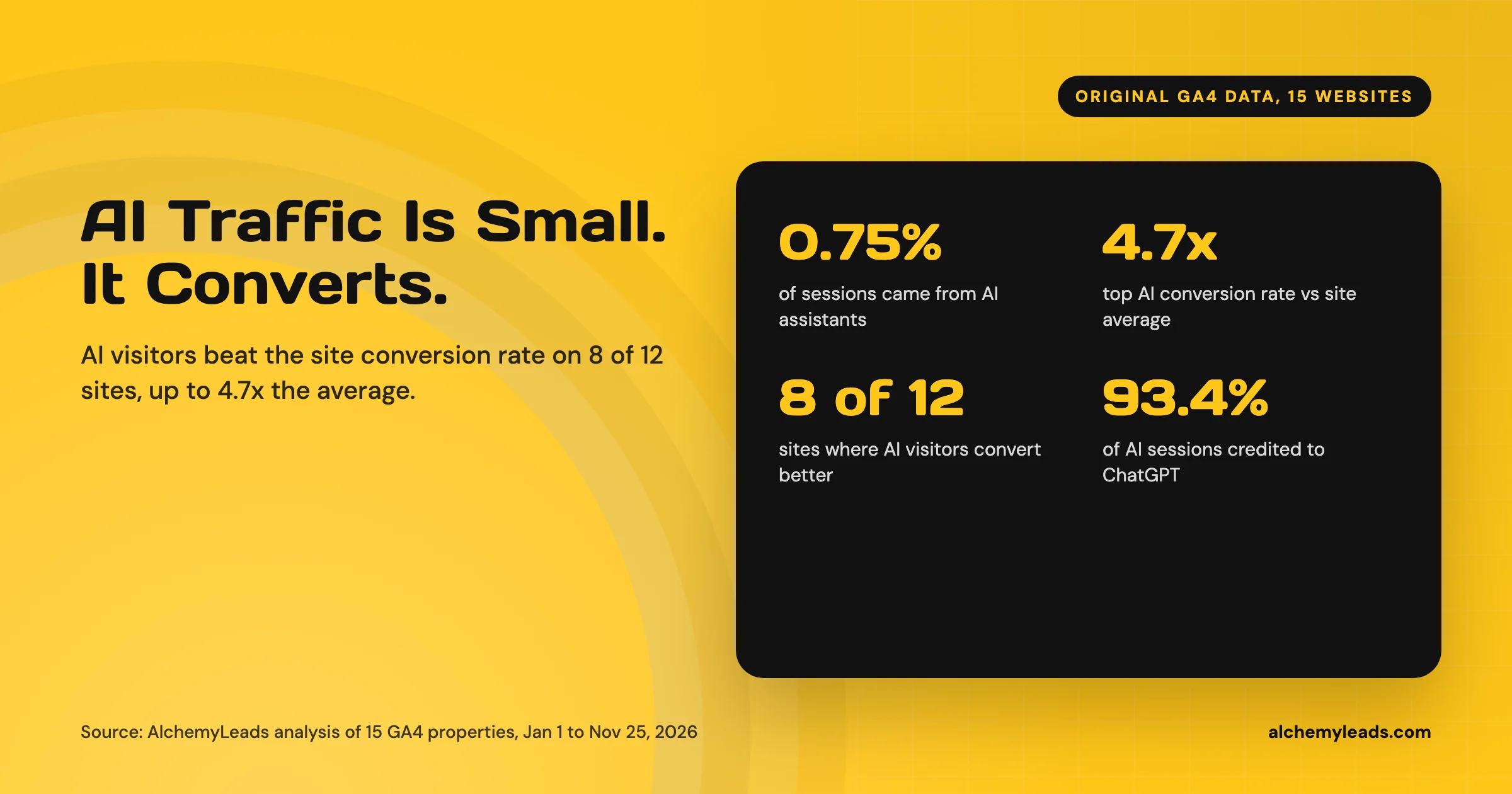
AI Search Traffic Is Under 1% of Visits. It Converts Up to 4.7x Better.
GA4 data from 15 websites: AI search sent 0.75% of sessions, but AI visitors converted better on 8 of 12 sites, up to 4.7x the site average. Here is why ChatGPT gets the credit and every AI platform is undercounted.
November 26, 2026
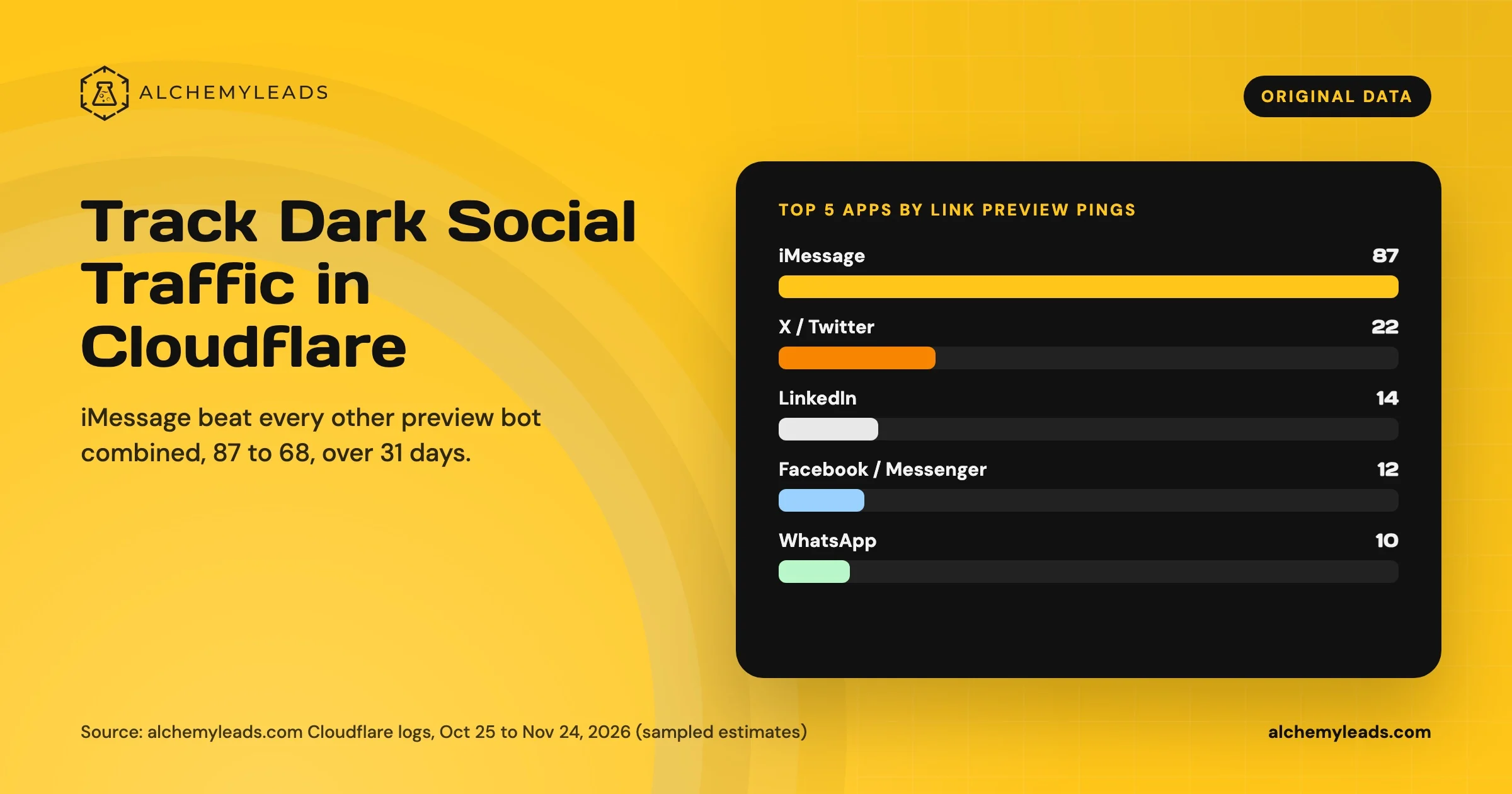
How to Track Dark Social Traffic With Cloudflare Logs
Link preview bots tell you which apps people use to share your pages. Our 31 days of Cloudflare data, the user agent table, the noise to filter and the setup steps.
November 25, 2026
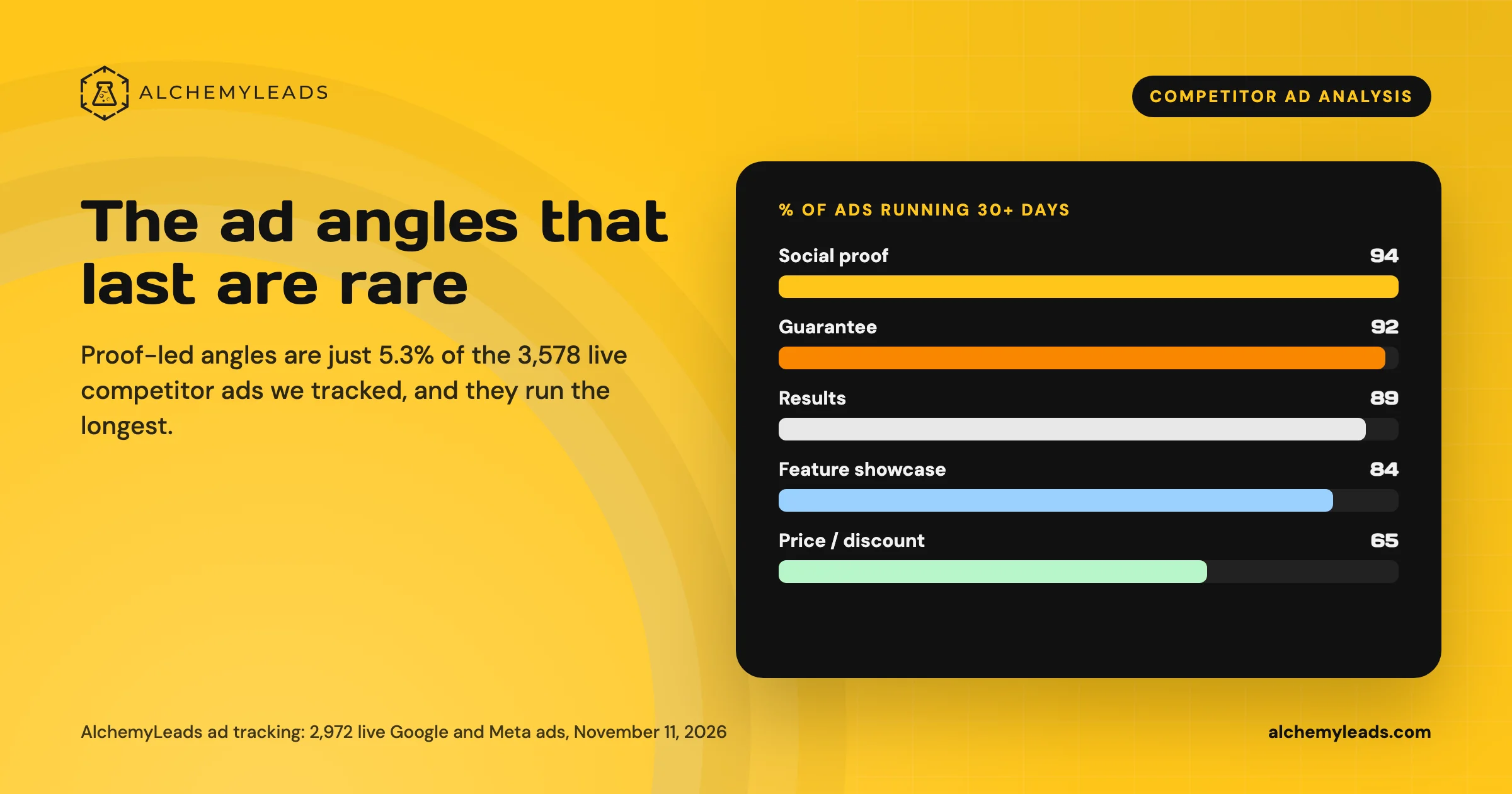
Competitor Ad Analysis: What 3,578 Live Ads Say About the Creative That Lasts
We tracked 3,578 live competitor ads on Google, Meta and LinkedIn. Proof-led angles are the rarest and run the longest. See the data and the playbook.
November 11, 2026
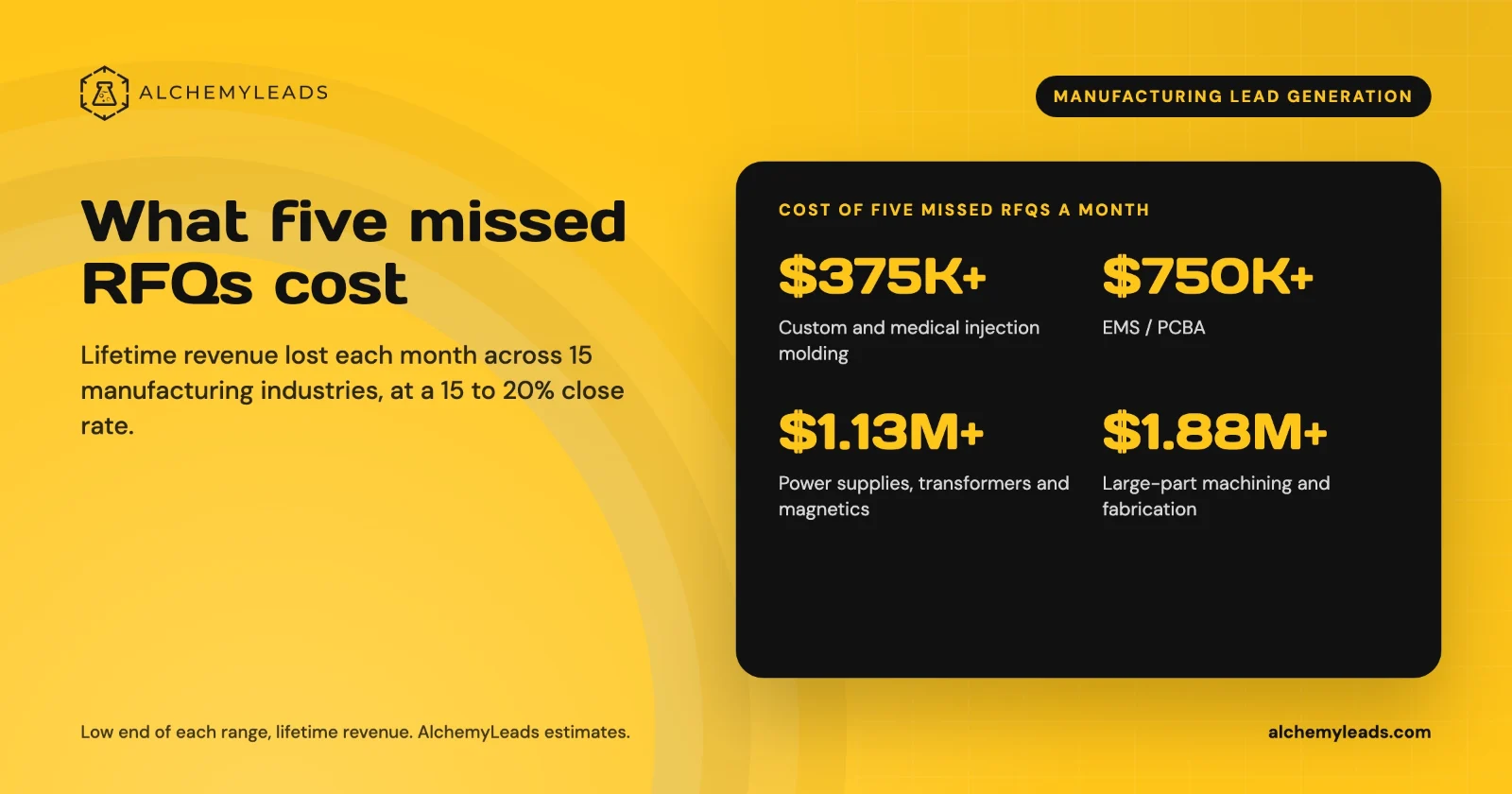
The Cost of Inaction in Manufacturing Lead Generation: What Five Missed RFQs a Month Cost in 15 Industries
What five missed RFQs a month cost across 15 manufacturing industries, with a cost of inaction calculator.
October 27, 2026
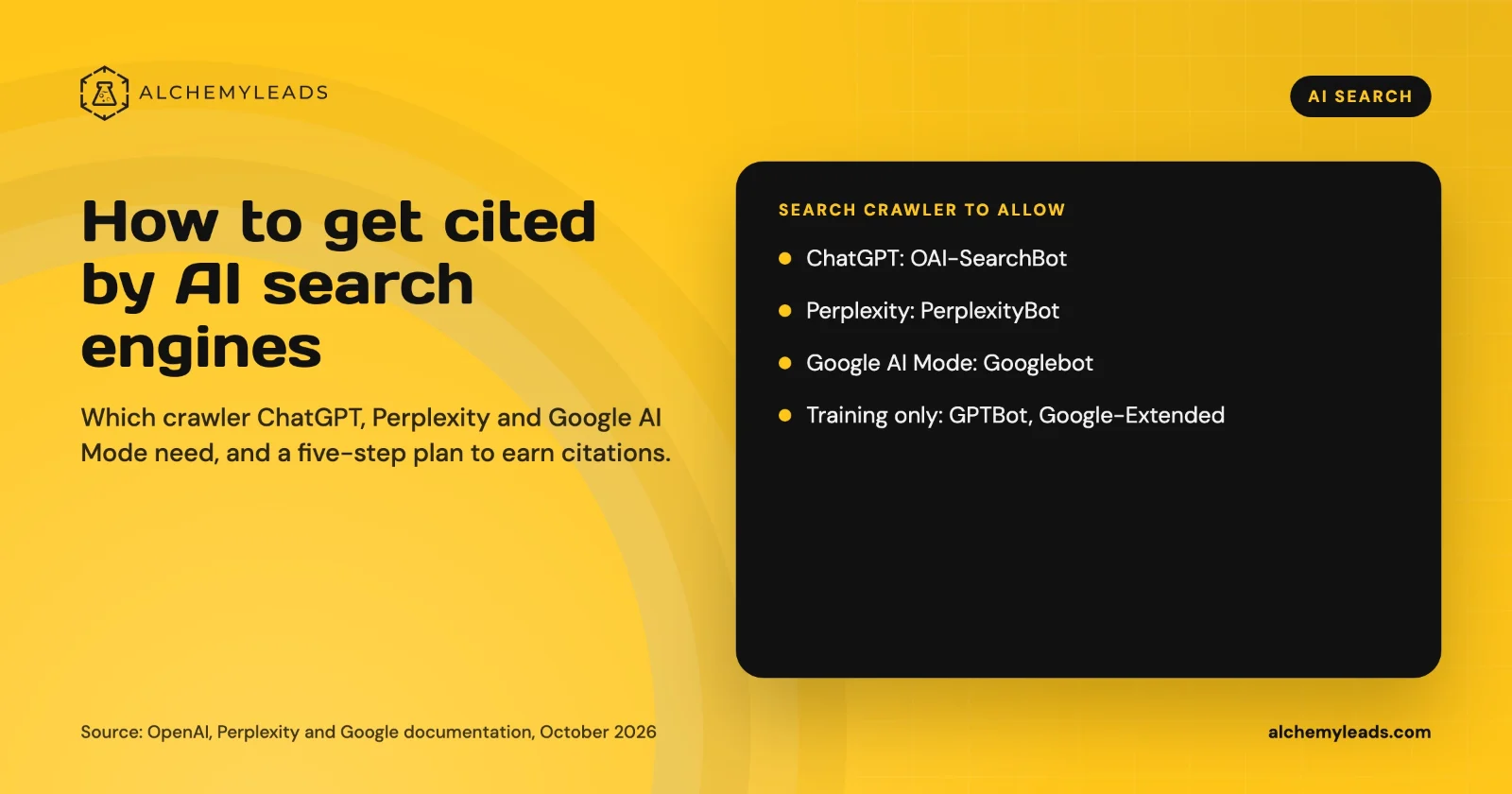
How to Get Cited by ChatGPT, Perplexity and Google AI Mode
How ChatGPT, Perplexity and Google AI Mode choose sources, which crawlers to allow, and a five-step plan to get your company cited, based on official docs.
October 26, 2026
Contact us
We value your privacy and won't share your email with others.
We'll only contact you with curated content.
