
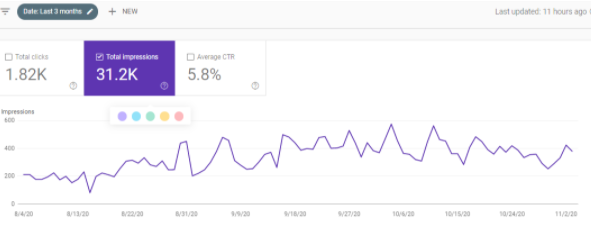
So you want to generate more traffic from Google, that’s a great idea but how exactly do you plan on going about it? When it comes to trying to squeeze more traffic out of Google, most people tend to immediately assume that they have to cook up some SEO wizardry or sink a ton of money into paid advertisements. Although leveraging SEO and paying for ads can certainly bring in some serious traffic, you can’t ignore the traffic potential of Google Discover.
Are you ready to start bringing in traffic like crazy without sinking a bunch of money into ads or wracking your brain trying to master the Art of SEO? Then settle in, because it’s time to learn about the advantages of Google Discover!
What Is Google Discover and What Can it Do for Me?
Although you may not have used Google Discover yet, you’ve probably seen it. Google Discover shows web pages in the form of cards which are located below the search box. If you click on a card, you will be directed to the corresponding website.
You can scroll through the cards just like a feed on a social media platform. The cards that you see on Google Discover will differ from the cards that other users will see. This is because the results are based on your own search history.
Why should you be interested in Google Discover when you can just play around scrolling through your Facebook feed? You should be interested in Google Discover because unlike your Facebook feed, Google Discover can make your traffic explode, in a good way.
Similar to social media posts, cards on Google Discover can get impressions which will boost their rankings. You should know that unlike the way stories are treated in Google News, high-ranking content on Google Discover isn’t limited to what was posted most recently.
Optimizing Your Content for Google Discover
The beauty of Google Discover is that it shows users what they want to see before they knew they’d want to see it themselves. As you are about to discover, no pun intended is how Google Discover can bring you more traffic than you’ve ever dreamed of without having to spend a dime on advertising.
Users don’t have to follow pages or trends to see cards in their feed. You’ll see personalized results that are engineered to suit your interests.
This means that in terms of generating traffic, Google Discover has done half of the work for you. If you can get your content featured prominently on Google Discover, that content will be delivered to the screens of people who have a delightfully high probability of actually being interested in it.
Now that you know more about how Google Discover can benefit your business by driving insane amounts of web traffic, it’s time to take a look at how you can make it happen. In order to benefit from the magic of Google Discover and revolutionize your traffic rates, you’ll have to start optimizing your content for Google Discover. Here’s an overview of what you should do to optimize your content for Google Discover specifically.
First and foremost you are going to need imagery that kills, seriously you need pictures that rock because Google Discover is going to look at them and take them into account when ranking your content. Written content aside, the first step towards getting a piece to rank well on Google Discover and tap in on that magic is to furnish it with a potent and enticing photo. You should only use photos of the highest quality and opt for images that command attention. A picture is worth 1,000 words, especially on Google Discover!
As for the text, you’ll have to make an effort to make your content a good match for the type of content Google Discover tends to favor. To optimize your content you’re going to want to take a look at the kind of topics that Google suggests to follow on Discover. Once you find suggested topics that relate to your business you can start producing content designed to get picked up by Discover.
Keep in mind, when producing content based on suggested topics quality and originality are paramount. You cannot just start hijacking topics and running content that says practically the same thing as a dozen other posts is a sure way to not rank well on Discover. Remember, be original, be creative, and never compromise on quality.
Another thing to keep in mind is that you need to focus on creating content that is shareable, and trendy with a potential for growth. Your content should address topics that people are actively talking about. Ideally, you need to identify important, popular, and relevant conversations and get your content in on the conversation. Once it’s in and is being talked about, it’ll get shared around and presto, you’ll have all the traffic you could ask for. Your aim in producing content should be to inform, educate, and amuse your customers with genuinely interesting information paired with an exemplary photo.
Finally, although you won’t need to lean heavily on SEO to benefit from Discover, you’re still going to have to make strategic use of keywords. It is considered to be good policy to generate a list of strategic keywords before writing the content in full.
In summary, here’s how you optimize your content for Google Discover in a nutshell.
- Choose relevant and attention-grabbing images.
- Use Google’s suggestions to identify topics.
- Generate a strategic list of keywords before writing the content.
Image Source: Pixabay
Analyzing the Traffic
After you’ve been producing content designed to rank well on Discover, you should start looking at the data to see if it’s making a difference.
While you might be accustomed to using Google Analytics, Google Search Console will be your weapon of choice when analyzing your efforts on Discover.
You’ll start by accessing your Google Search Console account and navigating the drop down menu on the left side of the screen. Hit the button titled, ‘Discover’ from the drop down menu to access the data. It’s worth noting that you will only be able to see and click on it if you have successfully generated a sufficient amount of traffic via Discover.
If you don’t see results don’t be alarmed, you should see the traffic as your content is posted which means you’ll see it in short yet voluminous bursts. For example, if you post your content on a Wednesday, you should check the data on Wednesdays.
Collecting and analyzing the data on increases in your web traffic via Google Discover can help you keep track of how well you’re doing. It may also be prudent to compare increases in web traffic that were generated from content featured on Google Discover versus traffic that resulted from paid advertisements. The key is to find the sweet spot where your web traffic from your interactions with Google Discover exceeds the amount of traffic that came from your ads. Once you’ve hit that threshold you’re golden.
Final Tips on Benefitting From Google Discover
Well there you have it, you now have enough info to get started on making content that both Discover and your customers will love. Even if you don’t use Discover on a daily basis in your personal life, you should become intimately familiar with it in your professional life because it’s not going anywhere soon. Google Discover has proven itself to be an extremely valuable marketing channel which means it’s something that you should be taking advantage of like crazy.
As a marketer, it’s important to have as many effective marketing channels to leverage as possible. Without enough channels to funnel your content, traffic can dry up fast. In today’s uncertain economy with the pandemic constantly looming, diversifying your marketing channels has become more important than ever before.
Consumer behavior is changing, it’s evolving and adjusting to events as the pandemic unfolds. For now, however, one thing is for certain, and that’s the fact that unique marketing channels like Google Discover can revolutionize your business and keep the traffic flowing in without losing money. Many businesses in today’s panic-stricken market environment either don’t have the money to throw at advertisements or they’re too cautious to spend the money. With Google Discover, you can sit on your capital and either save it or reinvest it elsewhere as you see fit.
In the end, we all know that the channels that marketers use will keep changing, but we also know that some channels, like Facebook, were built to stand the test of time. Google Discover looks very promising indeed, and businesses should be getting in on the action while it’s hot.
If you need any guidance on how to make the most of Google DIscover, get in touch with the digital marketing masters at AlchemyLeads, recently named one of the best seo companies in Los Angeles.
Suggested

Our Ahrefs Health Score Went From 74 to 96. Here’s What Our AI SEO Agent Found.
Seven problems our AI SEO agent found on our own site, from leads GA4 never recorded to 195 pages linking through redirects, and how we fixed them.
October 8, 2026

How Our AI SEO Agent Cleared 1,186 Schema Errors in One Day
How our AI SEO agent and team took a Shopify store from 1,186 structured data errors, 12 404s and 155 broken links to zero in one day.
October 8, 2026

How to Integrate HubSpot and Tripleseat: Lessons From 9 Builds
A step-by-step guide to connecting HubSpot and Tripleseat: forms, OAuth 2.0, field and stage mapping, multiple locations, documents and monitoring, with real lessons from nine production integrations.
October 4, 2026
Answer-First Content: The Inverted Pyramid (∇) for AI Search
The inverted pyramid (∇) puts the answer first and the detail after. Here is how answer-first writing serves busy buyers and AI systems that quote short passages, with examples, common mistakes, and a checklist.
October 3, 2026

Retrieve-for-Train explained: how Google Research is speeding up AI search fan-out
Google Research’s Retrieve-for-Train method trains a small diffusion model to fan out search queries in one pass. Here is how it works, what it reports, where it stops, and our cautious read for brands.
October 3, 2026
Contact us
We value your privacy and won't share your email with others.
We'll only contact you with curated content.
