
Managing hundreds or thousands of keywords across your marketing campaigns feels like organizing scattered puzzle pieces without seeing the whole picture.
If you’re experiencing the same problem above, you’re still doing traditional keyword research, which leaves you with massive spreadsheets of disconnected terms. This approach makes creating focused, high-impact content that drives revenue nearly impossible.
However, through keyword clustering, you can transform this chaos into a strategic advantage that boosts your search visibility and converts more effectively.
Let’s explore how this advanced search engine optimization (SEO) technique can revolutionize your content strategy and deliver measurable results.
What is Keyword Clustering?
Keyword clustering transforms scattered keyword research into organized groups based on semantic relationships and user intent.
Unlike basic keyword research that creates endless lists, clustering creates meaningful connections between terms that target similar search goals. For example, “best coffee machines,” “top espresso makers,” and “coffee maker reviews” naturally belong together because they serve users looking to make a purchase decision.
While a page can still have a primary keyword, a keyword clustering strategy allows it to have secondary keywords to target with.
This systematic approach helps identify which related keywords deserve their dedicated content pieces versus those that can be effectively targeted together.
Think of it as sorting ingredients in your kitchen – while salt and pepper might go together on the same shelf, you wouldn’t store your coffee beans next to your cleaning supplies!
Why Keyword Clustering Matters for SEO
The impact of keyword clustering extends far beyond basic organization.
Search engines have grown increasingly sophisticated in understanding the relationships between search terms and user needs. When you group keywords, you align your content strategy with how a search engine like Google or Bing processes and ranks information.
Consider a business selling ergonomic office furniture. Rather than creating separate pages for “ergonomic desk chair,” “best chair for office work,” and “comfortable desk chairs,” clustering helps identify that these terms share the same user intent.
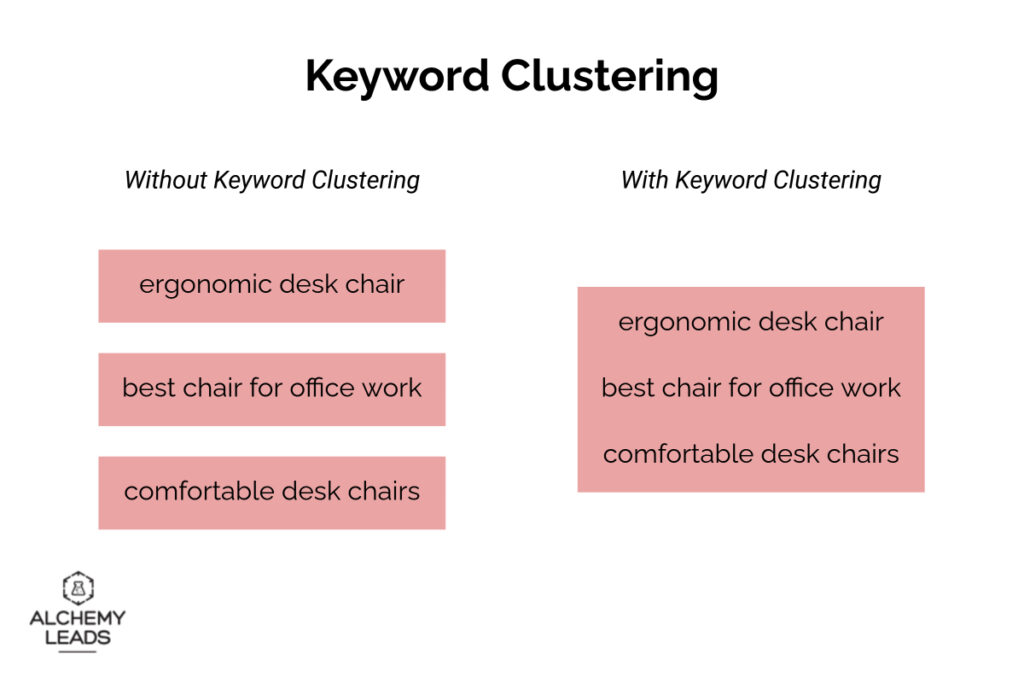
This insight allows for comprehensive content that thoroughly addresses the topic while avoiding cannibalization issues where multiple pages compete for the same rankings.
The financial implications are also significant. You reduce content production costs by consolidating your efforts around appropriately clustered keywords.
Instead of creating multiple pages targeting individual keywords identical to each other, you create a single comprehensive post targeting multiple searches simultaneously. This approach increases the likelihood of your page ranking well for multiple related terms of search engine results pages (SERPs).
Keyword clustering is also vital in creating a pillar page for your topical map. You want to create an all-encompassing page that covers a specific topic in depth.
By identifying the page’s topic coverage, you can optimize the content for multiple keywords, elevating not only your pillar page but your entire topical map on top of organic search! We will discuss more about this later.
The Relationship Between Keyword Clustering and Search Intent
Understanding search intent transforms keyword clustering from a mechanical exercise into a strategic advantage.
Each cluster should represent a specific type of search intent – informational, commercial, transactional, or navigational. This alignment ensures your content meets user expectations and delivers value that converts.
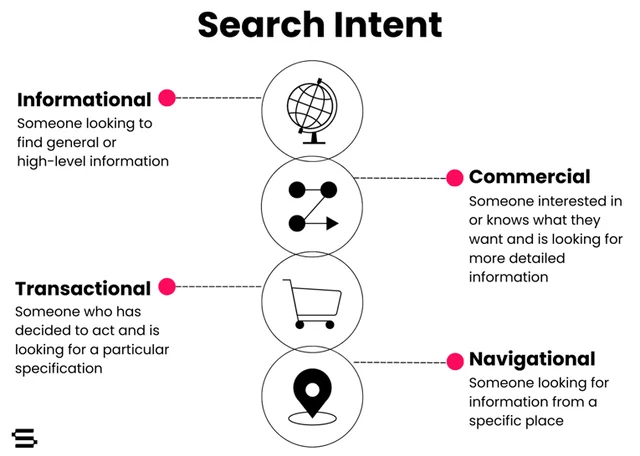
Consider how different intents might appear within a single topic. A cluster around “SEO tools” might separate into distinct intent-based keyword groups:
- Informational – “how do SEO tools work,” “types of SEO tools”
- Commercial – “best SEO tools 2024,” “SEO tool comparison”
- Transactional – “SEO tools pricing,” “buy SEO software”
By recognizing these intent patterns, you can structure your content to match exactly what users seek at each stage of their journey. This precision targeting increases engagement rates and improves conversion potential by delivering the right information at the right time.
Tools and Methods for Keyword Clustering
Effective clustering combines automated tools with strategic analysis. While tools handle the heavy lifting of identifying patterns across large datasets, your expertise guides the final grouping decisions.
First, you need a keyword research tool like the one found in SE Ranking. Enter your seed keyword and check similar or related search queries identified by the tool.
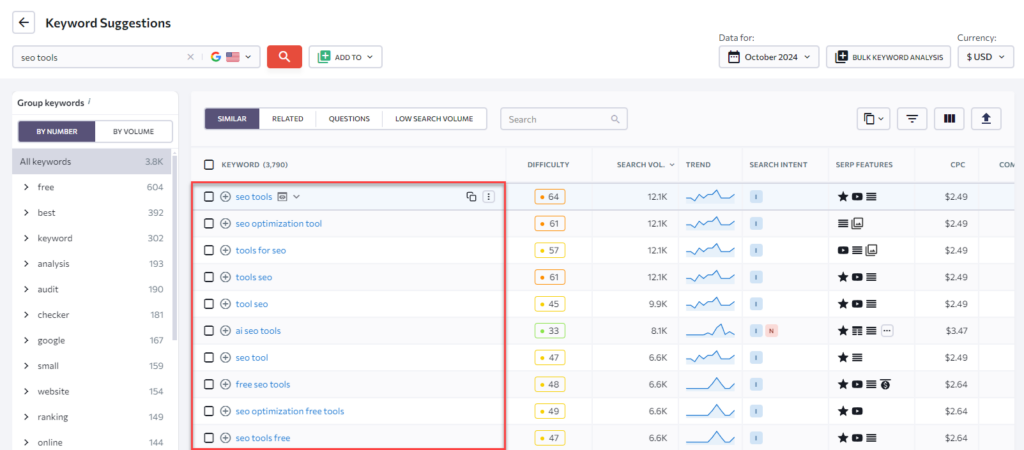
Export the keyword list so you can properly cluster them. This process, also known as keyword grouping, identifies similar keywords and groups them into clusters.
Also, it’s possible to create multiple clusters from this process, enabling you to create content with the best possible chances of ranking and attracting organic traffic.
Keyword clustering tools like KeyClusters and SEMrush’s Topic Research provide clustering features that analyze search intent patterns and SERP similarities.
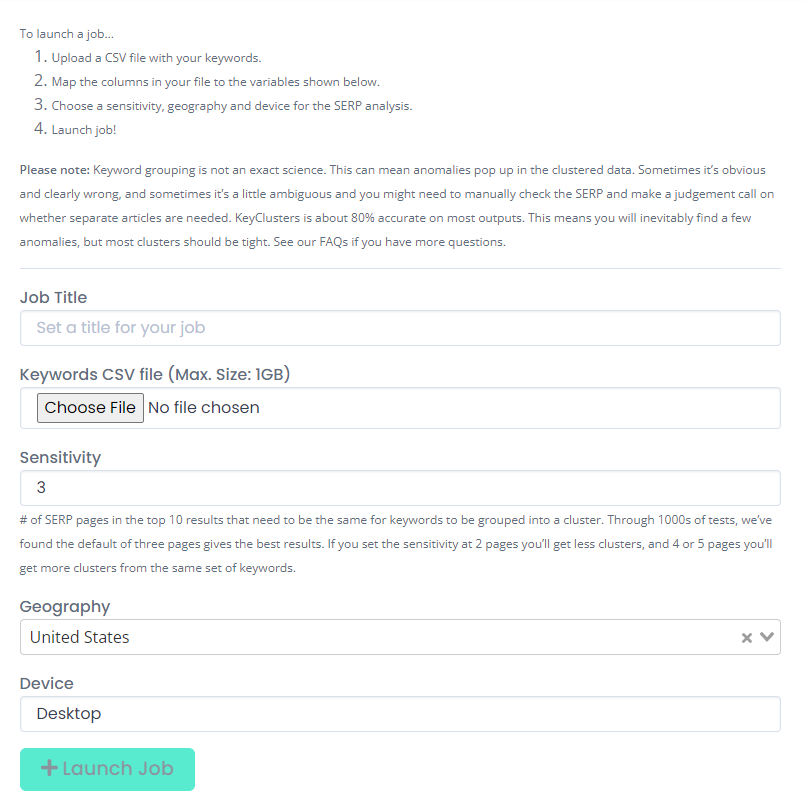
However, you can also use ChatGPT or similar to help you group similar keywords.
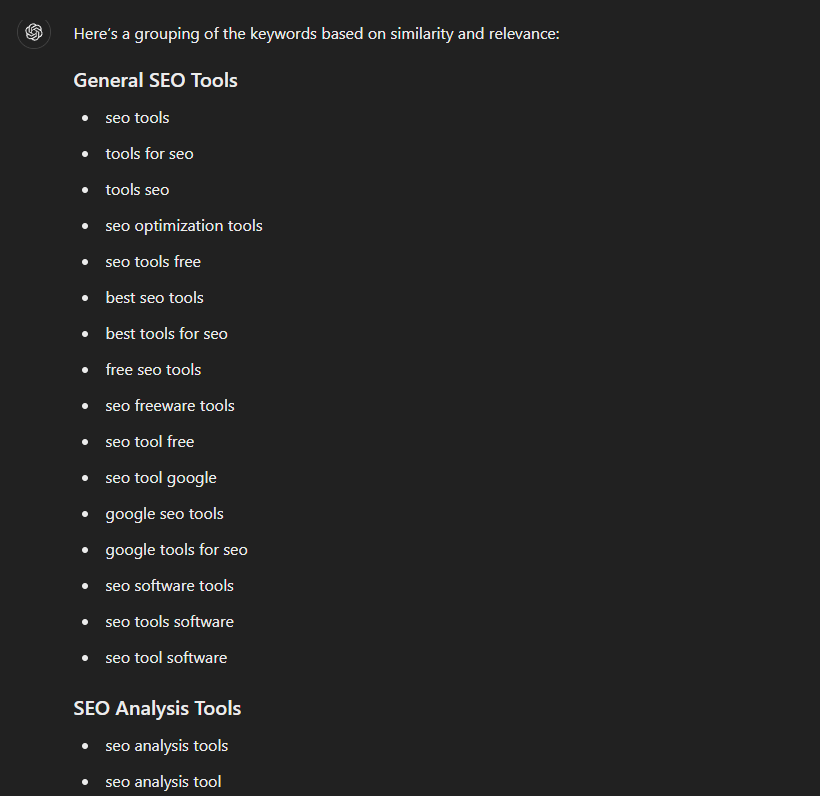
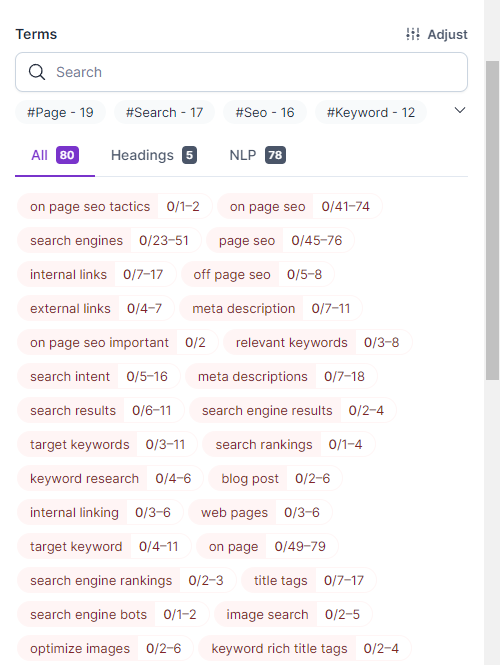
When creating content after grouping keywords, also consider using natural language processing (NLP) keywords. They help improve the content’s topical spread, enabling you to tackle subtopics and making the page more useful to its target audience.
Tools like Surfer SEO let you identify what these NLP keywords are in its Content Editor feature.
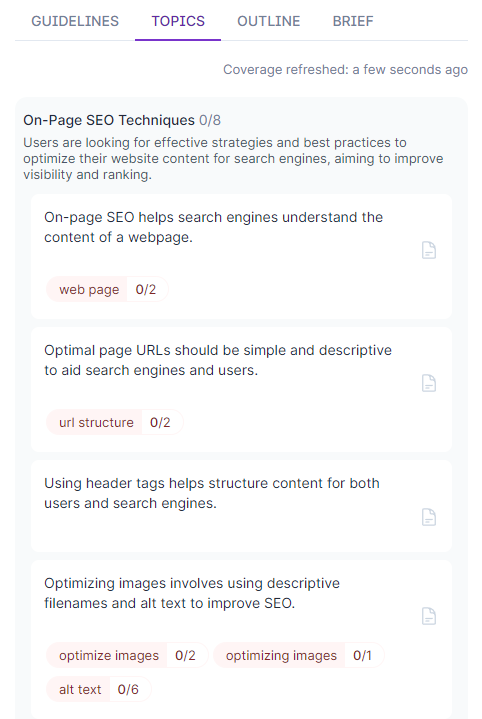
It also has a new Topics feature that identifies specific topics to cover in the content, not just keywords.
Metrics to Consider When Clustering Keywords
Clustering related keywords into actionable insights requires focusing on key metrics:
- Search volume distribution within clusters – This helps determine content depth and resource allocation. High-volume clusters often justify creating comprehensive content hubs, while lower-volume clusters might work better as supporting articles.
- Competition analysis across clustered terms – It reveals strategic entry points. Sometimes, targeting lower-volume terms within a valuable cluster provides faster results while building authority for more competitive terms.
- Historical ranking – This data adds another crucial layer to your analysis. By examining how your site previously ranked for terms within each cluster, you can identify patterns that inform future optimization efforts. Sites implementing data-driven clustering strategies typically see an improvement in ranking positions across their target clusters within the first six months.
Examining these metrics across your clusters reveals strategic opportunities. They help you identify which clusters to prioritize based on their high search volume keywords and competition.
Implementing Keyword Cluster Process in Content Strategy
Converting keyword clusters into effective content requires strategic planning and systematic execution.
As mentioned, identify existing content in your site that you can assign to specific clusters so you don’t have to recreate them from scratch. An SEO audit often reveals that most existing content could benefit from consolidation or expansion based on cluster insights.
You can also check Google Search Console to see pages attracting many clicks and impressions from search results.
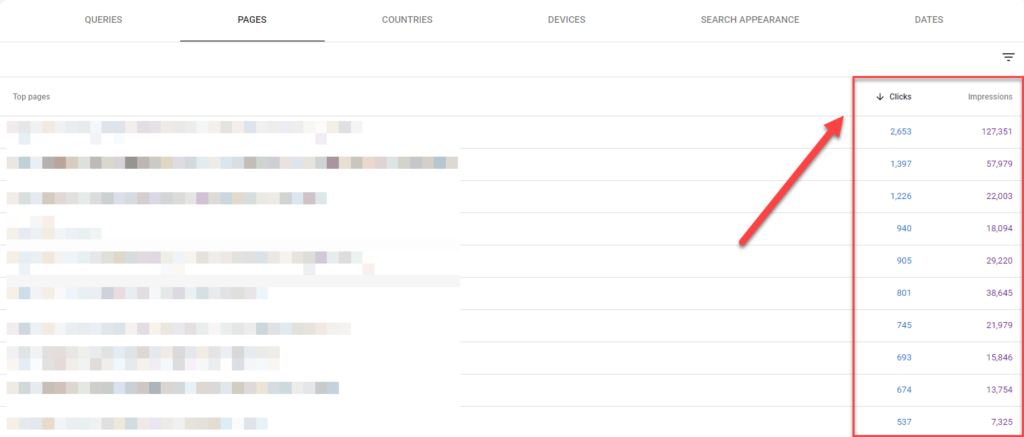
If they don’t belong to a cluster on your site yet, be sure to include them in your upcoming one.
Strategic content frameworks emerge from well-researched clusters. Rather than creating isolated pieces, develop content that comprehensively covers each cluster’s topics and subtopics. A single cluster might spawn multiple content pieces that work together.
Integration with Topical Maps
Keyword clusters serve as building blocks for broader topical maps. Each cluster contributes to your site’s expertise in specific subject areas.
Consider how clusters interconnect to form comprehensive topic coverage. For instance, clusters around “social media marketing” might connect with clusters about “social media marketing courses,” “social media platforms,” and “social media marketing for industries” to establish authority in digital marketing.
You can further expand your topical map to create yet another topical map for “social media marketing for industry” like the one in the image below:
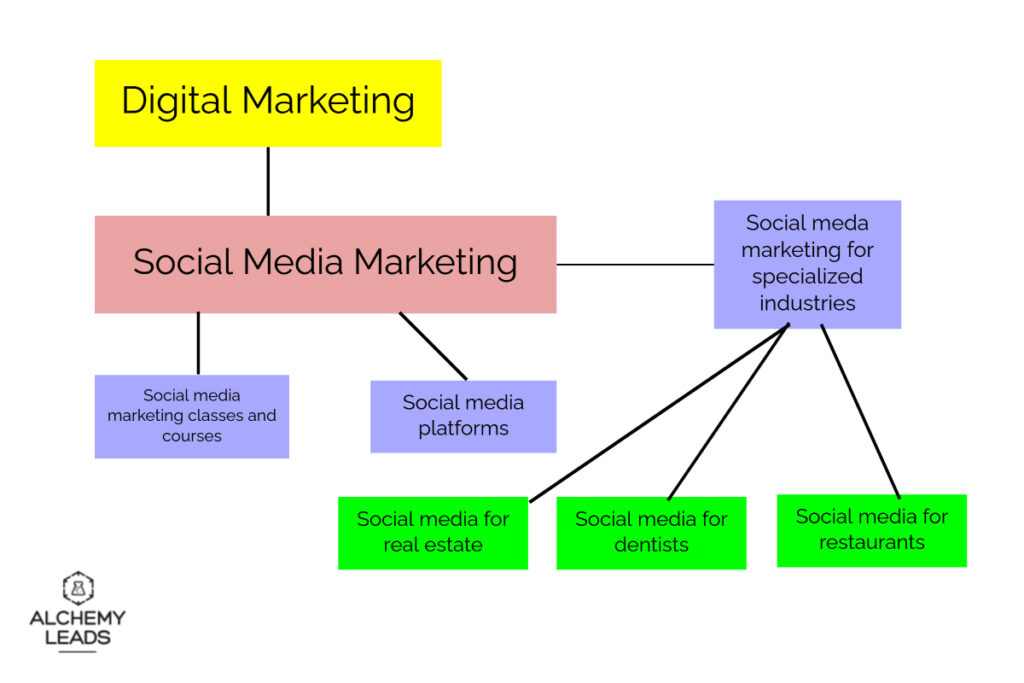
You can create extensive topical maps by extracting keyword ideas and clustering similar search queries. From here, implement strategic internal linking to help Google crawl the pages much more accessible and help its search spiders understand the existing relationships among the pages on the map.
The resulting structure for your SEO content strategy using your preferred keyword clustering tool provides clear navigation paths for users while signaling topical expertise to search engines.
Conclusion
Your success in search rankings directly correlates with how effectively you organize and target your keywords. Implementing keyword clustering strategically transforms scattered keyword lists into powerful content opportunities that drive measurable results. Through proper clustering techniques, businesses typically achieve marked improvements in organic visibility across their target topics.
However, maintaining and scaling these clustering efforts as your content library grows is the real challenge. This is where our professional Topical Mapping Services provide exceptional value. By partnering with experts who understand the intricate relationships between keywords, topics, and user intent, you can accelerate your path to topical authority while avoiding common pitfalls.
Our Topical Mapping Services help you:
- Transform raw keyword data into actionable content strategies
- Identify high-value cluster opportunities your competitors miss
- Create sustainable frameworks for ongoing content development
- Build genuine topical authority that drives sustained ranking improvements
Your next steps to leverage keyword clustering effectively:
- Audit your current keyword strategy to identify clustering opportunities
- Schedule a consultation to discuss your specific clustering needs
- Develop a customized topical mapping plan that aligns with your business goals
Take control of your SEO strategy through expert keyword clustering. Contact us to learn how our Topical Mapping Services can help you achieve and maintain stronger search rankings that drive revenue growth.
Suggested

Revenue First SEO
The New SEO Approach for Ecommerce Growth Rising CPCs. Saturated ad platforms. Customer acquisition costs climbing quarter after quarter. For ecommerce and B2B brands, the math on paid media keeps getting harder. And the question more marketing leaders are asking: where does organic search fit into a sustainable growth strategy? Our Founder & CEO addressed many of these questions
February 24, 2026

HubSpot TripleSeat Integration
HubSpot TripleSeat integration solves a major problem for event venues and hospitality businesses. Most companies lose track of where their leads come from when forms bypass their marketing system, or they lose track of invoices and sales pipeline when sales tools are siloed. This breaks the connection between ad spend and actual bookings. The result? Wasted marketing budgets and poor
February 23, 2026

B2B Facebook Ads: Ultimate Marketing Strategy
Despite Facebook’s popularity as one of the best advertising platforms, many B2B businesses still hold back from advertising on Facebook. According to Statista, 91% of B2C marketers run Facebook ads, while 86% of B2B marketers use LinkedIn. This post will examine why some B2B marketers avoid Facebook ads, their effectiveness, and how to create winning B2B Facebook ads. An Overview
February 23, 2026
How To Create Win Back Customer Segments in Shopify
Here’s the thing about ecommerce: you spend a fortune acquiring customers, and then they ghost you. No explanation. No goodbye. Just radio silence. The good news? Most haven’t sworn off your brand forever. They’re just distracted. And bringing them back costs way less than finding new customers (we’re talking 5x cheaper). This guide shows you exactly how to create win-back
February 23, 2026

Query Fan Out for GEO: AI-First Search Optimization
Query fan out drives significant improvements in search visibility for businesses that implement it correctly. This AI search technique expands single queries into 5-15 related searches behind the scenes. Traditional SEO targets individual keywords. Smart businesses now dominate entire topic clusters through query fan-out tactics. This guide shows you the exact methods we use to help clients capture traffic they
February 23, 2026
Contact us
We value your privacy and won't share your email with others.
We'll only contact you with curated content.
