
Are your SEO efforts falling short despite targeting all the right keywords?
Many businesses struggle to achieve meaningful search rankings because they focus on individual keywords rather than building comprehensive topic coverage.
Topical map SEO offers a strategic approach to organizing your website content and establishing true topical authority that search engines recognize and reward. Keep reading to find out more about your next SEO content strategy to implement on your site!
Fundamentals of Topical Maps
A topical map refers to a strategic organization of content that demonstrates expertise across an entire subject area.
Search engine algorithms have evolved beyond simple keyword matching to evaluate content based on topical relevance. Now, they are interested in looking at how much you’ve covered the topic on your site.
When you create a topical map, you’re essentially building a visual representation of how your content pieces connect and support each other, forming a logical structure that users and search engine crawlers can easily navigate.
This approach helps your website achieve topical authority. By extensively covering topics relevant to your industry and niche, you inform search engines that you are an industry authority (provided that the content you created is expertly written).
As a result, Google, Bing, and other search engines reward your site by ranking your page high on search results for your target keywords.
An effective topical map is closely related to semantic SEO; the relationship between the two creates a powerful framework for achieving higher search engine rankings.
Components of Topical Authority
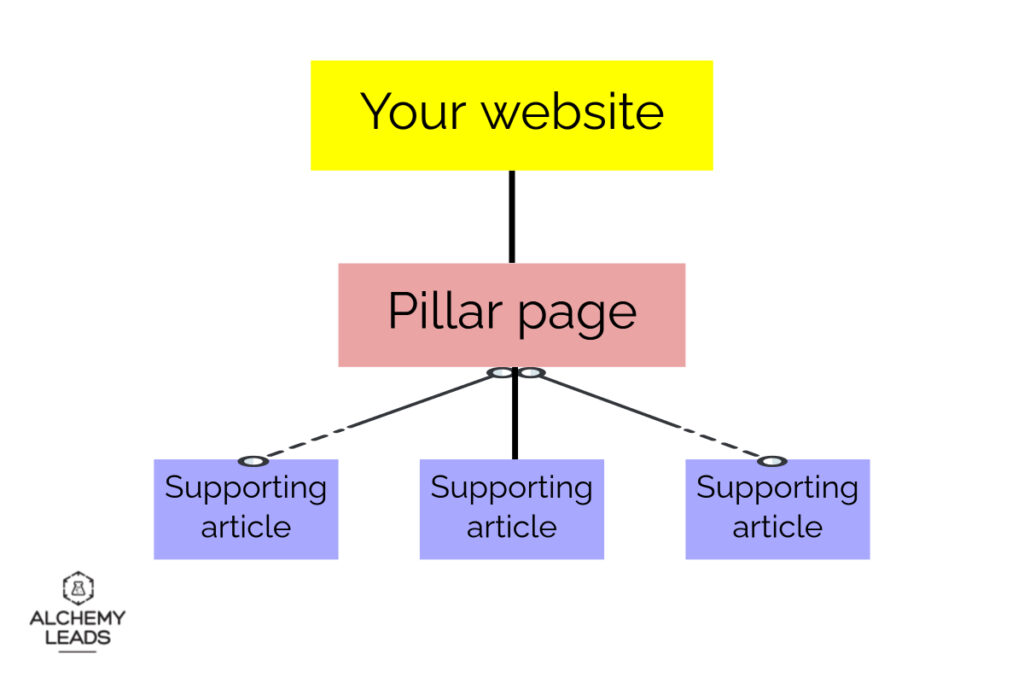
Gaining topical authority involves creating interconnected content that demonstrates deep expertise. Let’s examine the primary elements that contribute to establishing authoritative topical coverage.
Pillar Page
A pillar page is the cornerstone of a topical map or topic cluster. It is a comprehensive, authoritative piece of content that covers a broad topic in-depth and acts as the central hub for related subtopics.
The pillar page is designed to provide a complete overview of the subject, answering key questions and addressing significant aspects that users might be interested in.
The pillar page’s foundation of a topical map is its ability to establish a central theme around which related content can be organized.
The pillar page creates a network of interconnected content by linking to supporting articles that delve into specific subtopics. This structure enhances the user experience by guiding them through a logical flow of information and helps search engines understand the relationships between different pieces of content.
Supporting Articles
Supporting articles provide detailed insights and additional information that complement the overarching topic, enhancing the depth and breadth of content coverage.
By addressing niche keywords and related queries, supporting articles help reinforce the topical relevance of the entire content cluster.
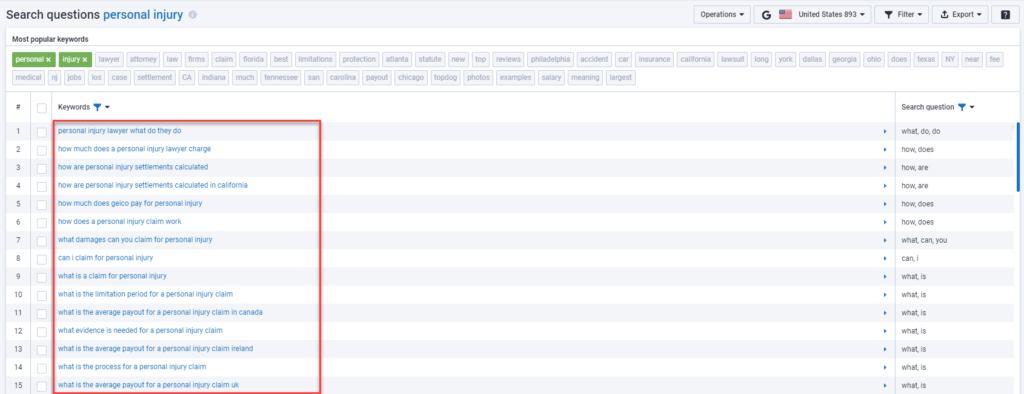
To effectively create supporting articles, conduct thorough keyword research using tools like Serpstat and other SEO tools. In particular, find question keywords from your seed keyword (the topic keyword of your pillar page).
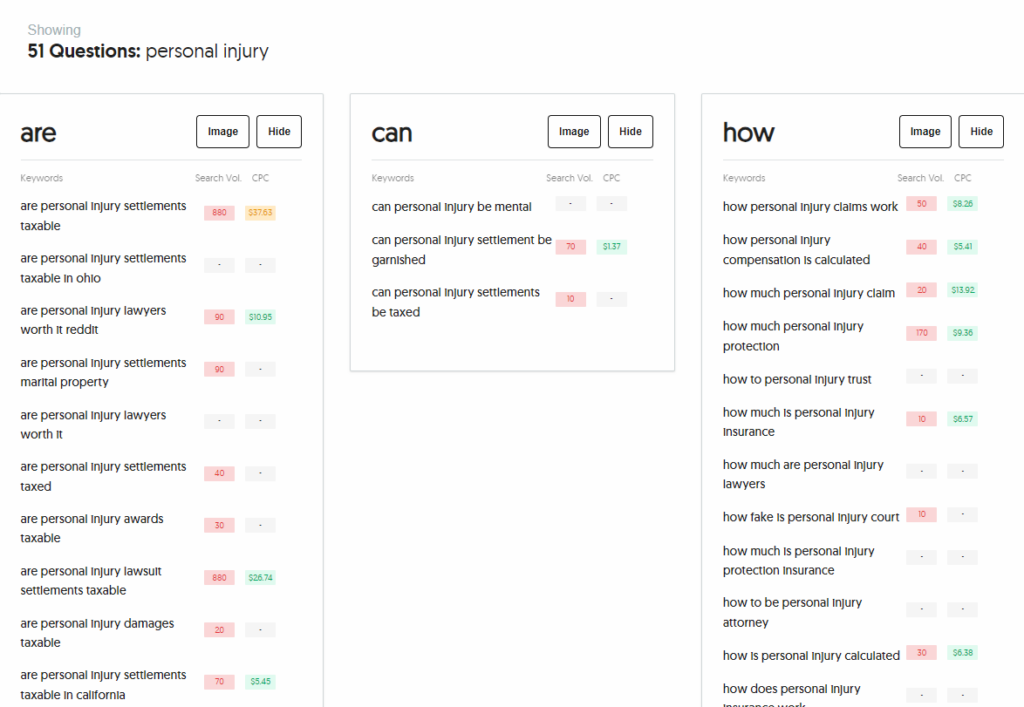
Another tool that you can use here is Answer the Public. It provides you with a visual representation of the topics your supporting articles should cover along with their search volume.
Hyperlinks
Hyperlinks, particularly internal links, are vital in establishing connections between various pieces of content on your site.
In the context of topical maps, internal links help reinforce the relationships between different topics and subtopics. They ensure supporting articles are connected to the pillar page, forming a cohesive network of related content.
They create pathways that guide both users and search engine crawlers through your content, enhancing the overall user experience and search engine understanding of your site structure.
This not only aids in achieving topical authority but also improves user engagement by making it easier for visitors to navigate through relevant information.
The best internal linking strategy for topical mapping involves creating a logical structure where each piece of content is strategically linked to others within the same topic cluster. Use descriptive anchor text that accurately reflects the linked page’s content, incorporating relevant keywords where appropriate.
Use Serpstat again to find related keywords to your target keywords for each page.
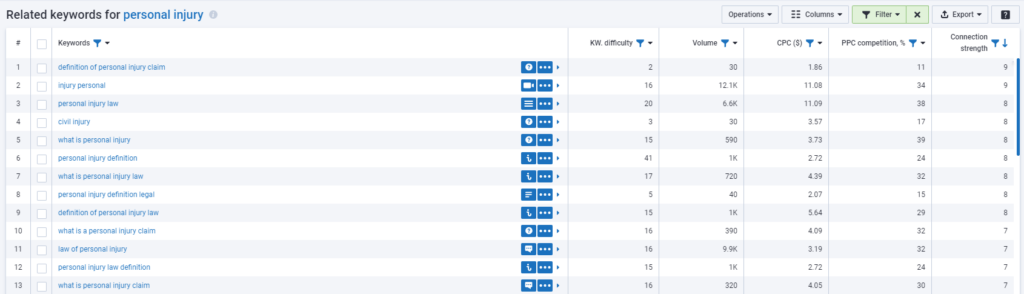
This enables you to brainstorm keyword ideas to diversify your anchor text and avoid using the same anchor text pointing to the same point, which is a red flag for Google.
Implementation Strategies
Implementing a topical map strategy requires careful attention to technical and content-related elements. The following subsections outline key approaches to maximize SEO efforts through proper implementation.
Internal Linking Structure
An effective internal linking strategy strengthens your topical authority by creating clear connections between related content.
Strategic internal linking goes beyond simply connecting pages—it involves creating a hierarchy that meaningfully guides both users and search engine crawlers through your content.
This means you can’t link to pages and articles in the same map just because. You need to establish the logic in your internal linking efforts to maximize their SEO impact.
Kyle Roof advocates for the reverse silo interlinking strategy.
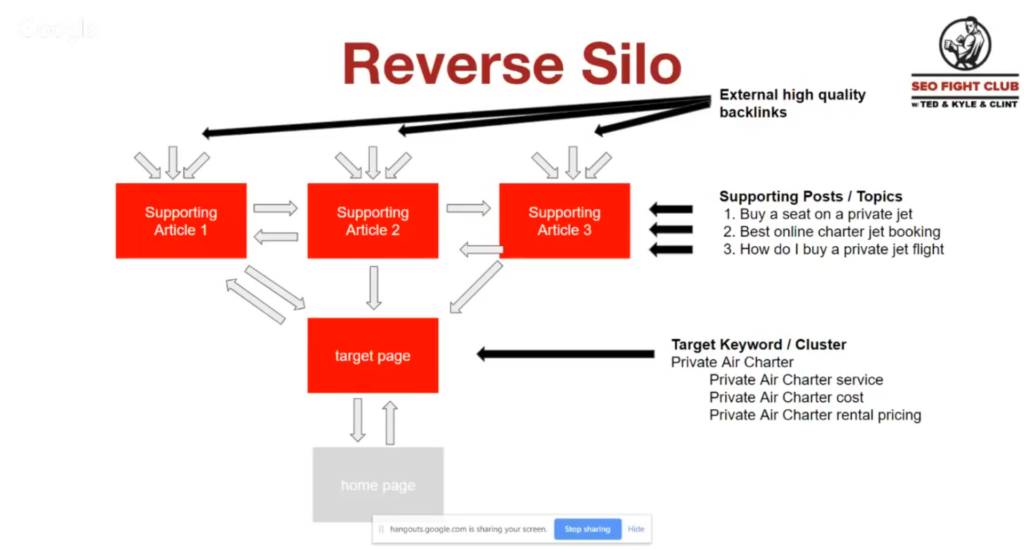
In this approach, all supporting articles point to the pillar page, which only points to one article. The supporting articles link to each other in a daisy chain, ex. article 1 links to articles 2 and 3, article 2 links to articles 1 and 3, and so on.
The great thing here is that this isn’t the only approach you can take. There’s a structure in which the pillar page links to all supporting articles and vice versa.
Test which strategy makes sense to your topical map, stick with it and monitor the results.
Content Development
Content development for topical authority requires a balanced approach to depth and breadth.
Successful content planning starts with SERP analysis to identify content gaps in your coverage. By analyzing competitors in relevant search results, you can discover opportunities to create content that better serves user intent and provides more comprehensive information than competing pages.
At the same time, your website content should thoroughly cover the main topics while addressing related queries that your target audience might have.
This is where your semantic SEO strategy comes into play. You need to extract natural language processing (NLP) keywords for your target keyword query and naturally incorporate them into the content.
Tools like Frase and Marketmuse lets you extract these queries to include in your website’s content.
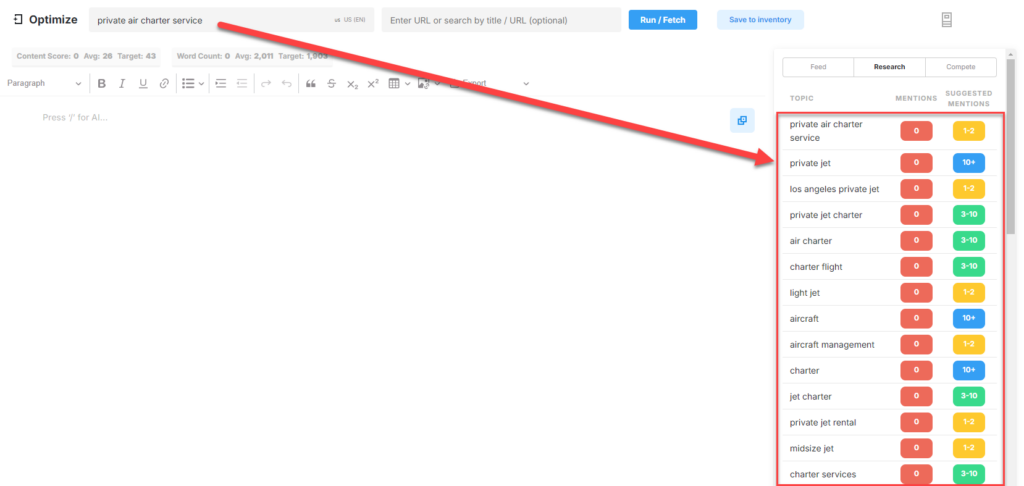
They use information from pages ranking on search engine results pages (SERPs) for your target keyword and extract NLP keywords and entities that you should mention in your content. This allows you to create content optimized for search engines, which makes your topical map even more effective.
Measuring Success
Tracking your SEO success is usually associated with basic keyword rankings, but it’s more than that nowadays.
When you create content based on a comprehensive topical map, focus on analyzing organic traffic patterns and how users interact with your interconnected content.
User engagement metrics provide valuable insights into how well your content serves visitor needs. Monitor metrics like time on page, bounce rates, and navigation patterns between related pages to understand if your topical structure resonates with your audience.
Topical authority refers to your site’s overall influence within specific subject areas. Tools that measure domain authority and topic relevance can help quantify your progress in establishing expertise across key topics.
Google Search Console offers essential data about how search engines understand and rank your content. Regular analysis of search rankings, click-through rates, and impression data helps identify areas where your topical coverage might need enhancement.
Integrating various SEO tools provides a complete picture of your topical authority. These platforms can help find related queries, analyze keyword difficulty, and identify opportunities to expand your content coverage.
Traffic analysis platforms reveal how users navigate through your topical clusters. This data helps optimize your internal linking strategy and identify which content pieces drive the most targeted traffic.
Advanced Optimization
Ongoing refinement is essential to maintaining and improving your topical authority. The following approaches will help you enhance your existing topical content map and stay ahead of competitors.
Continuous Improvement
Content gaps naturally emerge as search patterns evolve and new topics arise. Regular analysis helps identify areas where your topical coverage needs expansion or updating to maintain relevance.
Updating existing content keeps your topical map fresh and valuable. This involves more than surface-level edits – look for opportunities to deepen coverage, incorporate new related entities, and strengthen connections between topics.
Expanding topic clusters requires careful planning to avoid diluting your site’s authority. Focus on creating logical content groupings that support your core topics while addressing emerging user needs.
Competitive Analysis
Industry benchmarking reveals how your topical coverage compares to leading competitors. Analyzing high-ranking sites in your niche can uncover opportunities to improve your own topical map and identify underserved areas.
SERP analysis provides insights into what search engines consider relevant content for specific queries. Study competing pages to understand how they structure information and cover related topics effectively.
Developing content differentiation strategies helps your pages stand out in search results. This might involve finding unique angles, providing deeper analysis, or addressing user intent more effectively than competitors.
Common Challenges and Solutions
Even experienced SEO professionals encounter obstacles when implementing topical mapping. Here are key challenges and practical solutions to overcome them.
Keyword Cannibalization
Managing content overlap requires careful planning to avoid cannibalization. Create clear boundaries between related topics while maintaining natural connections through strategic internal linking.
In particular, check if you’ve published content for keywords you plan on creating for your topical map before creating them to avoid this issue.
Resource Allocation
Resource allocation often presents difficulties when creating comprehensive topic coverage. Prioritize content development based on search volume and business impact while maintaining a steady pace of expansion.
Content Freshness
Maintaining freshness across your entire topical map demands consistent attention. Implement a regular content audit schedule to identify and update outdated information while preserving your established topical authority.
For instance, monitor pages that dropped organic traffic and optimize them for keywords where they lost the most traffic.
Scaling
Scaling strategies become crucial as your topical map grows. Develop systematic content creation and optimization approaches that maintain quality while expanding your coverage efficiently. In this case, consider expanding your topical map by creating a topical map within a topical map (use its supporting article as a pillar page and create supporting articles from it).
Conclusion
Building effective topical maps represents a crucial evolution in SEO strategy. By implementing the abovementioned approaches, you can create content structures that demonstrate true expertise to users and search engines.
Ready to elevate your SEO performance through strategic topical mapping? Our Topical Mapping Services help businesses achieve stronger keyword rankings and increased organic traffic through expert implementation of these proven strategies. Contact us to learn how we can help you build comprehensive topical authority in your niche and outperform competitors in search results.
Suggested

Revenue First SEO
The New SEO Approach for Ecommerce Growth Rising CPCs. Saturated ad platforms. Customer acquisition costs climbing quarter after quarter. For ecommerce and B2B brands, the math on paid media keeps getting harder. And the question more marketing leaders are asking: where does organic search fit into a sustainable growth strategy? Our Founder & CEO addressed many of these questions
February 24, 2026

HubSpot TripleSeat Integration
HubSpot TripleSeat integration solves a major problem for event venues and hospitality businesses. Most companies lose track of where their leads come from when forms bypass their marketing system, or they lose track of invoices and sales pipeline when sales tools are siloed. This breaks the connection between ad spend and actual bookings. The result? Wasted marketing budgets and poor
February 23, 2026
B2B Facebook Ads: Ultimate Marketing Strategy
Despite Facebook’s popularity as one of the best advertising platforms, many B2B businesses still hold back from advertising on Facebook. According to Statista, 91% of B2C marketers run Facebook ads, while 86% of B2B marketers use LinkedIn. This post will examine why some B2B marketers avoid Facebook ads, their effectiveness, and how to create winning B2B Facebook ads. An Overview
February 23, 2026
How To Create Win Back Customer Segments in Shopify
Here’s the thing about ecommerce: you spend a fortune acquiring customers, and then they ghost you. No explanation. No goodbye. Just radio silence. The good news? Most haven’t sworn off your brand forever. They’re just distracted. And bringing them back costs way less than finding new customers (we’re talking 5x cheaper). This guide shows you exactly how to create win-back
February 23, 2026

Query Fan Out for GEO: AI-First Search Optimization
Query fan out drives significant improvements in search visibility for businesses that implement it correctly. This AI search technique expands single queries into 5-15 related searches behind the scenes. Traditional SEO targets individual keywords. Smart businesses now dominate entire topic clusters through query fan-out tactics. This guide shows you the exact methods we use to help clients capture traffic they
February 23, 2026
Contact us
We value your privacy and won't share your email with others.
We'll only contact you with curated content.
