
Local SEO (local search engine optimization) is the practice of optimizing your online presence to rank higher in location-based searches, the results Google shows when someone looks for a product or service “near me” or in a specific city. It determines whether your business appears in the Google Map Pack, Google Maps, and the local organic results when nearby customers are ready to buy.
Unlike traditional SEO, which competes nationally, local SEO focuses on a defined service area and relies on signals like your Google Business Profile, online reviews, local citations, and proximity to the searcher. For brick-and-mortar shops, service-area businesses, and multi-location brands, it is often the highest-intent channel available, because these searchers are close by and ready to act. Below, we break down how local SEO works, the ranking factors that matter most, the tools to use, and a checklist to start ranking.
As a small business owner, you’ve poured your heart and soul into building your business, but attracting local customers and standing out in a crowded market can be challenging. It’s like being a needle in a haystack, waiting for someone to find you.
But there’s a secret weapon that can help you rise above the competition and become the go-to destination for local customers: local search engine optimization (SEO). In this guide, we’ll show you how to navigate local search optimization and make your business shine.
Why is Local SEO Important: Benefits for Businesses
Local SEO matters because a huge share of search has local intent, around 46% of all Google searches are looking for local information, and “near me” searches keep growing as more people use their phones to find nearby businesses. When you boost your visibility in local search results, you put your business on the map, literally: with a well-optimized Google Business Profile, you appear in Google Maps and the local pack when nearby customers are ready to buy.
When you claim your business on local directories and keep your information consistent, you build credibility and trust with potential customers. Local SEO acts like a magnet: by targeting relevant local keywords, you attract an audience that is actively seeking your services.
And it doesn’t just bring people to your physical location, it boosts your online visibility too. With customer reviews and local link building, you make it easier for potential customers to find and trust your business. The result is higher click-through rates, more conversions, and a boost in sales.
How Does Local SEO Work?
Local SEO works by signaling to Google that your business is a relevant, nearby, and trustworthy answer to a local search. Google blends three core signals to rank local results:
- Relevance: how well your business matches the searcher’s intent, driven by your Google Business Profile category, services, and on-page content.
- Distance: how close your business is to the searcher or the location named in the query. This is why ranking for “near me” searches comes down to local relevance and proximity, not repeating the phrase “near me” everywhere.
- Prominence: how well known and trusted you are, based on reviews, citations, backlinks, and overall reputation.
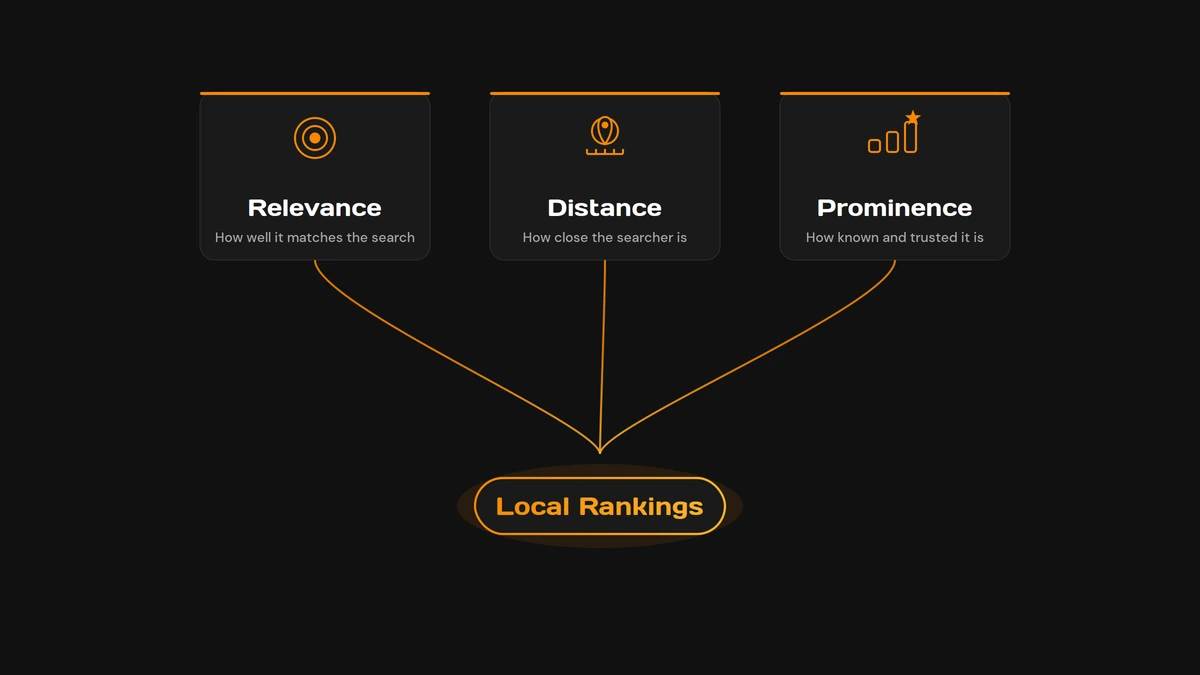
In practice, that means optimizing a complete, accurate Google Business Profile; consistent name, address, and phone (NAP) details across local citations; a steady flow of genuine reviews; locally focused pages and content; and links from local, relevant websites. When these signals align, Google is more likely to place you in the Map Pack and local results, where high-intent, ready-to-buy customers are looking.
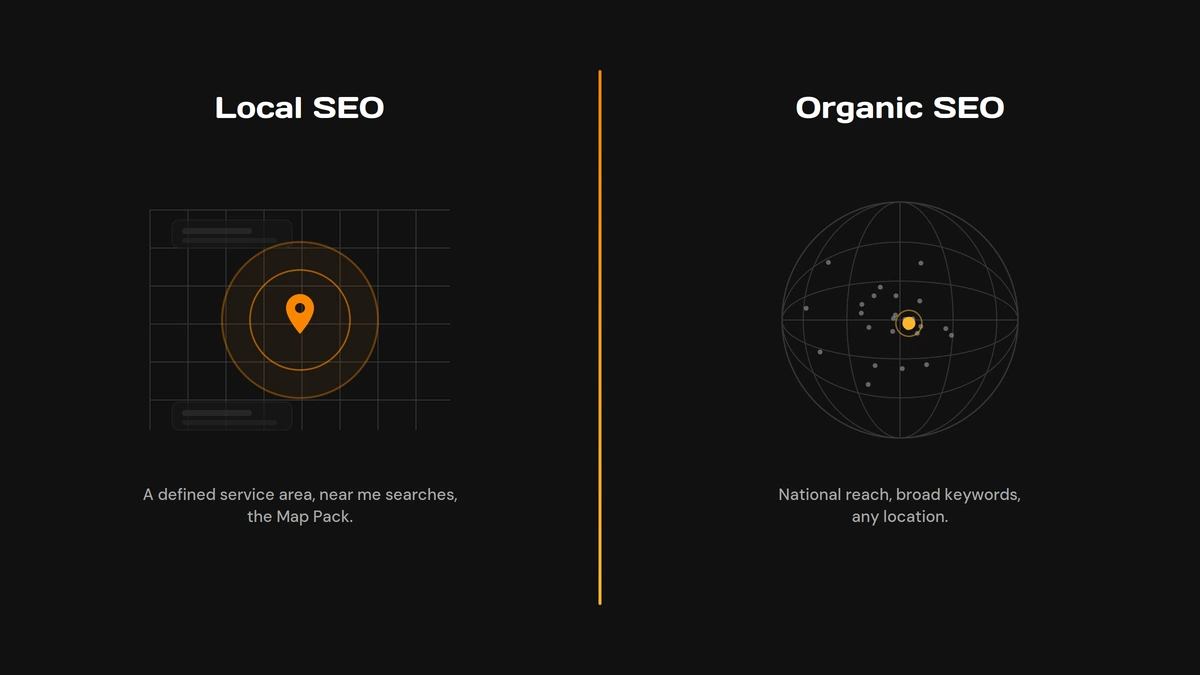
Local SEO vs. Organic SEO
Understanding the difference between local and organic SEO is essential for small businesses that want to maximize their online visibility and effectively reach their target audience.
Local SEO focuses on optimizing your online presence for a specific geographic location. This involves claiming and optimizing your Google Business Profile listing, building local citations, and creating location-specific content. The aim is to make it easier for customers in your area to find and visit your business.
On the other hand, organic SEO takes a broader approach, focusing on improving your website’s overall visibility in organic search results for relevant keywords, regardless of location. While organic SEO can attract customers from a wider geographic area, it isn’t always the most effective strategy for businesses primarily targeting local customers.
Local SEO Ranking Factors
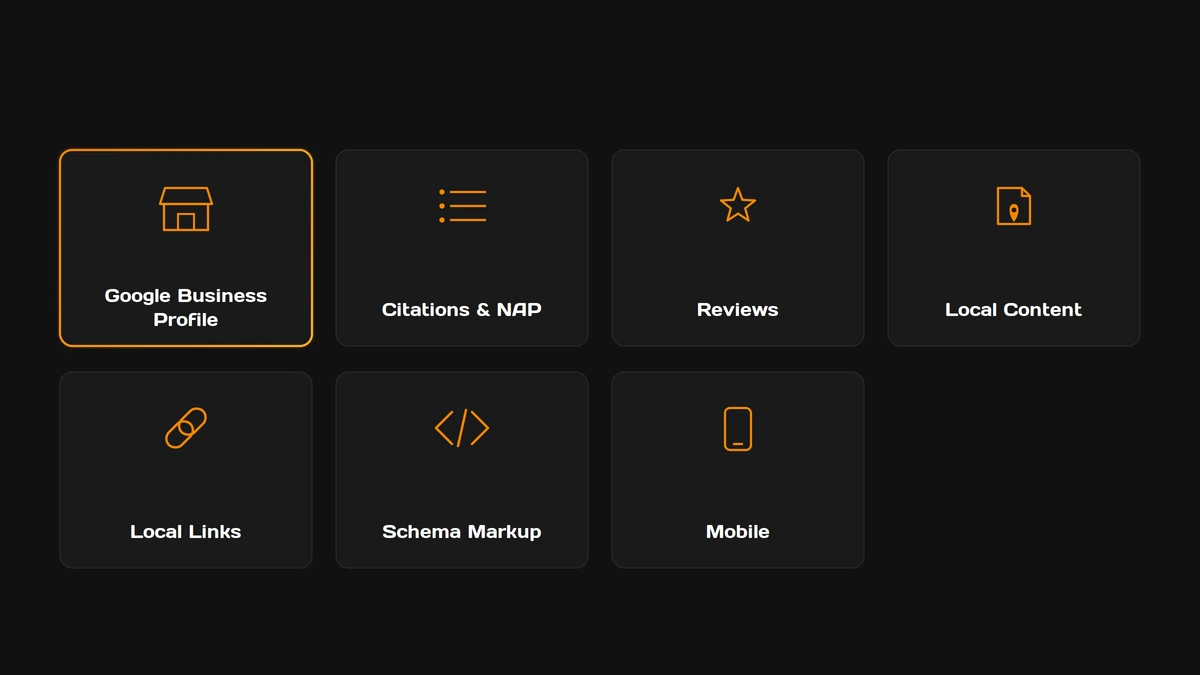
Before you begin your local SEO efforts, you should know what moves the needle. Google Business Profile signals are consistently the single biggest factor in Local Pack rankings, around a third of the weight. Here are the key ingredients:
Google Business Profile and Local Listings
Your Google Business Profile is your business’s online calling card, a free tool that lets you manage your presence across Google Search and Maps. Claim and verify your listing, then optimize your Google Business Profile with accurate, up-to-date information: your business name, address, phone number, website, and hours. Add high-quality photos, encourage reviews, and respond to them promptly.
Local Citations
Citations are online mentions of your business’s name, address, and phone number (NAP) on directories, websites, and social platforms. Building local citations is all about consistency and accuracy, your NAP should be identical across every citation. Claim your listings on top directories like Yelp and Facebook, then branch out to industry-specific and hyper-local opportunities like community event listings and local sponsorships.
Reviews and Social Proof
Customer reviews significantly impact your local search rankings, around 97% of consumers read online reviews for local businesses. Encourage satisfied customers to leave positive reviews on your Google Business Profile, Yelp, or other relevant sites, and respond to both positive and negative reviews to show you’re engaged. Beyond reviews, active social media and testimonials strengthen your credibility.
Local Keywords and Content Strategies
Sprinkle your content with relevant local keywords so your business is visible to local customers searching for what you offer. Create content that speaks directly to your local audience, optimize your service pages and FAQs with local keywords, and build geo-specific landing pages for different service areas. Mentioning local events or community news adds local flavor and keeps your audience engaged.
Local Link Building
Local link building is like a secret handshake that opens doors to higher local rankings. When reputable local websites link to you, it signals popularity and trust to search engines. Sponsor or join local events, partner with other local businesses, and reach out to local media for coverage. Focus on quality over quantity, links from reputable, locally relevant sites in your niche.
Local Schema Markup
Schema markup is structured data that helps search engines categorize and interpret your content. For local businesses, local business schema lets you hand search engines key details, your name, address, phone number, and hours, and can enhance your appearance in results with rich snippets like star ratings. Many platforms offer built-in tools or plugins to add it.
Mobile Optimization
In a mobile-first world, a mobile-friendly website is a must for local SEO. Use responsive design so your layout, images, and content adapt to any screen, and optimize loading speed by compressing images, minifying code, and leveraging browser caching. Google has made it clear that mobile-friendliness is a key ranking factor in local search.
Local SEO for Multi-Location Businesses
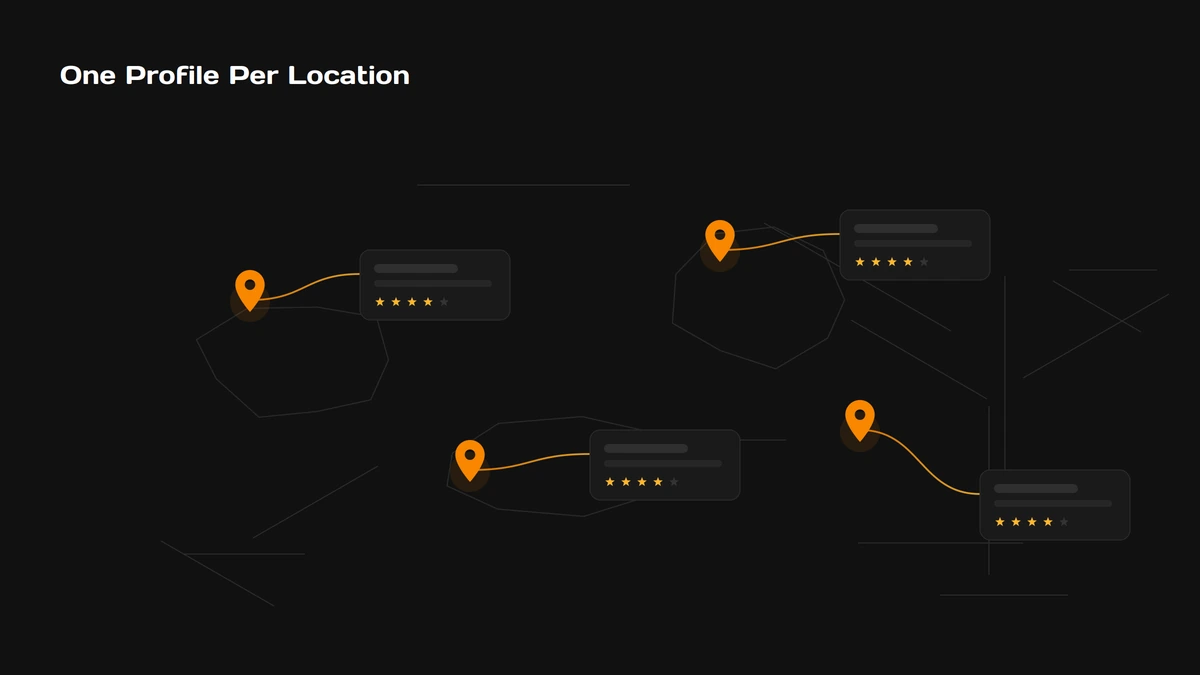
If your business has multiple locations, you’ll face unique local SEO challenges. Create separate Google Business Profile listings and location pages for each location so search engines understand each one as a distinct entity with its own address and phone number. Optimize each listing and page with relevant local keywords, and encourage reviews for each location. As always, keep your NAP information consistent across every listing and citation.
Local SEO Tools
Local SEO tools help you improve visibility and attract more local customers. A few popular options:
Moz Local
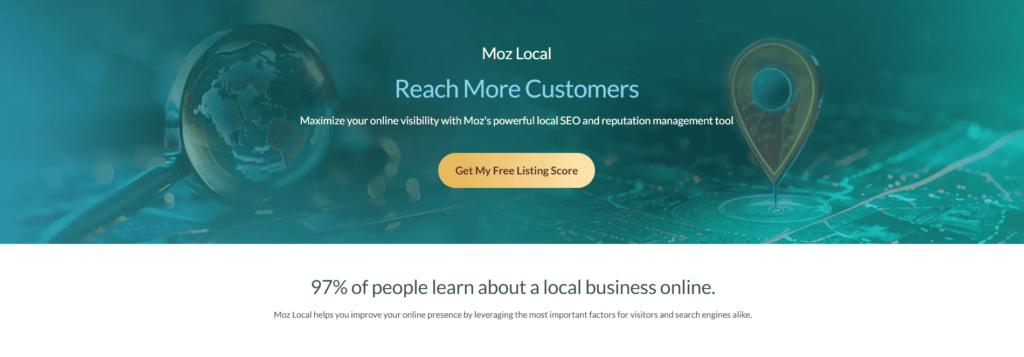
Moz Local helps you manage your online listings across directories and platforms, keeping your business information accurate and consistent. Plans start around $129 per year for a single location.
BrightLocal
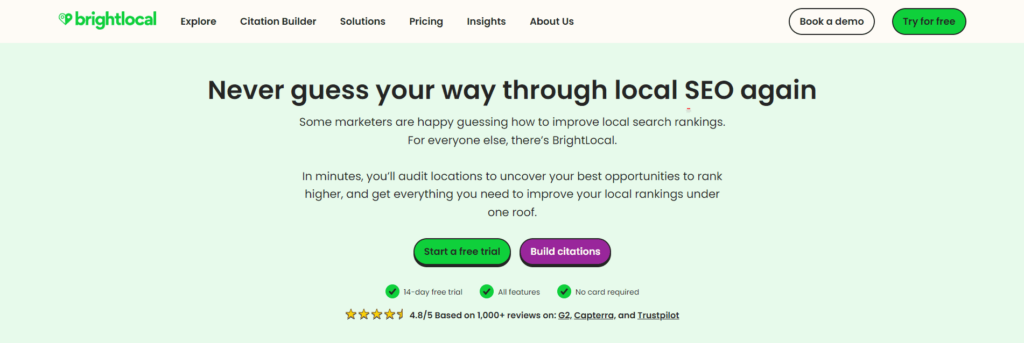
BrightLocal is a comprehensive local SEO tool offering rank tracking, listing management, review monitoring, and local SEO audits. Plans start around $39 per month.
Yext
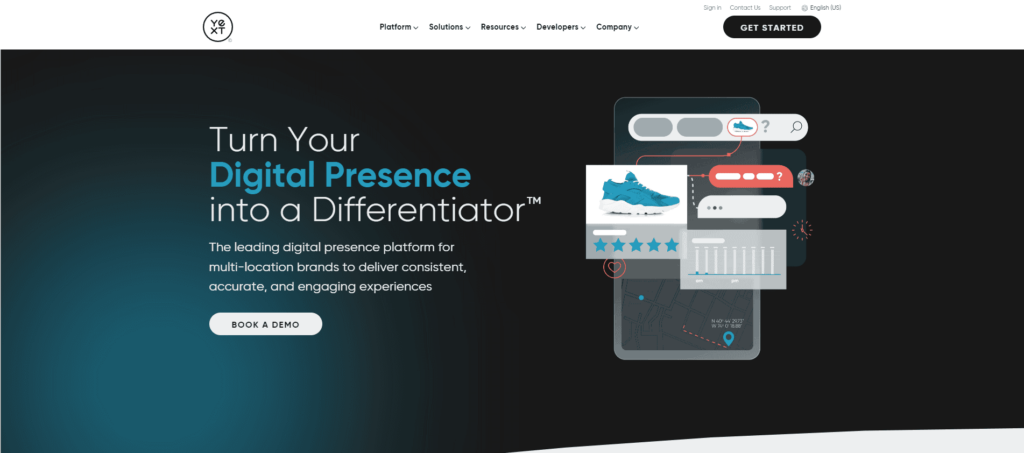
Yext manages your online presence across many directories, websites, and apps from a single dashboard, keeping your information consistent everywhere. Pricing is custom based on business size and needs.
Local SEO Checklist
Here’s a handy checklist to keep your local SEO on track:
- Claim and verify your Google Business Profile listing
- Optimize your Google Business Profile with accurate, up-to-date information and high-quality photos
- Build local citations on relevant directories, ensuring consistent NAP information
- Create location-specific pages for each of your business locations
- Optimize your content with relevant local keywords and phrases
- Encourage customers to leave reviews on your Google Business Profile and other platforms
- Engage with your local community through events, sponsorships, and partnerships
- Create locally focused content, such as posts highlighting local events or insider tips
- Implement local schema markup to give search engines structured data about your business
- Ensure your website is mobile-friendly and loads quickly on all devices
- Monitor your local rankings and online reputation regularly, and adjust as needed
Local SEO FAQs
What is local SEO?
Local SEO (local search engine optimization) is the process of optimizing your online presence so your business ranks in location-based searches, such as “near me” queries and the Google Map Pack, when nearby customers look for what you offer.
How is local SEO different from regular SEO?
Local SEO targets a specific geographic area and relies on signals like your Google Business Profile, reviews, citations, and proximity, while regular (organic) SEO competes for rankings nationally or globally on relevant keywords regardless of location.
How long does local SEO take to work?
Many businesses see Map Pack and local ranking movement within a few months, with gains compounding as reviews, citations, and content build over time.
Do I need a Google Business Profile for local SEO?
Yes. A complete, verified Google Business Profile is the single most important asset for local rankings and is what places you in Google Maps and the local pack.
How much does local SEO cost?
It varies with your market, number of locations, and competitiveness; many businesses run local SEO as a monthly retainer. Get a custom quote based on your goals.
What is Local SEO: Final Steps
By now you should have a solid understanding of what local SEO is, why it matters, and how to use it to grow your business. Measuring your results matters too, track your local rankings, organic traffic, click-through rates, and conversions, and refine your strategy where you fall short.
AlchemyLeads’ local SEO work helps promote your business online in your location. We use best practices to develop and execute strategies that deliver results and increase your local leads and clients. Check out our local SEO services to get a custom quote.
Suggested

Our Ahrefs Health Score Went From 74 to 96. Here’s What Our AI SEO Agent Found.
Seven problems our AI SEO agent found on our own site, from leads GA4 never recorded to 195 pages linking through redirects, and how we fixed them.
October 8, 2026

How Our AI SEO Agent Cleared 1,186 Schema Errors in One Day
How our AI SEO agent and team took a Shopify store from 1,186 structured data errors, 12 404s and 155 broken links to zero in one day.
October 8, 2026

How to Integrate HubSpot and Tripleseat: Lessons From 9 Builds
A step-by-step guide to connecting HubSpot and Tripleseat: forms, OAuth 2.0, field and stage mapping, multiple locations, documents and monitoring, with real lessons from nine production integrations.
October 4, 2026
Answer-First Content: The Inverted Pyramid (∇) for AI Search
The inverted pyramid (∇) puts the answer first and the detail after. Here is how answer-first writing serves busy buyers and AI systems that quote short passages, with examples, common mistakes, and a checklist.
October 3, 2026

Retrieve-for-Train explained: how Google Research is speeding up AI search fan-out
Google Research’s Retrieve-for-Train method trains a small diffusion model to fan out search queries in one pass. Here is how it works, what it reports, where it stops, and our cautious read for brands.
October 3, 2026
Contact us
We value your privacy and won't share your email with others.
We'll only contact you with curated content.
