
Add as a preferred source on Google
Short answer Traffic usually drops after a redesign because old URLs weren’t 301 redirected, ranking pages or copy were removed, internal links changed, or the new site blocks crawlers (a leftover noindex tag, a staging robots.txt, new CDN bot rules). AI visibility drops for the same reasons, plus JavaScript-only content that AI crawlers can’t read and changed URLs that break existing AI citations. Use the 10-step checklist below to find which one hit your site.
Table Of Contents
1) Web Traffic Questions
2) Why Your Traffic Dropped After Redesigning Your Website
2.1) You Didn’t Create Any Redirects
2.2) The Architecture Changed
2.3) You Gutted the Copy
2.4) Missing Pages
3) Website Redesign Tips to Retain More Traffic
4) SEO Integration Points For Redesigning or Re-platforming a Website
4.1) Research and Analytics, How to Strategize Your Content
4.2) Design Factors to Take Into Account During a Website Redesign
4.3) Taking Social Media Platforms Into Consideration
5) We’ve Got This Down Pat, How About You?
6) The Pitfalls of Improper Integration
7) Why Your AI Visibility Dropped After a Redesign
8) Post-Redesign Traffic Drop Checklist: 10 Steps in Order
Frequently Asked Questions

1) Web Traffic Questions
We’ll start you off easy with a couple of common web traffic questions. For example, you might be wondering what percentage of traffic you should expect to lose during a website redesign. It’s pretty normal to lose a small percentage, but that percentage should not exceed 10%, if it does, you’ve got a problem.
Another common web traffic question is how long should the dip in traffic last after having your website redesigned? For the most part, you should only lose traffic for a few weeks, if the plunge lasts longer than that you’ll need a web analysis stat!
2) Why Your Traffic Dropped After Redesigning Your Website
Now let’s dig into the reasons why your traffic dropped after a website redesign shall we? It’s probable that there are multiple causes to the plunge, especially if it’s been dragging on or shall we say down for more than a few weeks.
2.1) You Didn’t Create Any Redirects
One of the biggest and naughtiest no-nos in a website redesign is to leave out 301 redirects. A 301 redirect is used to redirect viewers to a different URL and is commonly used to retain web traffic during a redesign.
For example, if you just designed your website or rebranded your business, you’ll have a ton of pre-existing content lying around that will go dead unless you start using 301 redirects to literally redirect all of that traffic to your current web pages. You should do the same thing when a product goes out of stock, rather than leading a customer to a page that basically says ‘sorry bub, we’re fresh out’ you can use a 301 redirect to lead them to the most similar product still in stock.
2.2) The Architecture Changed
You can also lose traffic after a website redesign by messing with the architecture. When you change the architecture of a website you change the arrangement of how your pages are organized and linked together.
So why does playing with the architecture magically do so much damage? Google, that’s why. Google takes the internal links of your website and their value into account when ranking your pages in the search results. If your original architecture was working for you and was established enough to bring in steady traffic then you’ll want to keep a lot of that intact to prevent losing traffic.
2.3) You Gutted the Copy
Another big and surprisingly common mistake that people make when redesigning a website is gutting the copy too zealously. While it’s important to add some new copy to freshen up your website it is possible to go too far.
Not only will you lose some of the customers who preferred how things sounded in the copy from your old website but you’ll also be getting on Google’s bad side too. The copy that you originally had is part of the formula that Google used to rank your pages, when you mess with the copy, you mess with the formula. One way to get around this is to have the new copy written by the same person who wrote the original version.
2.4) Missing Pages
Another good way to lose traffic when redesigning a website is to delete the wrong web pages. How do you know which pages are more valuable? You need to examine the keywords that each page targets and evaluate the value of those pages by seeing how much they boost your search rankings for the most important keywords.
You can think of it like this, certain web pages are like load-bearing walls in a house, when you knock out those walls bad things happen. Rather than having a ceiling collapse from axing the wrong web pages your web traffic and search ranking will collapse instead.
3) Website Redesign Tips to Retain More Traffic
We could give you a huge list of tiny yet unessential tips on how to retain more traffic after a website redesign, but we’re not going to do that to you because, well frankly, we’re better than that, much better.
The single most important tip that you need to know on how to retain that traffic is to incorporate SEO at the beginning of the planning stage of the redesign. When you wait to consider SEO until after the website redesign is complete, you’re going to do one of two things, maybe both. The first thing you’re going to do is set your web traffic on fire and not in a good way, it’s going to go down in flames into a big sad looking pile of ashes. The second thing you’re going to do is drive your SEO strategist completely insane.
The takeaway here is to take SEO into account during the planning stages of a redesign rather than waiting until it’s already done, if not for the sake of your SEO strategist’s sanity then at least for the sake of your own web traffic!
4) SEO Integration Points For Redesigning or Re-platforming a Website
Now it’s time for some SEO integration points to consider when redesigning your website. You’re going to need to run some analytics, actually, you’re going to need to run a lot of analytics. You’ll need to conduct a website audit, satisfaction audit, competitive analysis, and a content analysis. That last one is particularly important, remember, content is king.
4.1) Research and Analytics, How to Strategize Your Content
In terms of research and analytics, the most strategic way to go is to conduct both monthly and quarterly analysis along with custom SEO dashboard development.
4.2) Design Factors to Take Into Account During a Website Redesign
As for design factors that you should take into account during a website redesign, it’s best to run your content hierarchy parallel to your design elements. Another thing that you should make an effort to do is to pair user-focused SEO methods into your design.
The key here is to successfully combine the best and most beneficial SEO practices into the design of your new website.
You’ll also need to manage the following elements in a way that is in line with SEO in order to maximize your retention of web traffic after the redesign is complete.
- Frontend and backend web development
- Marketing and public relations
4.3) Taking Social Media Platforms Into Consideration
Last but not least you need to consider how your website redesign will affect traffic coming from social media. Again, you will need to use a lot of 301 redirects to hold on to valuable content posted previously and keep the web traffic that it’s been generating for you.
If people who click on links on your social media posts that lead to dead web pages, you’ll lose that traffic which can affect your sales over time.
5) We’ve Got This Down Pat, How About You?
That was a lot of material, are you still with us, did you catch all of that? More importantly, did you understand it? SEO and the art of a successful website redesign can be a lot to take in, and it can be confusing especially to non-technical business owners.
If you’re still struggling with some of the concepts or feel overwhelmed when thinking about how to execute these tips, it might be best to leave it to the digital marketing gurus at AlchemyLeads. We know this stuff inside and out and are more than capable of helping your business retain as much traffic as possible when undergoing a website redesign.
6) The Pitfalls of Improper Integration
Once you’ve had a chance to process all of that information you might still be wondering about the pitfalls of improper integration. How bad could it be? Well, it’s bad, and it can cripple a business.
When you lose traffic because of improper integration on a website redesign you’re choking yourself. Traffic is your lifeblood and when that flow suddenly stops, the heart of your business has nothing to pump and your company will start to go dead limb by limb until the flow is restored and customers return.
7) Why Your AI Visibility Dropped After a Redesign
AI visibility drops after a redesign when ChatGPT, Claude, Perplexity and Google’s AI features can no longer fetch, read or link to the pages they used to cite. The four usual causes are JavaScript-only content, blocked AI crawlers, lost structured data and changed URLs.
Google’s AI Overviews and AI Mode use the regular Google index, with no extra technical requirements, so sections 2 through 4 apply to them too. Other AI assistants run their own crawlers, which are less forgiving than Googlebot.
7.1) Your New Site Renders Content With JavaScript
Many redesigns move to a JavaScript framework that loads copy in the browser. Googlebot renders those pages in headless Chromium before indexing. Most AI crawlers don’t. Vercel’s crawler tests found that OpenAI’s GPTBot, OAI-SearchBot and ChatGPT-User, Anthropic’s ClaudeBot and PerplexityBot do not execute JavaScript. If your copy only appears after scripts run, those assistants see a near-empty page. Run your key pages through our free JS Rendering Gap Checker to compare the raw HTML with the rendered page and see what an AI fetcher actually reads.
7.2) The New Site Blocks AI Crawlers
A new host, CDN or security plugin can start refusing AI bots. Cloudflare, for example, has blocked AI crawlers by default on new domains since July 1, 2025, and asks at sign-up whether to allow them. Check your robots.txt (a copied staging file with “Disallow: /” blocks everyone), any rules for GPTBot, OAI-SearchBot, ClaudeBot or PerplexityBot, and your CDN or firewall bot settings. One note on Google: blocking the Google-Extended token controls Gemini training and grounding, and Google says it does not affect inclusion or ranking in Google Search.
7.3) Your Structured Data Didn’t Make the Move
Schema markup often lives in old templates or a plugin the new build leaves out. Losing it costs you rich results in Google and removes the machine-readable facts (your company, products and FAQs) that crawlers read without guessing. Compare old and new templates in Google’s Rich Results Test.
7.4) Changed URLs Broke the Links AI Answers Already Cite
AI answers link to specific pages. Change those URLs without 301 redirects and every cited link lands on a 404 until the assistant finds your content at its new address. Redirect cited URLs the same way you would pages with backlinks. Our 301 redirect planning guide walks through the mapping, and how to get cited by ChatGPT, Perplexity and Google AI Mode covers what to fix once the pages are reachable again.
8) Post-Redesign Traffic Drop Checklist: 10 Steps in Order
To diagnose a traffic drop after a redesign, confirm the drop is real, rule out site-wide blockers, then check redirects, indexing, content, links and AI crawler access in that order. The early steps catch the problems that take down a whole site, so don’t skip ahead.
- Confirm the drop and date it. In Search Console, open the Performance report and compare clicks and impressions for the weeks before and after launch. If Search Console looks normal but GA4 sessions fell, the new templates are probably missing the GA4 tag.
- Rule out site-wide blockers. Check robots.txt for “Disallow: /”, look for a leftover noindex tag, and make sure staging password protection is off. Run URL Inspection’s Test live URL on your top pages.
- Test every old URL. Pull old URLs from Search Console, the old XML sitemap and your backlink list. Each should return a single 301 to its closest new equivalent, with no chains and no mass redirects to the homepage. Google recommends keeping redirects in place for at least a year.
- Read the Page indexing report. Look for spikes in “Not found (404)”, “Page with redirect”, “Redirect error”, “URL marked ‘noindex'” and “URL blocked by robots.txt” that start on your launch date.
- Find the pages that lost the most. In the Performance report’s Pages tab, compare the two date ranges and sort by click difference. Compare each loser’s old version (from a backup or the Wayback Machine) with the new one: title, H1 and body copy.
- Check internal links and navigation. Pages that dropped out of the menu or footer lose internal link value. Point internal links straight at the new URLs.
- Check sitemaps and canonicals. Your XML sitemap should list only live, canonical new URLs and be submitted in Search Console. Canonical tags should point to the live domain, never staging.
- Check what Google and AI crawlers can see. In URL Inspection, open View tested page to see Google’s rendered screenshot and HTML. Then run the same pages through the JS Rendering Gap Checker to see the raw HTML that non-rendering AI crawlers get.
- Confirm AI crawler access. Server logs show whether GPTBot, OAI-SearchBot, ClaudeBot and PerplexityBot get 200 responses or 403s from your new setup.
- Restore structured data, then watch the trend. Run key templates through the Rich Results Test and put back any schema the old site had. Then track recovery in Search Console, including its Search Generative AI performance report, which shows impressions from AI features such as AI Overviews and AI Mode by page.
If the drop started on launch day across most pages, look hardest at steps 2 to 4. If only some pages fell, start at step 5.
Frequently Asked Questions
Why did my website traffic drop after a redesign?
The most common causes are missing 301 redirects from old URLs, deleted or rewritten pages that used to rank, a changed internal link structure, and crawl blockers left over from staging, such as a noindex tag or a robots.txt that disallows the whole site. Check site-wide blockers and redirects first, because they affect every page at once.
Why did my AI visibility drop after a website redesign?
AI assistants stop citing a site when they can’t fetch or read it. After a redesign, that usually means content that only loads with JavaScript (most AI crawlers don’t run it), AI bots blocked in robots.txt or at the CDN, structured data that didn’t carry over, or cited URLs that now return 404 errors instead of redirecting.
How long does it take traffic to recover after a redesign?
Google says that for a medium-sized site it can take a few weeks or more for new URLs to replace old ones in search results, and longer for large sites. Recovery only starts once the underlying problem is fixed, so a drop that lasts past a few weeks usually points to a redirect, indexing or content issue that still needs attention.
Can a website redesign block ChatGPT from reading my site?
Yes. A new robots.txt, security plugin or CDN can block OpenAI’s crawlers, and Cloudflare blocks AI crawlers by default on domains added since July 2025. A move to a JavaScript-rendered build can also hide your copy, because OpenAI’s crawlers read the raw HTML without running scripts.
Suggested
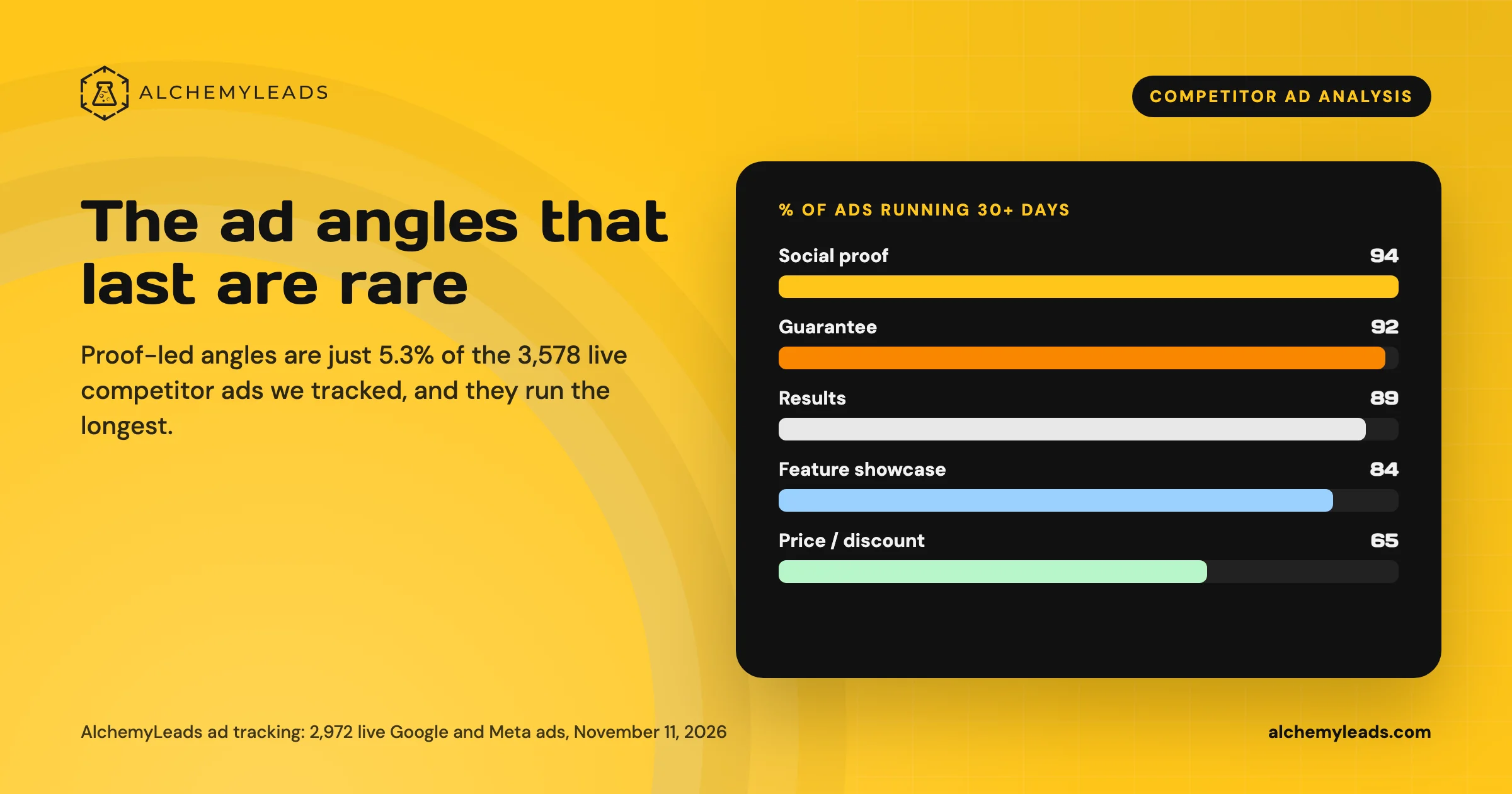
Competitor Ad Analysis: What 3,578 Live Ads Say About the Creative That Lasts
We tracked 3,578 live competitor ads on Google, Meta and LinkedIn. Proof-led angles are the rarest and run the longest. See the data and the playbook.
November 11, 2026
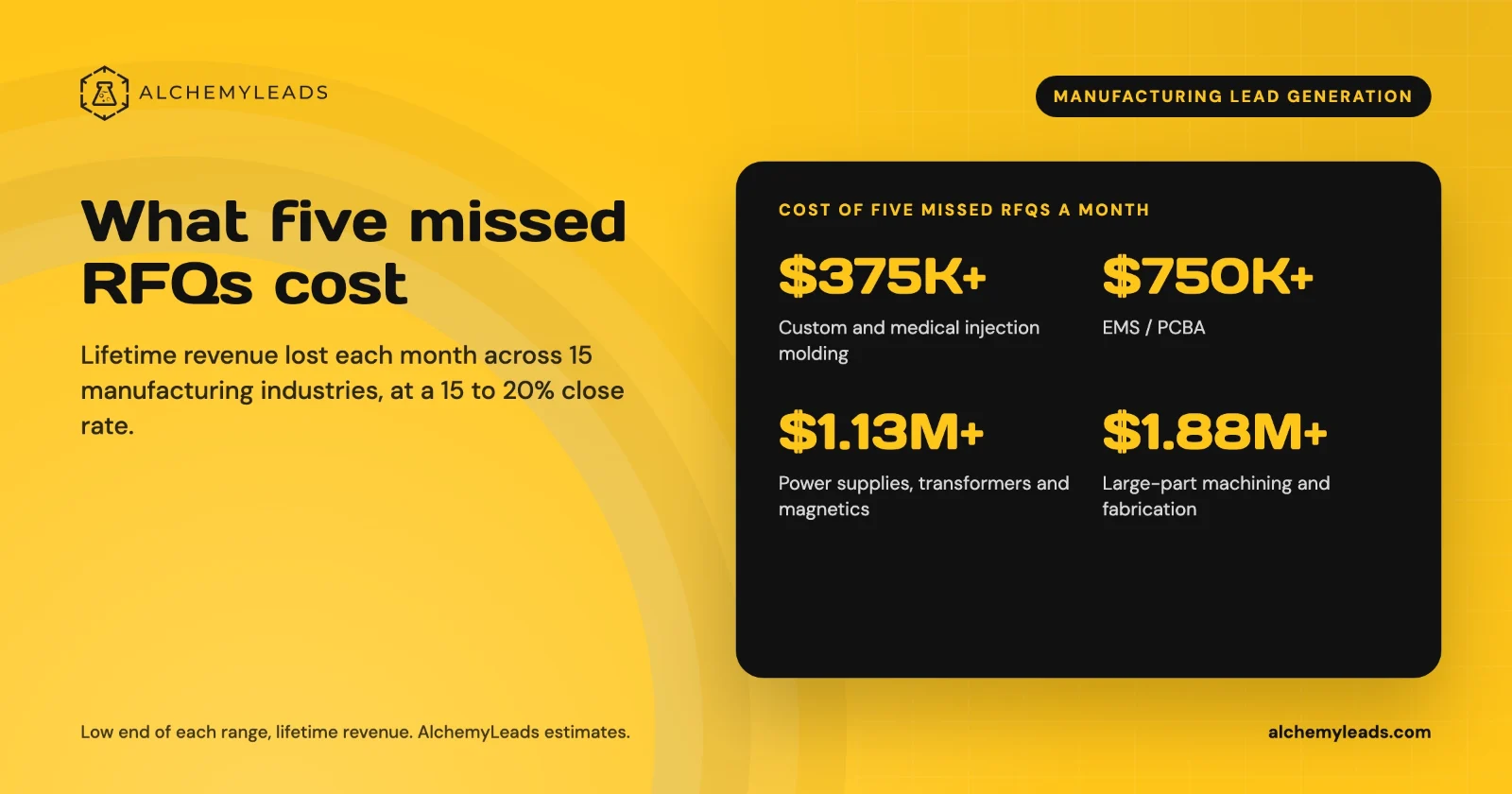
The Cost of Inaction in Manufacturing Lead Generation: What Five Missed RFQs a Month Cost in 15 Industries
What five missed RFQs a month cost across 15 manufacturing industries, with a cost of inaction calculator.
October 27, 2026
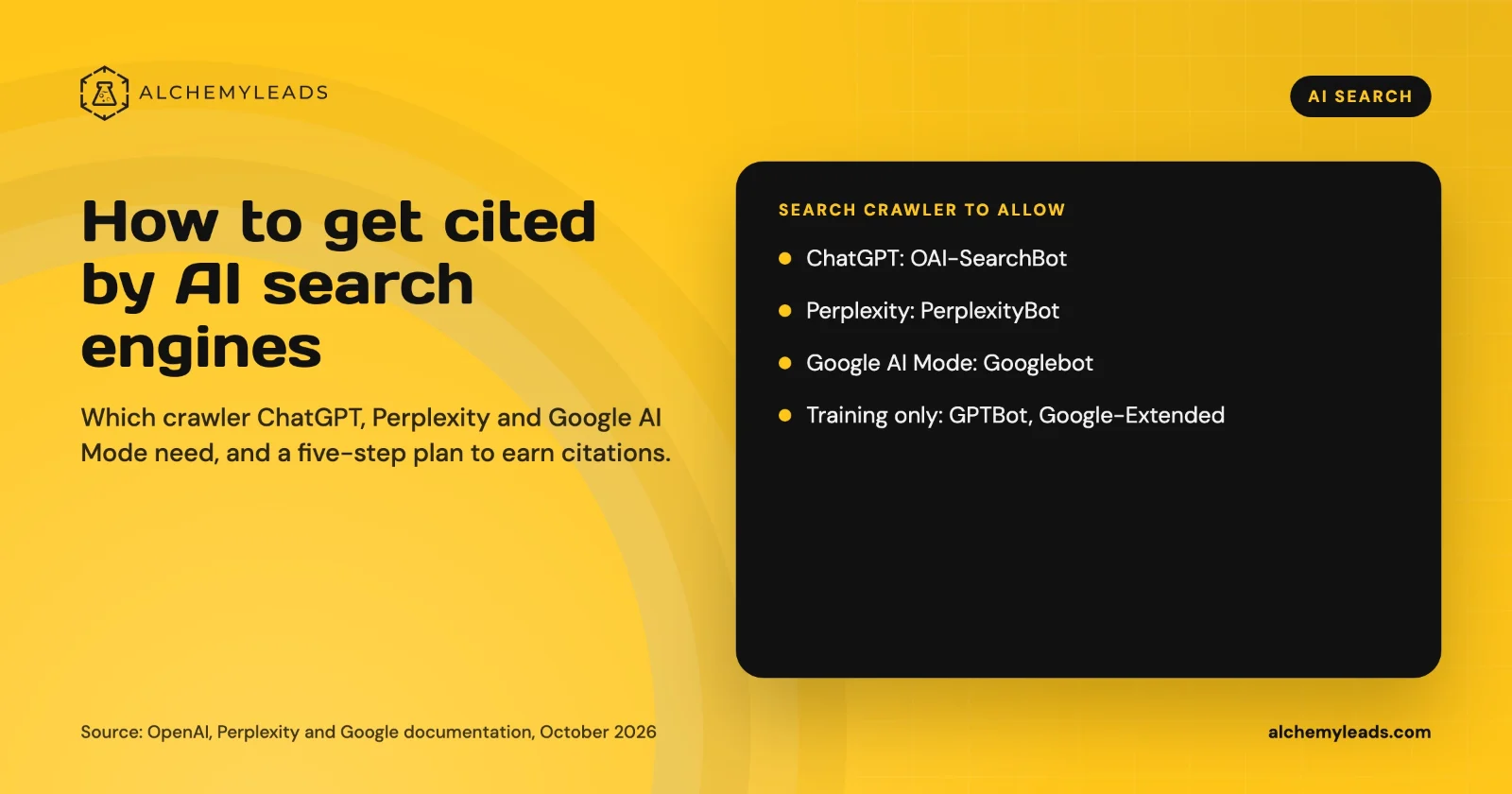
How to Get Cited by ChatGPT, Perplexity and Google AI Mode
How ChatGPT, Perplexity and Google AI Mode choose sources, which crawlers to allow, and a five-step plan to get your company cited, based on official docs.
October 26, 2026
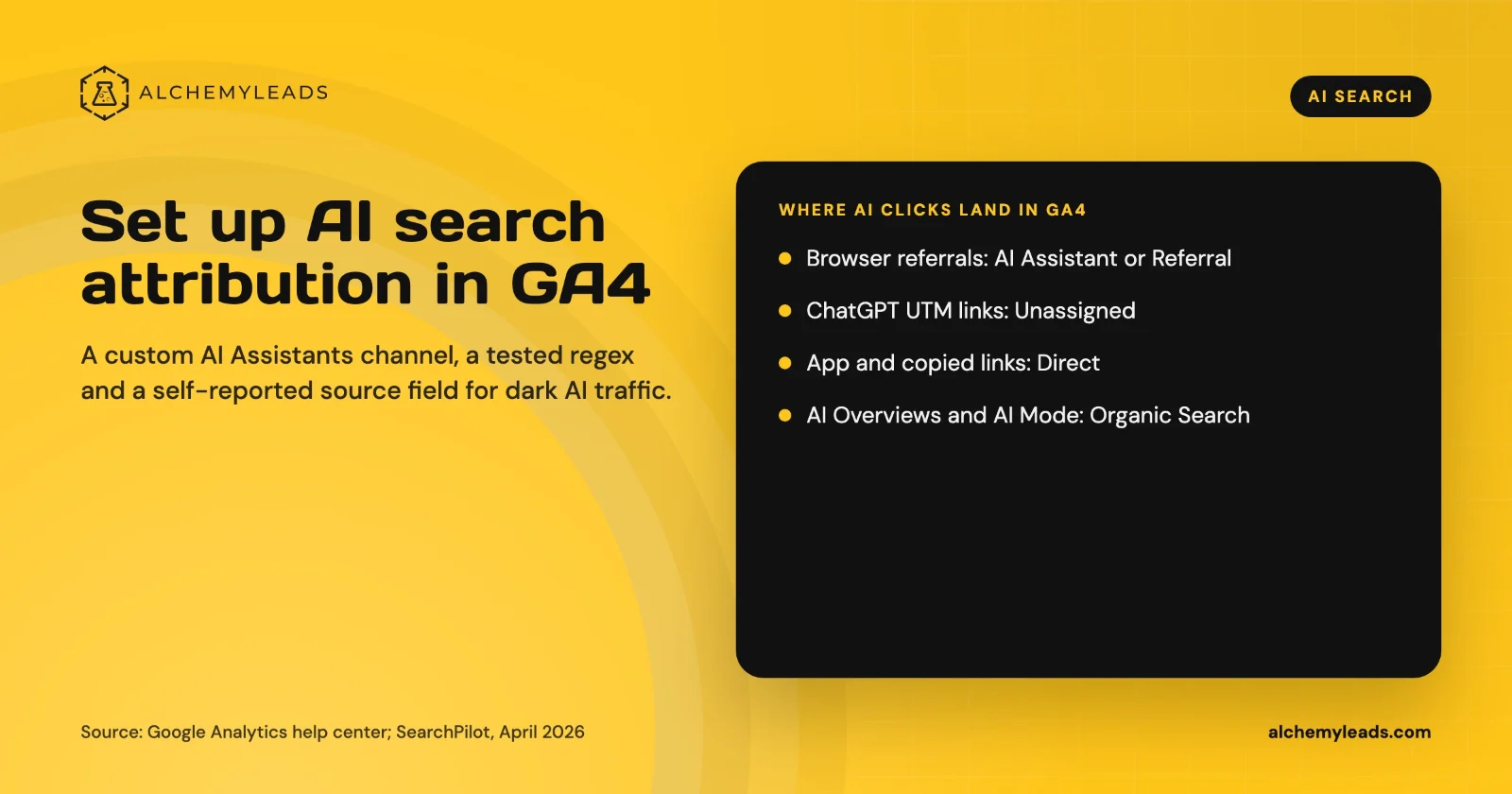
How to Set Up AI Search Attribution in GA4: A Step-by-Step Guide for 2026
Step-by-step GA4 setup for AI search attribution: an AI Assistants channel, a copy-paste regex, ChatGPT UTM fixes and a self-reported AI source field.
October 26, 2026
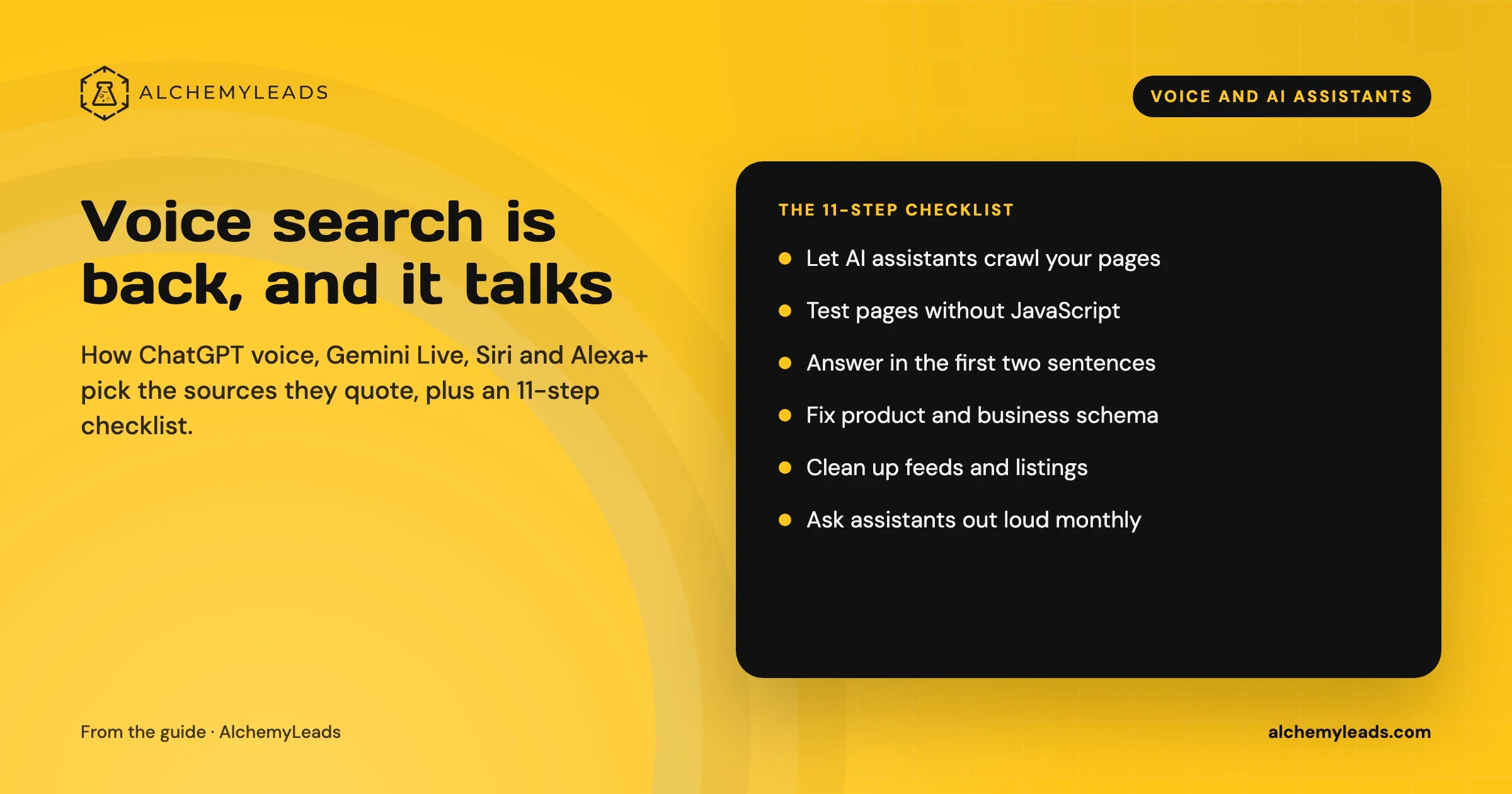
Voice Search in 2026: How AI Assistants Pick Their Sources
We first wrote about voice search in 2022, when the question was whether “Hey Siri” and “OK Google” would change how people shop. Four years later, voice is back in a bigger form. People now talk to ChatGPT, Gemini, Siri, Alexa+ and Copilot the way they talk to a knowledgeable friend, and those assistants answer by reading the web in
October 17, 2026
Contact us
We value your privacy and won't share your email with others.
We'll only contact you with curated content.
