
How to get backlinks: the short answer
To get backlinks, create pages worth citing, then ask the right sites to link to them. The most reliable ways are digital PR, reclaiming unlinked brand mentions, broken link replacement, resource and list inclusion, and partner or supplier links. Focus on relevant, editorially placed links from sites your buyers actually read.
Every tactic below fits one of four approaches:
- Create: publish something people want to reference, such as original data, guides, tools or case studies.
- Ask: reach out to sites that already mention you, list your competitors or link to broken pages.
- Earn: get covered by journalists, editors and creators through digital PR and expert commentary.
- Claim: secure the links you are already entitled to from partners, suppliers, associations and directories.
What are backlinks, and Why Should You Care?
In simple terms, backlinks refer to links that point to your own website from another site. In other words, backlinks direct users’ attention from one website to another.
Backlinks form a critical part of off-page SEO strategy. Unfortunately, backlinks are one of the SEO metrics you need more control over. Although you can include some backlinks in your content, you also need other sites to reference your content with a link.
Backlinks are a major contributor to organic traffic on a website. Google views backlinks on websites as a vote of confidence or a recommendation. When publishers link your content on their website, they are telling their readers that you’re a trustworthy source of information that they should check out for themselves.
The kind of endorsement backlinks give small businesses or startups cannot be overstated. Moreover, backlinks from sites (or referring domains) let search engines understand how your content relates to other pages and websites. This way, your page can appear on relevant search engine results pages (SERPs) and attract organic traffic from relevant search queries.
Not all backlinks are created equal. That means you need to take your time to ensure you get high-quality links. After all, low-quality backlinks won’t work and may even earn your site a penalty from Google.
What makes a high-quality backlink
A few strong links usually do more than many weak ones. Before you chase a link, check five things:
- Relevance: the site and the page cover topics close to yours.
- Authority: the site earns links and traffic of its own.
- Editorial placement: the link sits in the body of the content because a writer chose to include it.
- Real audience: people read the page, so the link can send visitors as well as ranking signals.
- Natural anchor text: the link text describes your page in normal language.
Where to start: the best tactics by effort
If you are new to link building, work through the tactics in this order. The first group uses relationships and assets you already have.
Start here (lowest effort)
- Reclaim unlinked brand mentions
- Claim partner, supplier and distributor links
- Fix and complete your directory and association listings
- Reclaim unlinked images
Build next (medium effort)
- Get added to resource pages and “best of” lists
- Replace broken links with your content
- Answer journalist requests and join interviews and podcasts
- Find sites that link to several competitors
Invest in (highest effort, highest payoff)
- Digital PR campaigns built on original data
- Definitive guides and case studies
- Useful tools and calculators
20 proven ways to get backlinks
Before you build backlinks using the tactics below, most of them require you to perform link building outreach, a process requiring you to find out the email addresses of the website owners you want a link from and send them the request. This requires the ability to send emails continuously and tweak your approach and strategy to improve your conversion rates. Our roundup of link building outreach tools covers the software that makes this faster.
That said, get better backlinks using the following tips:
Guest Posting
Also known as guest blogging, guest posting is one of the ways to earn quality backlinks. Although it may sound like you’re helping another site generate more views, guest posting is an excellent way to introduce your website to a new audience.
Unlike ghostwriting, when you guest blog post on another website, you get credited for your work and get backlinks to your website. Guest posting offers a great opportunity to get your name out there, reach out to a new audience, and earn increased online visibility. It offers an excellent way to build a reputation in your industry.
Getting guest post opportunities can sometimes be overwhelming. One way to identify these opportunities is to look for the “write for us” page on a website where you want to publish your content and send a good pitch.
You can also find opportunities on X and LinkedIn by searching for editors and publications that invite contributors in your industry. With a good strategy, you’ll get many quality backlinks that will help improve your rankings on search results.

Resource Link Building
Another link building tactic is to get included on resource pages. To be successful with this tactic, you need to have useful and high-quality content that other businesses will want to share. After that, you need to identify businesses that can add value to your audience.
Having high-quality content alongside high-value links will help increase website traffic and improve organic rankings. The catch is to ensure that you link to other relevant pages relevant to your audience. That means if you sell AI search or GEO services, you need to feature on resource pages for marketing and technology websites to remain relevant to the users.
Reclaim Unlinked Mentions
The truth is you’re losing out on potential backlink opportunities each time your site is mentioned on another site, but they don’t link back to you.
That’s why you need to keep an eye on who mentions your brand on blogs and news. One way to achieve this is through Google alerts. You can also use tools like Ahrefs content explorer, BuzzSumo, etc., to get more insight into your mentions, including the number of shares and the domain authority of the site that mentions your brand, product, or service.
When you discover mentions from an authoritative site, send them a message asking for a proper link attribution. The best part is that since these people already know who you are, it won’t be challenging to convince them to add a link to the specific mention. You just need to draft a nice message asking for proper attribution, and you are good to go.
Reclaim Unlinked Images
Like reclaiming unlinked mentions, you can get many potential backlinks by reclaiming unlinked images. This is especially useful if you have unique and original images that have been used on other websites.
Conduct an online image search and then reach out to websites where your images are used. Of course, you need to approach them nicely; otherwise, they might feel guilty and delete the images. Be nice and ask them to link back to your site. In most cases, the website using your images will be happy to link to your site
Create Ultimate Guides
An ultimate is a resource piece of content that covers a topic in its entirety. In other words, it is a comprehensive resource on a specific topic.
Bloggers and publishers like to link back to articles that are definitive guides when creating their blog posts. That means you’ll increase your chances of getting quality backlinks if you create high-quality ultimate guides in your industry.
The main reason ultimate guides offer an excellent backlinking opportunity is that they help bloggers reference an idea they mention. For example, when someone is writing an article about off-page SEO techniques, they can mention a few tips without much detail and then link to an off-page SEO resource guide where readers can get more information about the topic.
If you’re looking for more backlinking opportunities, create lengthy and detailed articles that are link-worthy. Of course, you still need to ensure that your content is relevant, unique, and easy to read.
Conduct Competitor Research
Another way to get quality backlinks is to spy on your competitors to get an idea of where they get their backlinks, the type of content they publish, and their organic strategy.
When looking at your competitor’s sources of backlinks, pay much attention to their top-performing content, organic keywords, social media activities, etc. Tools such as SEMrush and Ahrefs can help look for backlinks by providing a complete backlink profile for different websites.
Use the information you get to create a backlink strategy for your website. For instance, you can publish content on websites that your competitors have a guest post. You can also sign up for your competitors’ email newsletters to get notification alerts anytime they publish new content.
Find Broken Links
The broken link building strategy is an excellent way to get backlinks. When conducting competitor research, pay attention to broken links as well.
Broken links are internal links to pages on your prospect site that no longer exist or are out of date, meaning they add no value to a blogger or website owner. It can be due to 404 errors (where a website source has removed the links), improper URL, or domain change. You can find link building opportunities with search operators to speed up the search.
Broken links present a good opportunity to get a backlink for your website. Just find the broken links and pitch your site as a replacement to the link. This will benefit both you and their website: you’ll get the new backlink, and they’ll get a link that works and is more relevant. It’s a win-win.
The Skyscraper Technique
The skyscraper technique was introduced to the SEO community by Brian Dean of Backlinko. This technique involves a simple process that includes:
- Finding ranking content that has earned many links
- Improving the content
- Promoting the content to websites that linked to the original content
There are different ways you can improve existing content, including making it longer, adding related videos, adding more statistics, updating the content, among others.
This technique works because you’re building upon a foundation that is proved to be successful: you’re removing the guesswork. However, you shouldn’t just rewrite the existing content. Present the information in a new, better way, and add more facts to ensure your curated content will serve as a foundation, not a framework. Your content will become more popular and earn more backlinks.

Take Advantage of Local Directory Submissions
Directories can help improve local SEO and make your business more visible to customers. The best part is that you can submit a website link to a local directory which they’ll display publicly on your business page.
Of course, we’re not referring to spammy directories, which are likely to harm your SEO performance. We’re talking about valuable directories like Google Business Profile, Yelp, Apple Business Connect and the respected directories in your industry that can help improve your rankings and traffic. If you serve a local market, listings like these are one part of a wider local SEO plan.
Fortunately, creating directory backlinks isn’t complicated. The best part is that they can help customers find your business, what it entails, and your contact information. The more links you have from quality sites, the better you will rank on Google.
Provide Testimonials
Almost every company would want to showcase testimonials they have received from their clients. In fact, most companies will place a few select testimonials on their homepage, while others have a whole page dedicated to customer reviews with a link to the homepage.
If you don’t know, you can turn this into an excellent opportunity to earn backlinks. What you need to do is identify the products or services that you have used recently. After that, identify sites with a testimonial page and write short positive reviews about your experience using their product or service. Reach out to them with good testimonials in exchange for getting a backlink to your website.
Most companies will want to include testimonials on their homepage for social proof, which offers a great exposure opportunity for your business.
Use infographics to Earn Backlinks
Infographics also provide a great way to earn backlinks. Infographics involve representing data and information using graphics, charts, and images. They help break up content into a clear and easy-to-read way. In other words, infographics break down complex concepts into simple visuals that are easily understandable.
When you have helpful infographics, other creators might use your creation in their blogs, which will provide a backlinking opportunity.
Supplier Links
The most challenging part of getting quality backlinks is convincing someone to link back to your site. That’s why you shouldn’t sit on an opportunity to get a backlink from people who already know you. This is especially the case if you’ve partnered with an e-commerce site to sell their products or services.
If you’re keen, you’ve noticed the “where to buy” or “stockist” pages on manufacturer or supplier websites. Ideally, manufacturers use these pages to point customers where they can buy their products or services. If you sell a manufacturer’s products, then you need to be listed and linked.
Look at the pages that list stockists on your supplier website and identify the pages where you are not listed. Reach out to the right person and ask them how you can get your website listed and linked. In most cases, your manufacturers and suppliers will be happy to add to the stockist list and link your website.

The same applies upstream and sideways. Ask your distributors, technology partners, integration partners and the manufacturers whose components you use to list and link you on their partner, dealer or “where to buy” pages.
Build Useful Tools
Calculators, template generators and checkers earn links for years because people keep using and sharing them. Search your industry for terms like “calculator”, “template” or “generator”, study the tools that rank and earn links, then build a version that is more accurate, easier to use or better designed.
Use Intersect Tools
You likely have loyal fans who will link to everything you post and new products, right? The same applies to your competitors. Link intersect tools can help you find sites linking to your competitors. After all, if they link to similar websites to yours, they are likely to link to yours as well.
Once you identify these sites, reach out to them to see if they will be willing to link back your website as well.
Create Informative Case Studies
Case studies are used in different disciplines and are known to have great value in the SEO industry. In fact, high-quality case studies can help earn many natural backlinks for your site.
By creating informative case studies, people will view you as an expert in your industry. Of course, you need to ensure to use up-to-date statistics and ensure that your information is relevant to what people are searching online. You can then approach publishers who have written similar topics in the past with more up-to-date case studies and ask them to add your link to help add more value to their readers.
Listicle Link Building
Listicles are another important source of backlinks. Listicles do more than improve your search rankings; it puts your products or services in front of your audience for better sales.
To get started, identify popular listicles in your industry that reference your competitors but don’t include your site. Google search operators will help in this process. Good examples of listicles are articles that cover ten best…, or top 10…, etc.
Reach out to the blogger and tell them why you stand a better chance to be on that list. If you can demonstrate how your product or service is valuable to users, the blogger or journalist will be happy to include you on the list.
Answer Journalist Requests
Journalists post requests for expert sources every day on journalist request platforms and on social media, often under hashtags like #journorequest. Sign up for the platforms that cover your industry, answer only the requests that match your expertise, and send a specific, quotable answer fast. A good quote can earn a link from a publication you could never pitch cold.
Participate in Interviews
You can also get backlinks by taking part in interviews. One way to land an interview is by searching for sites that conduct interviews regularly on the web. You can also land an interview through journalist request platforms by looking for queries relevant to your industry and asking for an interview.
One of the best ways to be interviewed today is to get guest post appearances on podcasts. Some of the great platforms to find relevant podcasts include Google Play, iTunes, Spotify, etc.
When pitching a podcast, remember to include your qualifications and experience and explain how it would benefit the listeners. As expected, you will start to receive offers and invitations to podcasts when you become popular, meaning you won’t need to spend a lot of your time looking for podcast opportunities.
Consider Sponsoring an Event
Sponsoring an event (whether online or local) also provides an opportunity to earn tons of backlinks. Of course, sponsoring an event means giving out something valuable (money or products), but you will get mentions on the event website and social media. This will help you earn backlinks and improve your visibility.
The best way around this is only to sponsor relevant events. That way, you will benefit from the link and get more people willing to learn more about your business and drive relevant traffic.
Digital PR
Last but not least, you can build quality links through digital PR. Digital PR can help get quality backlinks from the most popular publications in your industry. When you get these links, people will view you as an authority in your industry and increase your chances of getting targeted referral traffic.
To succeed in this strategy, you need to provide link-worthy assets and use proven PR tactics to promote them to journalists.

How B2B companies get backlinks
B2B companies have link sources of their own, and they are often the most relevant links you can earn.
- Trade publications: pitch original data, technical explainers and expert commentary to the editors who cover your industry.
- Associations and standards bodies: member directories, certification listings and event pages.
- Distributors, partners and suppliers: dealer locators, partner pages and co-authored case studies.
- Customers: with permission, case studies and vendor pages on customer sites.
- Universities and research groups: sponsored research, lab equipment partnerships and student projects.
- Industry “best of” lists: ask to be considered, with clear proof of why you belong.
Digital PR ties these together. A single data study or expert guide can be pitched to trade editors, shared with partners and referenced in association newsletters. See how this fits into a full B2B SEO strategy, or see our B2B link building services.
How backlinks and mentions help AI citations
AI assistants such as ChatGPT, Gemini, Perplexity and Google AI Overviews look for independent sources when they describe or recommend a company. The same coverage that earns you backlinks gives those systems more trusted places to find your brand connected to your topics.
The fastest route is to work backward from the answers. Ask the AI assistants the questions your buyers ask, note which articles and listicles they cite, and pitch those pages first. Unlinked mentions still help here, so track mentions as well as links. Our AI SEO and GEO work measures AI citations alongside link metrics, and our B2B link building service runs this outreach for technical brands.
Link building services from AlchemyLeads
If you want a team to run this, AlchemyLeads offers B2B link building services for industrial, aerospace, med-tech and technical companies and high-AOV Shopify brands with $5M to $150M in revenue. We run link building inside our digital PR and SEO programs, starting with the pages AI assistants already cite for your buyers’ questions.
What our link building outreach includes
- Link and mention audit. We review your current backlinks, unlinked brand mentions and the sites that link to several competitors but not to you.
- Claimed links first. Partner, supplier, distributor, association and directory links you already qualify for.
- Linkable assets. Original data, expert guides, case studies and tools that editors want to cite.
- Digital PR and outreach. Researched pitches to trade publications, industry lists, podcasts and journalist requests, each written for that editor and checked by our team before it goes out.
- Mention reclamation. Turning existing unlinked mentions and images into links.
What we never do
We never buy links, rent placements on link networks, use private blog networks or set up link exchanges. Google’s spam policies treat those as link schemes, and a manual action can undo years of work. Editors decide what they publish and nobody controls Google’s results, so we commit to the work and never to a link count or a ranking date.
How we measure link building
Every earned link and mention is logged with the page it points to, and you can see it alongside rankings, AI citations, leads and pipeline in a 24/7 real-time dashboard on your own tools. Independent coverage also gives ChatGPT, Gemini and Google AI Overviews more trusted places to find your brand, so we track AI citations next to links.
What does it cost?
Link building and digital PR are part of our SEO and AI search programs. See every tier on our pricing page, or book a strategy session to hear which links we would go after first for your site.
What to avoid when building backlinks
- Buying links or paying for placement without a sponsored or nofollow tag. Google’s spam policies treat this as a link scheme.
- Private blog networks and sites that exist only to sell links.
- Large-scale link exchanges (“you link to me, I link to you”) set up only for rankings.
- Low-quality directories and comment or forum spam.
- Exact-match anchor text repeated across many links.
Links like these can be ignored by Google at best and lead to a manual action at worst. If that has already happened, see our guide to Google penalty recovery.
How to get backlinks: FAQs
What is the fastest way to get backlinks?
Start with links you can claim quickly: unlinked mentions of your brand, partner and supplier pages, and directory or association listings. These sites already know you, so a short, polite request often works within days.
How do I get backlinks without paying for them?
Most good backlinks are earned. Reclaim unlinked mentions, replace broken links with your content, get added to resource pages and lists, answer journalist requests and publish original data or guides that writers want to cite.
How many backlinks do I need?
There is no fixed number. Compare your page with the pages that rank for your target keyword and look at how many relevant sites link to them. Quality and relevance matter more than the count, and a few links from respected sites in your industry can be enough.
Should I buy backlinks?
No. Paying for links that pass ranking credit breaks Google’s spam policies and can lead to a manual action. If you pay for a placement, such as a sponsored article, the link should be marked sponsored or nofollow.
How long do backlinks take to improve rankings?
It varies. Google has to find the linking page first, and the effect builds as more relevant links add up. Many sites see movement within a few months of consistent link building, though no one can guarantee a timeline or a ranking.
How can a B2B company get high-quality backlinks?
Focus on the sources your buyers trust: trade publications, industry associations, distributors, partners and customers, plus the articles AI assistants already cite for your category. Digital PR built on original data or expert commentary is the most scalable way to earn those links, and it also creates mentions that AI assistants use when they recommend suppliers. See our B2B link building services.
How much do link building services cost?
Prices vary widely with the type of links, the industry and how much content and outreach is included. AlchemyLeads includes link building and digital PR in its SEO and AI search programs and never sells links by the piece.
Do link building services guarantee links or rankings?
An honest one commits to the work and never to a count. Editors decide what they publish, and no agency controls Google’s rankings. A good link building company commits to research, assets, pitches and follow-ups, with every earned link visible to you as it lands.
What is the difference between link building and digital PR?
Link building is any work that earns links to your site, such as reclaiming mentions, partner links and resource page inclusion. Digital PR is one method inside it: pitching data, expert commentary or stories to journalists and trade editors. Digital PR tends to earn the most authoritative links and mentions, which also help AI assistants recommend you.
Wrapping Up
As you can see, there are different ways to get better backlinks. The catch is to ensure that you get your links the natural way to get the most out of your link building efforts. Always diligently search for new link building opportunities and identify the type of link that allows you to easily secure the link. From here, you have the choice to produce high-quality content, including high-quality images, infographics, up-to-date statistics, videos, etc., to build links and increase your keyword rankings.
Want help earning links from the publications your buyers read? Our digital PR agency team builds campaigns for B2B and high-growth ecommerce brands.
Suggested
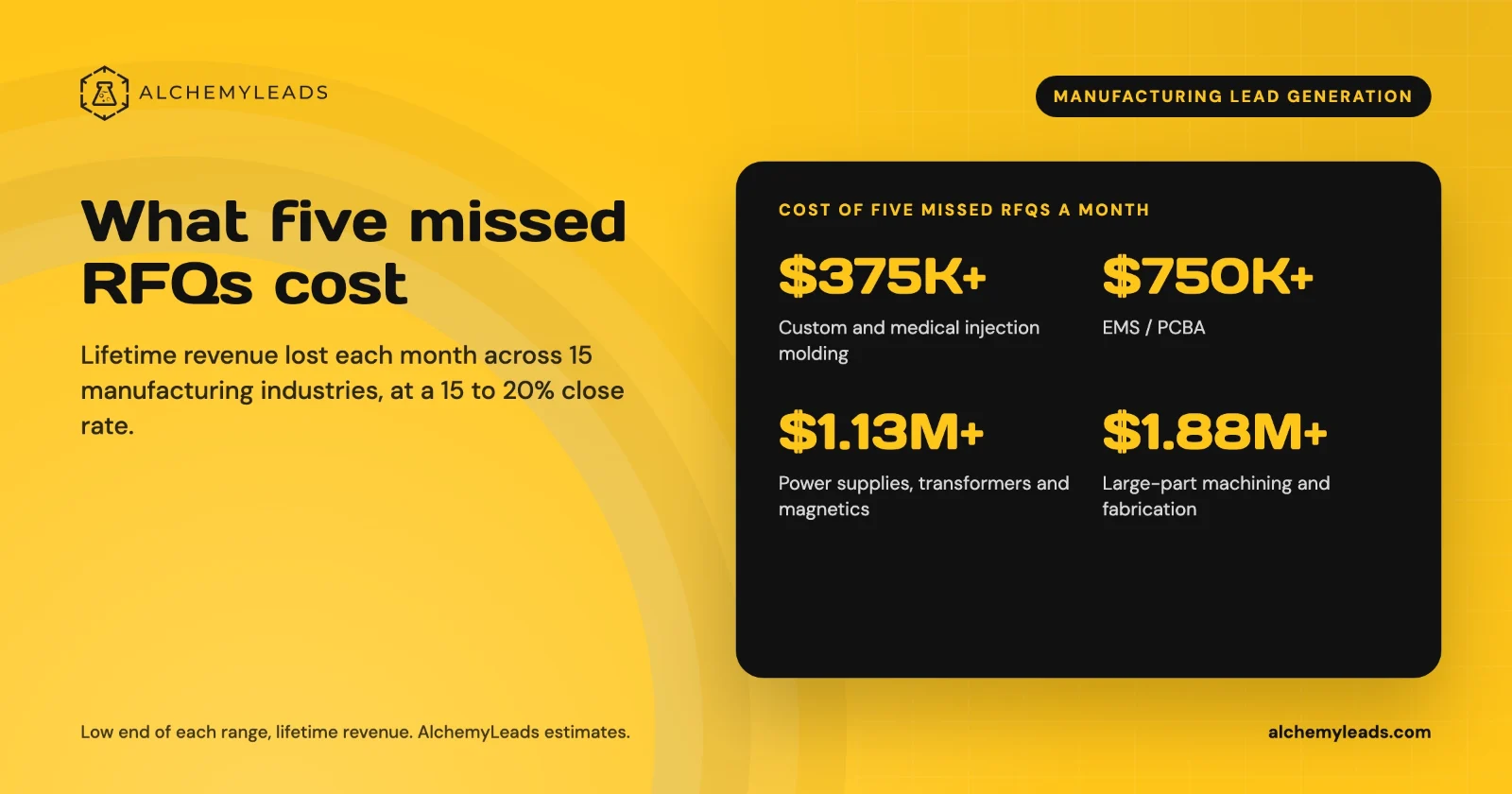
The Cost of Inaction in Manufacturing Lead Generation: What Five Missed RFQs a Month Cost in 15 Industries
What five missed RFQs a month cost in 15 manufacturing industries, with customer lifetime values, a conservative 15 to 20% close rate, and a cost of inaction calculator.
October 27, 2026
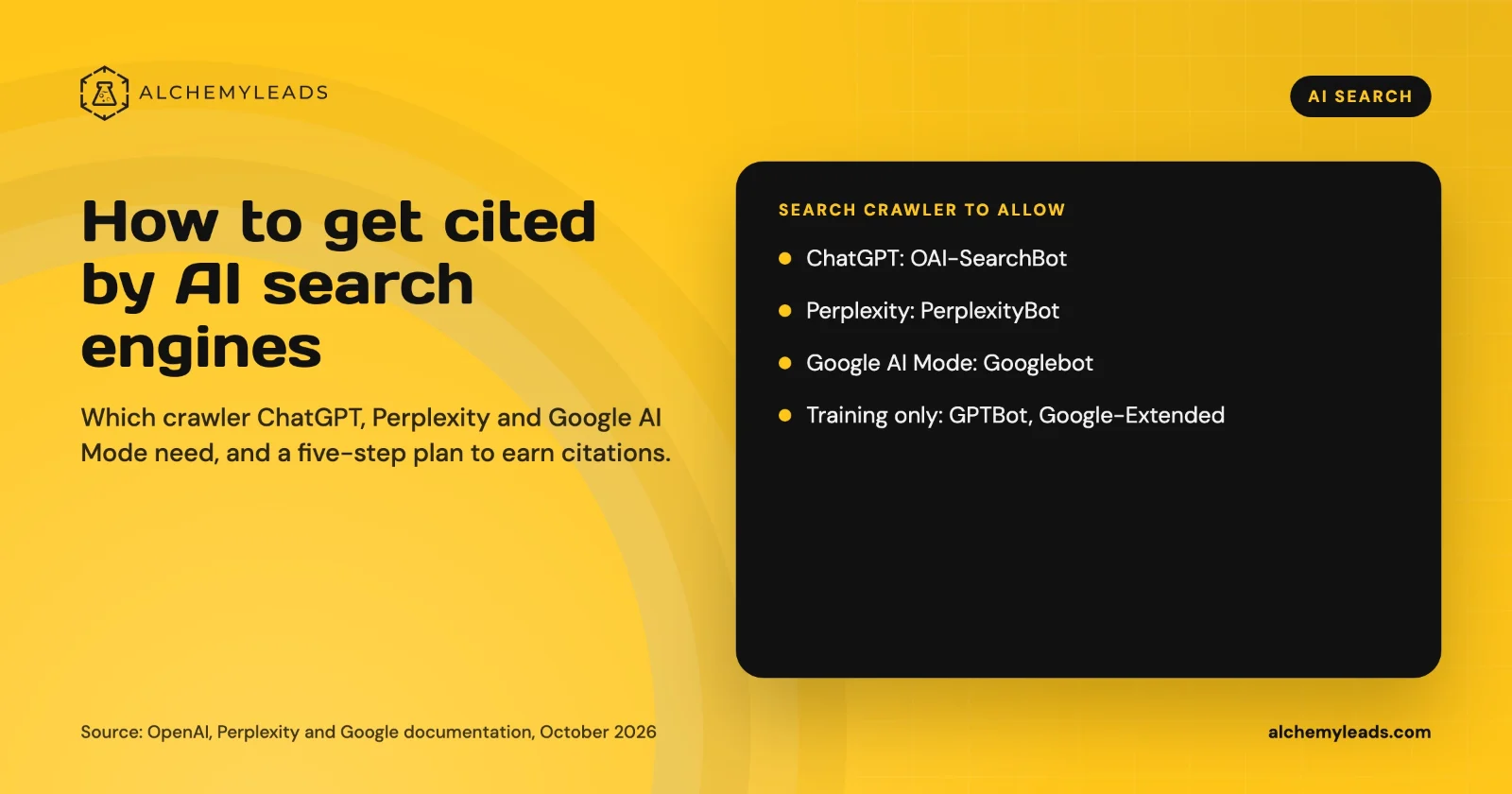
How to Get Cited by ChatGPT, Perplexity and Google AI Mode
How ChatGPT, Perplexity and Google AI Mode choose sources, which crawlers to allow, and a five-step plan to get your company cited, based on official docs.
October 26, 2026
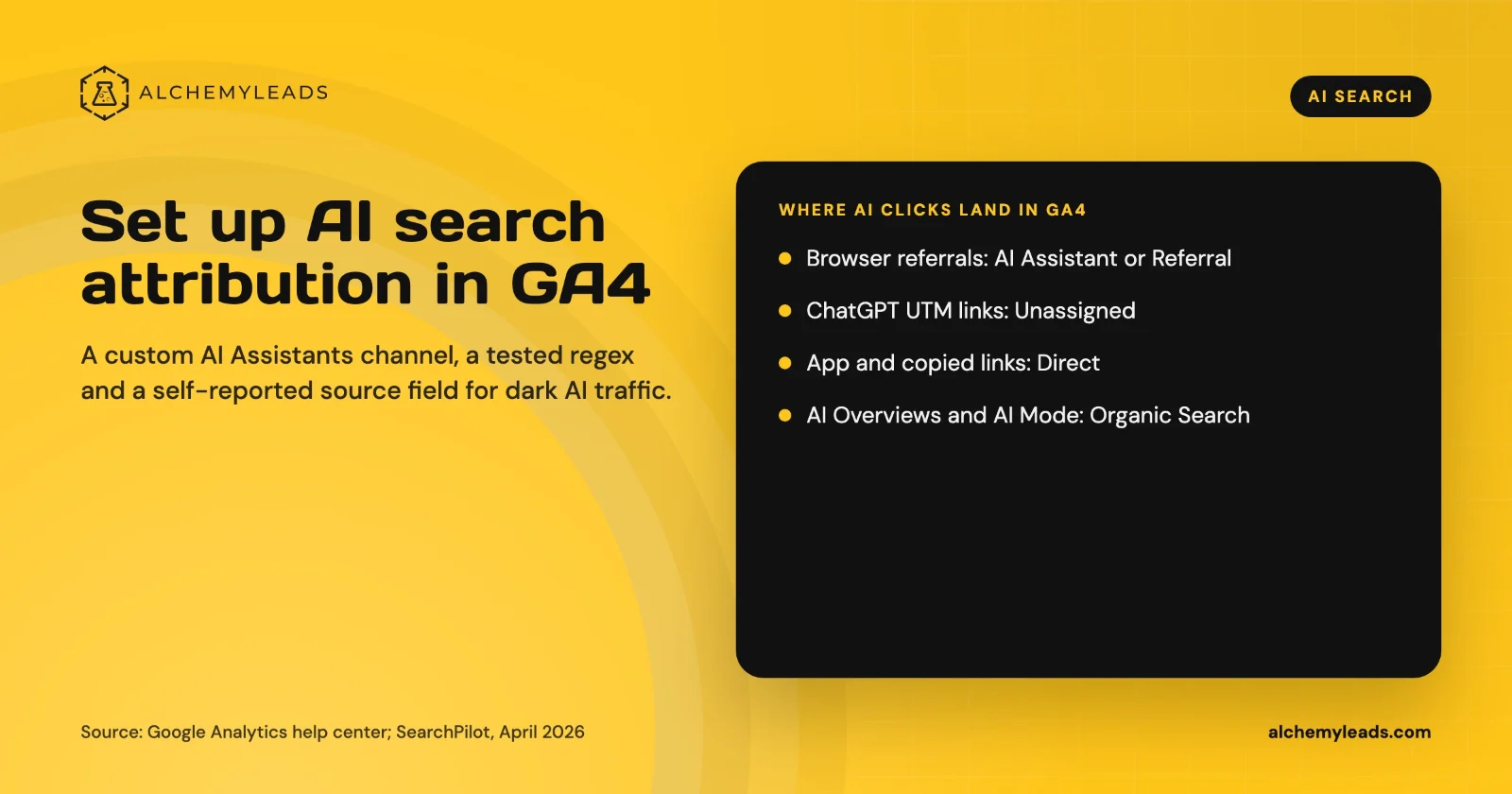
How to Set Up AI Search Attribution in GA4: A Step-by-Step Guide for 2026
Step-by-step GA4 setup for AI search attribution: an AI Assistants channel, a copy-paste regex, ChatGPT UTM fixes and a self-reported AI source field.
October 26, 2026
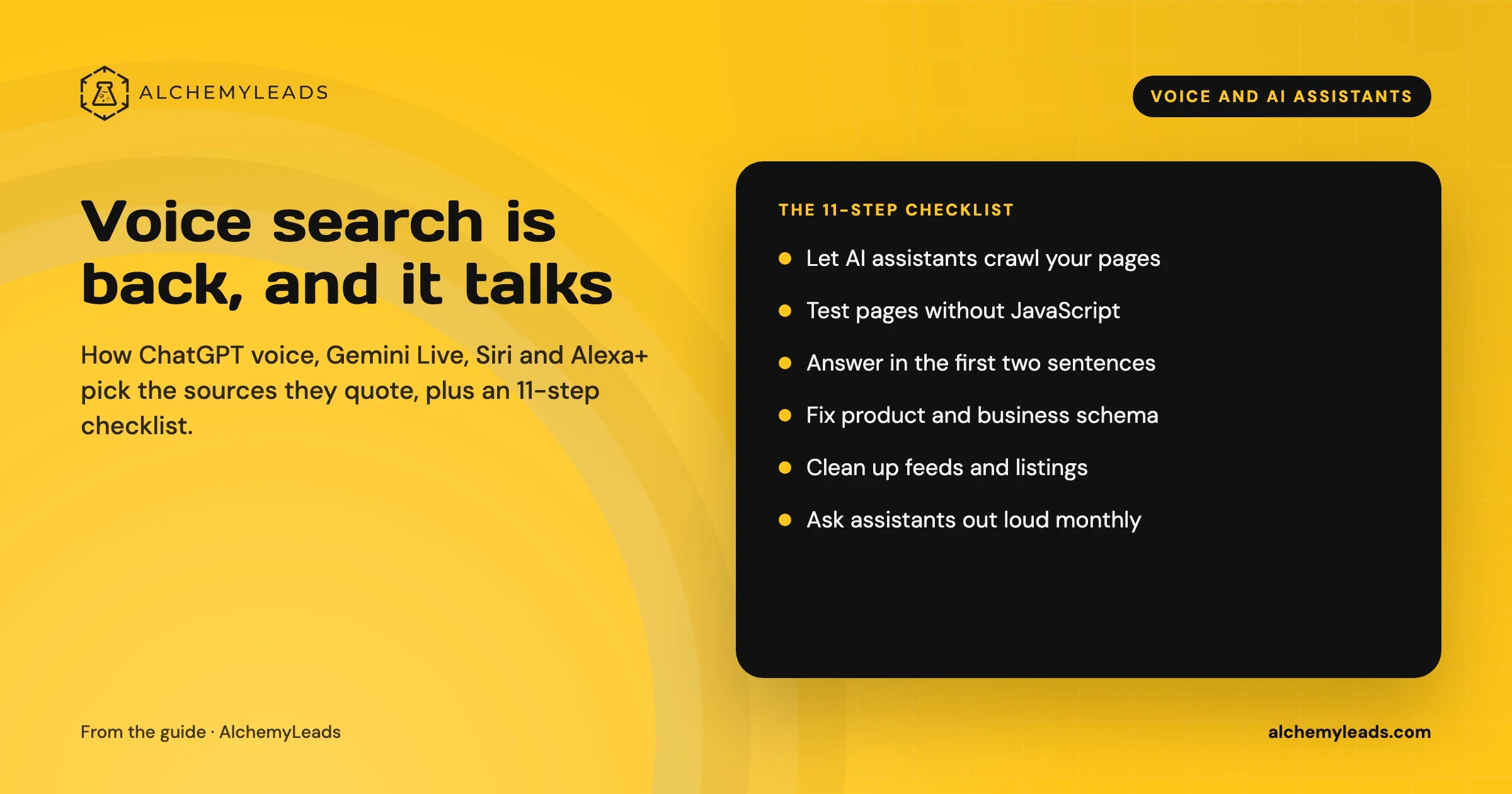
Voice Search in 2026: How AI Assistants Pick Their Sources
We first wrote about voice search in 2022, when the question was whether “Hey Siri” and “OK Google” would change how people shop. Four years later, voice is back in a bigger form. People now talk to ChatGPT, Gemini, Siri, Alexa+ and Copilot the way they talk to a knowledgeable friend, and those assistants answer by reading the web in
October 17, 2026
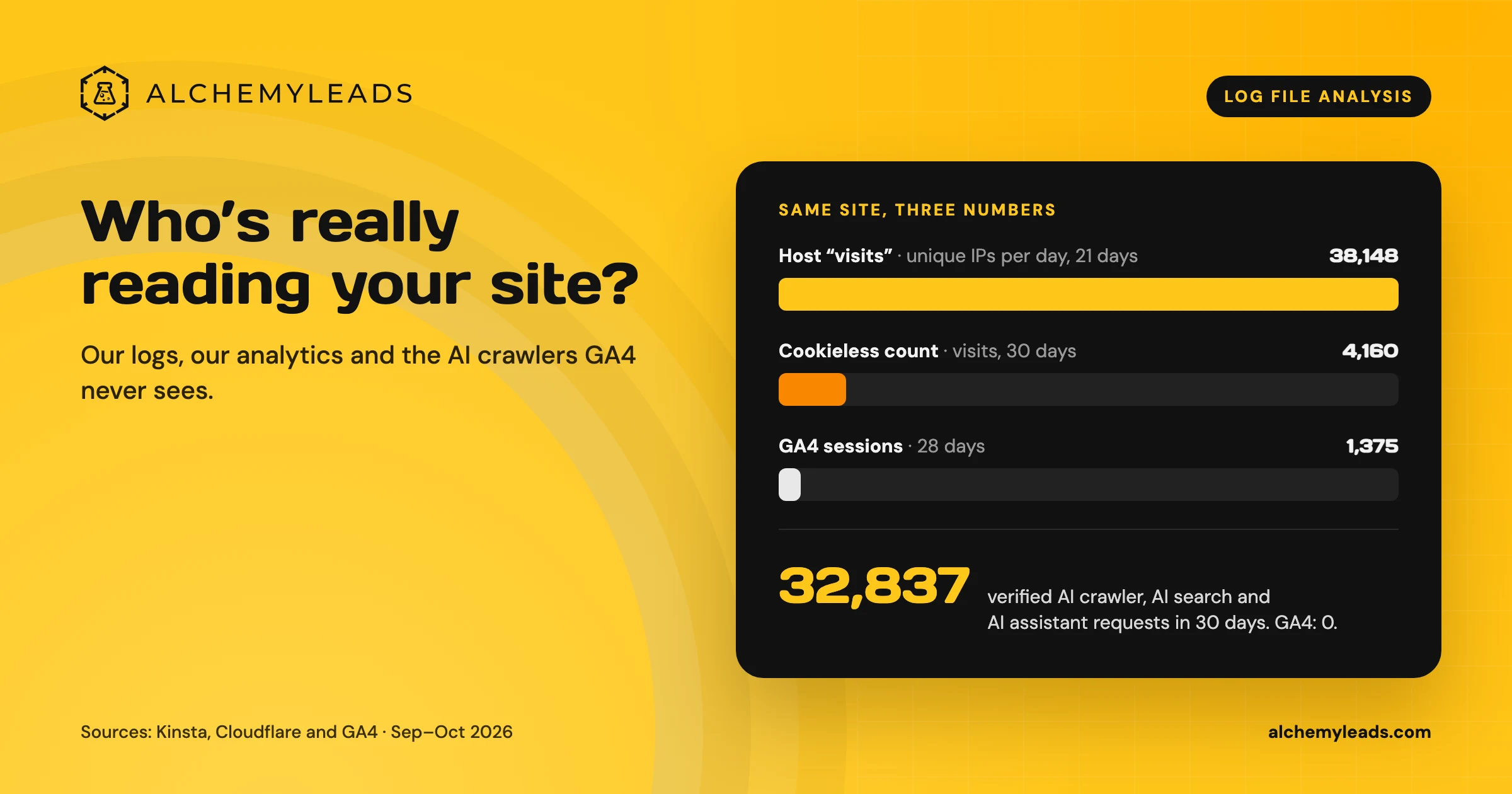
Log File Analysis for AI Search: Our Logs Showed 38,148 Visits. GA4 Showed 1,375.
Our host logged 38,148 visits. GA4 logged 1,375 sessions. We opened the server logs to see who was really there, and what AI crawlers read.
October 16, 2026
Contact us
We value your privacy and won't share your email with others.
We'll only contact you with curated content.
