
Add as a preferred source on Google
TL;DR
Medical device SEO is the work of getting device, diagnostics and lab products found in Google and cited in AI answers by the clinicians, engineers, distributors and procurement teams who buy them. It works when every page answers one buyer’s question, stays inside your cleared or approved labeling, clears your medical, legal and regulatory review, and is measured in demo and quote requests. Early signals usually appear in three to six months, and pipeline builds over six to twelve.
What is medical device SEO?
Medical device SEO is search engine and AI search optimization for companies that sell devices, diagnostics, lab equipment and related technical products to professional buyers. The goal is qualified pipeline: demo requests, quote requests and distributor inquiries from people who can buy.
The work covers four layers: technical health, so Google and AI crawlers can read your product and specification pages; content that answers each buyer’s questions; entity and schema work, so AI assistants describe your products the same way your labeling does; and measurement that connects search to your CRM. If you want a partner to run it, see our medical device SEO agency page.
How is medical device SEO different from healthcare SEO?
Healthcare SEO usually targets patients looking for a provider nearby. Medical device SEO targets a buying committee that researches for months and needs technical accuracy on every page.
That changes three things. The keywords are clinical and technical, such as specifications, indications, compatibility and ordering details. Every claim has to stay inside your cleared or approved labeling and pass your review process. And success is measured in pipeline across a long sales cycle, so local rankings and appointment bookings matter far less.
Who searches for medical devices?
Six roles drive most device and diagnostics purchases, and each one searches with different words. Map content to each role, a practice we cover in content journey mapping.
Clinician champions
Surgeons, physicians and nurses who ask about use cases, workflow and the evidence behind a product.
Biomedical and clinical engineers
They want specifications, compatibility, sterilization or cleaning methods, service and maintenance details.
Value-analysis and procurement
Committees that compare total cost, contracts, ordering details and alternatives across vendors.
Lab directors
Diagnostics and lab buyers who search for throughput, test menus, instrument specifications and supplies.
Distributors
Partners who need product data, ordering codes and territory or partner information they can trust.
OEM engineers
Engineers who source components and subsystems and search by specification, tolerance and certification.
Which pages does a medical device website need?
A medical device site needs one strong page for each question a buyer asks before they contact sales. These are the page types that rank and get cited most often in technical B2B categories:
- Product pages with a plain one-sentence description, key specifications in a table, and the cleared or approved indications as written in your labeling.
- Specification and compatibility pages for engineers, with model numbers, dimensions, materials and accessories.
- Use and application pages scoped to your labeled indications, one application per page.
- Comparison pages that compare product lines or methods fairly, using data your regulatory team approves.
- Ordering, service and distributor pages that answer how to buy, who sells where, and what support looks like.
- An evidence library that links to the published studies and documents your team approves for promotional use.
Our technical SEO work makes sure these pages are crawlable, fast and marked up with the right schema, and our guide to FAQ schema covers one of the easiest wins.
How do you keep medical device SEO inside FDA and FTC rules?
Keep every page inside your cleared or approved labeling and route it through your medical, legal and regulatory (MLR) review before it is published. Your regulatory team decides what is allowed. The SEO team’s job is to make approved content findable.
- Start from labeling. The cleared or approved indications and claims set the boundaries for every page.
- Tie each performance statement to evidence. Every number or performance claim points to a source your team supplies and approves.
- Write with your experts. Engineers, product managers and clinical specialists supply the facts. Writers shape them for search.
- Review before publishing. Health and medical companies run compliance checks, so all content needs their approval before it goes live. Medical, legal, regulatory and compliance reviewers sign off on every page and have the final say.
- Plan for review time. Build approval rounds into the content calendar from the first month.
- Handle testimonials and reviews carefully. Collect and publish them within the FTC endorsement rules and your company’s policy.
Search and AI tools reward specific, accurate pages. A page that sticks to approved claims, states them plainly and links to its evidence is also the kind of page AI assistants quote.
How do you get a medical device company cited in ChatGPT and Google AI Overviews?
AI assistants cite pages they can parse, trust and quote, and they lean on third-party lists for “best vendor” questions. You need both: clear, specific pages on your own site and accurate mentions on the sites AI tools already cite.
On your site, that means question-led headings, an answer in the first sentence under each heading, specification tables, consistent product names, and entity-based SEO so AI tools connect your brand to the right products. Off your site, it means consistent product data with distributors and directories, and a place on the industry lists buyers and AI tools use. Our post on how AI content is fetched, cited and mentioned explains the difference.
This works in technical B2B. An industrial ground monitoring manufacturer earned 4,500 AI citations across just 18 pages in six months, and an aerospace manufacturer earned 74,808 Google AI impressions in three months. To see how AI tools describe your company today, run the AI Visibility Checker. Our AI SEO and GEO service covers the full process.
How does medical device SEO generate qualified leads?
Medical device SEO generates leads when each page a buyer finds ends in a clear next step, such as a demo request, a quote or RFQ, a sample request or a distributor inquiry, and every one of those requests is tracked from its first search to a closed deal in your CRM. Rankings and AI citations only matter when they lead to those conversations.
Match each conversion to the buyer who makes it
The six roles who research devices each want a different next step. Give every page the action that fits the person most likely to read it.
| Conversion | Who asks for it | Where it belongs |
|---|---|---|
| Demo or evaluation request | Clinician champions, lab directors | Product and use pages |
| Quote or RFQ | Value-analysis and procurement, OEM engineers | Specification, comparison and ordering pages |
| Sample or reagent request | Lab directors, OEM engineers | Consumables, supplies and component pages |
| Distributor or partner inquiry | Distributors | Distributor and territory pages |
| Technical question for an applications specialist | Biomedical and clinical engineers | Compatibility, service and IFU pages |
Keep the forms short and ask the questions sales needs to route the lead: role, facility type, product or application of interest, and country or territory. A biomedical engineer with a compatibility question should reach an applications specialist, while a procurement lead with an RFQ should reach a sales rep the same day.
Gate the right documents
Leave the documents that help buyers judge fit open to read: specifications, compatibility tables, instructions for use and safety information. Those pages are what Google ranks and what AI assistants quote, and a gated PDF earns neither. Gate the material a buyer only wants once they are seriously evaluating, such as validation data packages, configuration guides, ROI or workflow models, and service plans. A buyer who downloads one of those is telling you they are in an active evaluation.
Know what counts as a qualified med-tech lead
A qualified lead is a person at an organization you can sell to, with a need your cleared or approved product meets, in a territory you serve. In practice, sales accepts a lead when it checks four boxes:
- Role: a clinician, lab director, engineer, value-analysis member, buyer or distributor with a part in the decision.
- Organization: a hospital, health system, reference or university lab, clinic, OEM or distributor that fits your market.
- Need: a specific product, application or replacement, inside your labeled indications.
- Timing: an active evaluation, a budget cycle, a tender or RFP, or an instrument nearing end of life.
Filter out patients, students, job seekers, vendors and requests from countries where your product is not cleared or sold. Route patient and consumer questions to customer service, and send any message that mentions a product problem or injury to your complaint-handling team the same day. Device makers must keep complaint files under FDA’s Quality Management System Regulation, in effect since February 2, 2026, and a web form can be where a complaint first arrives.
Volume is low in this market and the value of each lead is high. Our clinical lab diagnostics case study notes that large university and hospital clinical labs are worth five to six figures a year, and that a lab tends to keep running a testing platform once it validates one. Our guide to the cost of missed RFQs shows the math for technical B2B sellers.
Track leads from organic and AI search into your CRM
Connect every form to your CRM with the source attached, so each opportunity shows the search or AI visit that started it.
- Record the landing page, referrer and UTM values in hidden form fields, and pass them to the CRM contact and deal.
- Set up an AI assistants channel in GA4 so visits from ChatGPT, Perplexity, Gemini and Copilot are counted on their own. Our AI search attribution guide for GA4 has the steps.
- Add a “How did you hear about us?” field. Many buyers see your name in an AI answer and come back later by typing your URL, and this field is often the only place that shows up.
- Mark lead stages in the CRM (new, sales accepted, opportunity, won) and judge SEO by the pipeline and won deals that start in search.
Our CRM and tech integrations team builds this connection for HubSpot, Salesforce and other CRMs.
Keep follow-up inside your labeling
FDA rules still apply after a lead leaves your website. Under 21 CFR 801.4, a device’s intended use can be shown by labeling claims, advertising matter, or oral or written statements by the company or its representatives. That includes nurture emails, chatbot answers and what sales reps say on a demo. Run lead nurture emails and website chat scripts through the same MLR review as your pages. FDA oversees the advertising of restricted devices and the FTC oversees advertising for devices that are not restricted, as the GAO’s 2023 review of device advertising oversight lays out, so ask your regulatory team which rules apply to each product line.
How long does medical device SEO take?
Early signals such as rankings and AI citations often appear within three to six months. Qualified demo and quote requests usually build over six to twelve months, and closed deals take longer because hospital and lab buying cycles are long.
Review cycles add time, so plan for them. Much of the early impact also shows up as direct traffic from buyers who saw your name in an AI answer, which we explain in our post on the dark AI funnel. More detail on timelines is in how long AI SEO takes.
A 10-point medical device SEO checklist
Use this checklist to see where your site stands before you hire anyone.
- Each product has its own page with a one-sentence description and a specification table.
- Indications and claims on every page match your cleared or approved labeling.
- Every performance statement links to approved evidence.
- Specification, compatibility, ordering and distributor questions each have a page.
- Headings are written as the questions buyers ask, with the answer in the first sentence.
- Product, Organization and FAQ schema are in place and valid.
- Product names and specifications match across your site, distributor listings and directories.
- Search Console is reviewed for conversational and AI-style queries; our free AI Query Classifier sorts them for you.
- GA4 and your CRM record demo requests, quote requests and pipeline from organic and AI traffic, as covered in our analytics work.
- Your MLR review process has a set turnaround so content keeps moving.
Should you hire a medical device SEO agency?
Hire an agency when you need technical SEO, regulated content, AI search and pipeline measurement working together faster than an in-house hire can cover them. Choose one that can show device or diagnostics results, works inside your MLR process, and measures pipeline.
We lay out nine checks, and what we can show on each, in how to choose a medical device SEO agency. For general vetting, use our questions to ask an AI search agency. Our medical device work includes a clinical lab diagnostics manufacturer, where AI engines cited its site 9.6K times in six months across 159 different pages, its pages earned 64.4K impressions in Google AI Overviews and AI Mode over the same period, and direct sessions grew 48.8% from January 1 to October 26, 2026, versus the previous period. An industrial cleanroom manufacturer that builds cleanrooms for pharmaceutical, biotech and medical device facilities grew monthly sales pipeline from $1M to $2.7M in 90 days. All results are on our client reviews and case studies page.
Frequently Asked Questions
What is the difference between medical device SEO and medical device marketing?
Medical device SEO is the search and AI-visibility part of medical device marketing. Marketing also covers paid media, trade shows, sales enablement and PR. See our medical device and med-tech marketing services for the full program.
Can medical device companies do SEO under FDA rules?
Yes. Product and educational content can rank and get cited in AI answers while staying inside your cleared indications and approved claims. Your regulatory team reviews every page before it is published and has the final say.
Does medical device SEO help with ChatGPT and Google AI Overviews?
Yes. The same clear, specific, well-structured pages that rank in Google are the pages AI assistants quote. Consistent product data across distributor and directory sites helps AI tools describe your products accurately.
What should medical device SEO measure?
Measure qualified demo and quote requests, sales pipeline, cost per opportunity, rankings and AI citations. Traffic alone says little in a market where a few searches can lead to a large order.
How much does medical device SEO cost?
Cost depends on catalog size, content volume and review time. Our plans are listed on our pricing page.
Is AlchemyLeads a good fit for medical device and med-tech companies?
Yes, if you are a medical device, med-tech, diagnostics, lab or cleanroom company with roughly $5M to $150M in annual revenue that sells high-value products through a long, committee-led sales cycle. We also work with industrial and manufacturing and aerospace companies. We are selective and only take on engagements where we see a strong probability of success, which is a big reason 95% of new clients since 2020 (38 of 40) have stayed with us longer than 12 months.
How do medical device companies get leads from SEO?
Medical device companies get leads from SEO by ranking and getting cited for the questions buyers ask, then giving each page a clear next step: a demo request, quote or RFQ, sample request or distributor inquiry. Each request is tracked into the CRM so you can see which searches turn into pipeline.
What is a qualified lead for a medical device company?
A qualified lead is a buyer, clinician, engineer, lab director or distributor at an organization you can sell to, with a need your cleared or approved product meets, in a territory you serve, and with a reason to act now, such as an evaluation, tender or budget cycle. Patients, students, job seekers and vendors are not qualified leads.
Should medical device spec sheets be gated?
Usually no. Specifications, compatibility tables and instructions for use help buyers decide and are the pages Google ranks and AI assistants quote, so keep them open. Gate deeper evaluation material, such as validation data packages, configuration guides and ROI models, where a download signals an active evaluation.
How do you track leads from ChatGPT and AI search?
Track AI search leads with an AI assistants channel in GA4, hidden form fields that pass the referrer, landing page and UTM values into your CRM, and a “How did you hear about us?” field. Many AI-influenced buyers return by typing your URL, so the self-reported field catches leads analytics files as direct.
Suggested
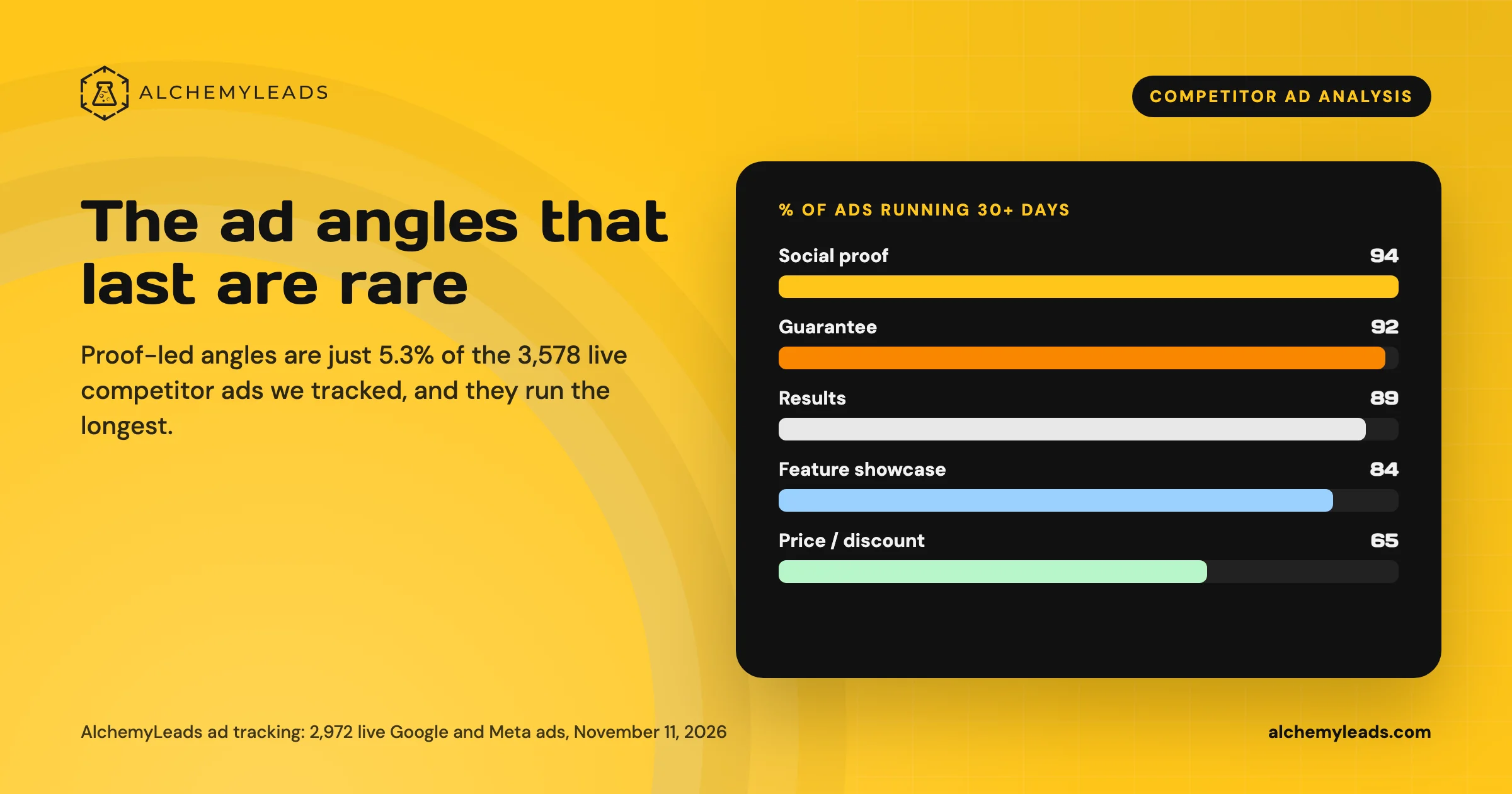
Competitor Ad Analysis: What 3,578 Live Ads Say About the Creative That Lasts
We tracked 3,578 live competitor ads on Google, Meta and LinkedIn. Proof-led angles are the rarest and run the longest. See the data and the playbook.
November 11, 2026
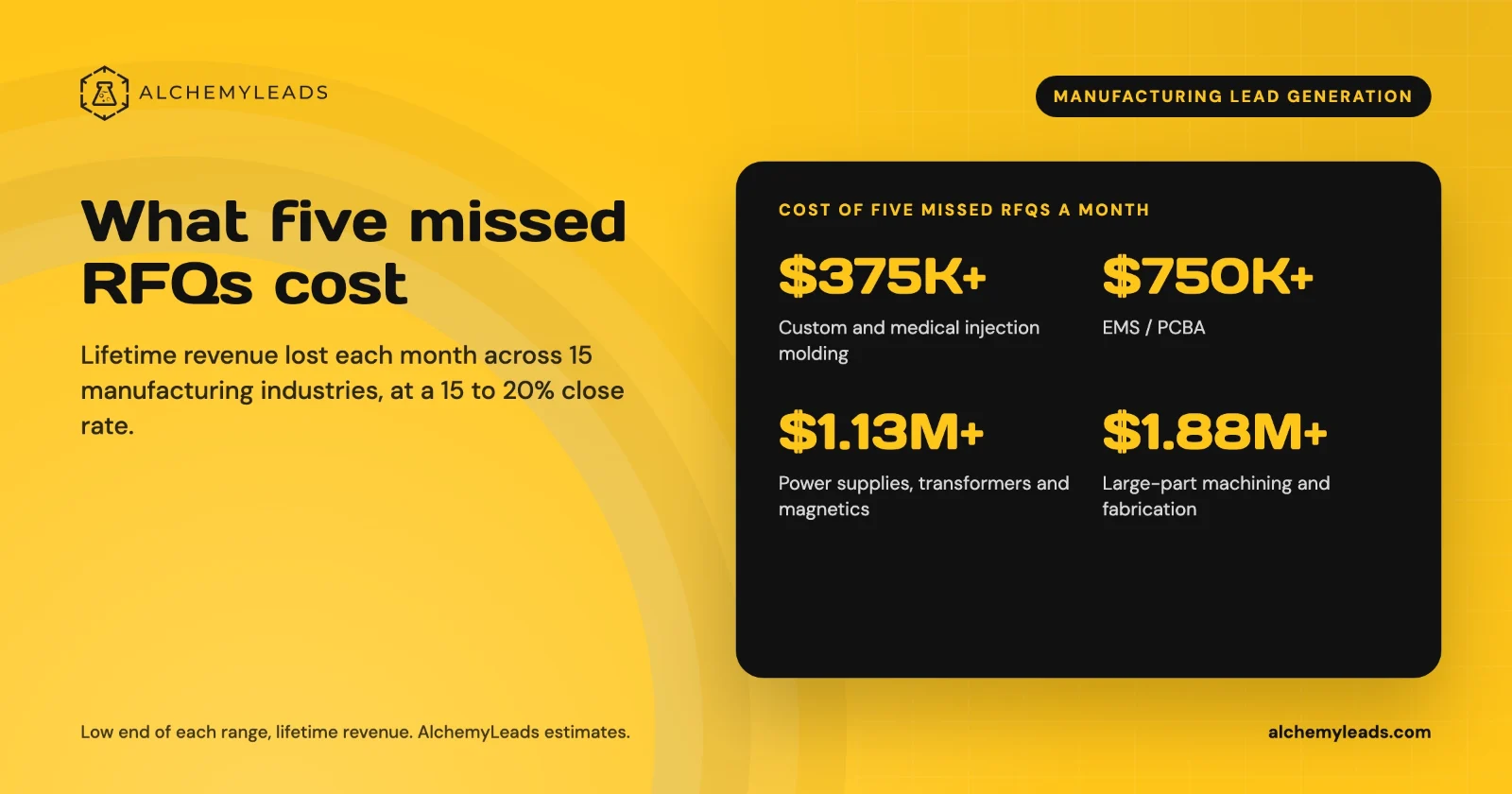
The Cost of Inaction in Manufacturing Lead Generation: What Five Missed RFQs a Month Cost in 15 Industries
What five missed RFQs a month cost across 15 manufacturing industries, with a cost of inaction calculator.
October 27, 2026
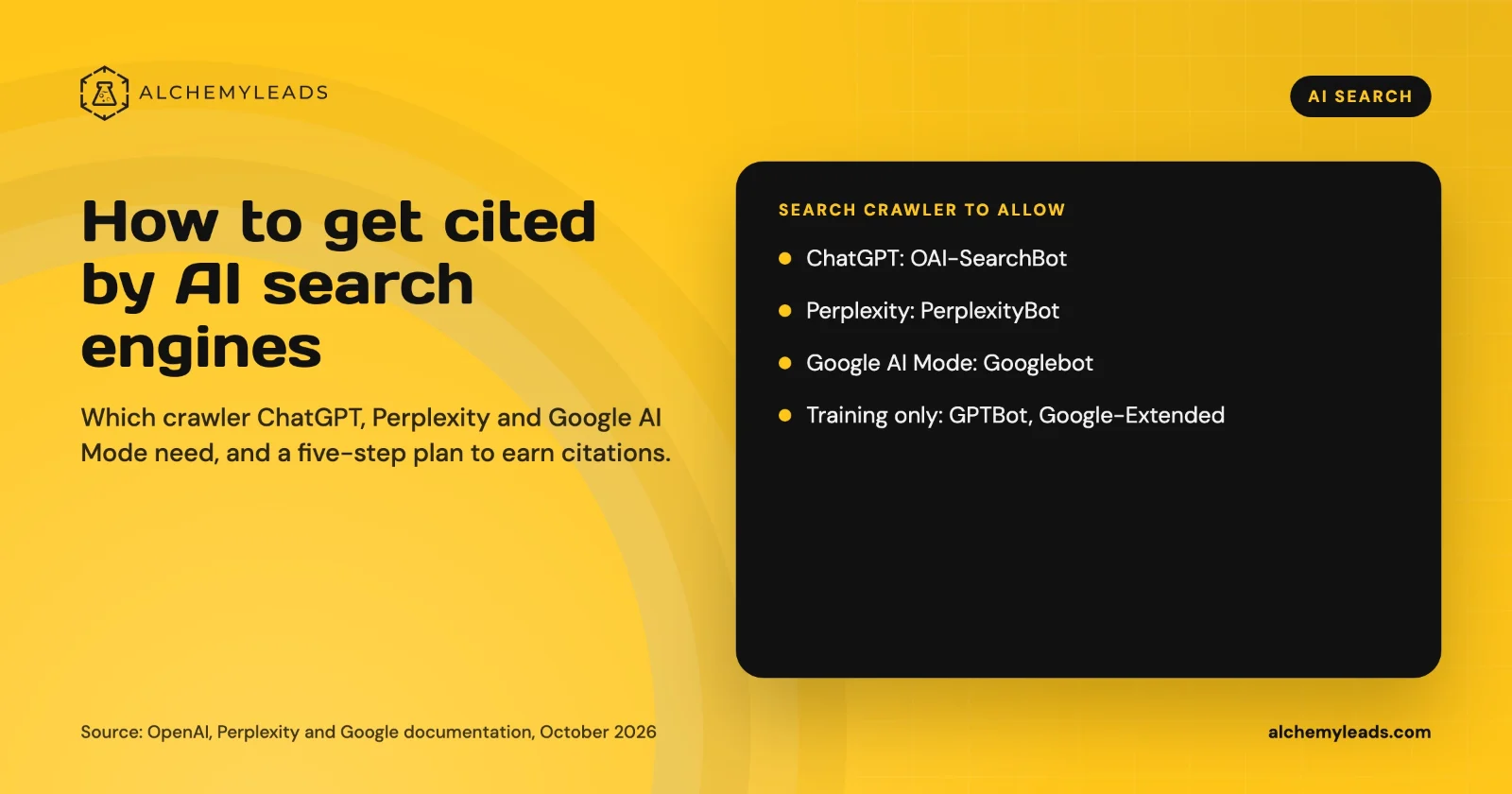
How to Get Cited by ChatGPT, Perplexity and Google AI Mode
How ChatGPT, Perplexity and Google AI Mode choose sources, which crawlers to allow, and a five-step plan to get your company cited, based on official docs.
October 26, 2026
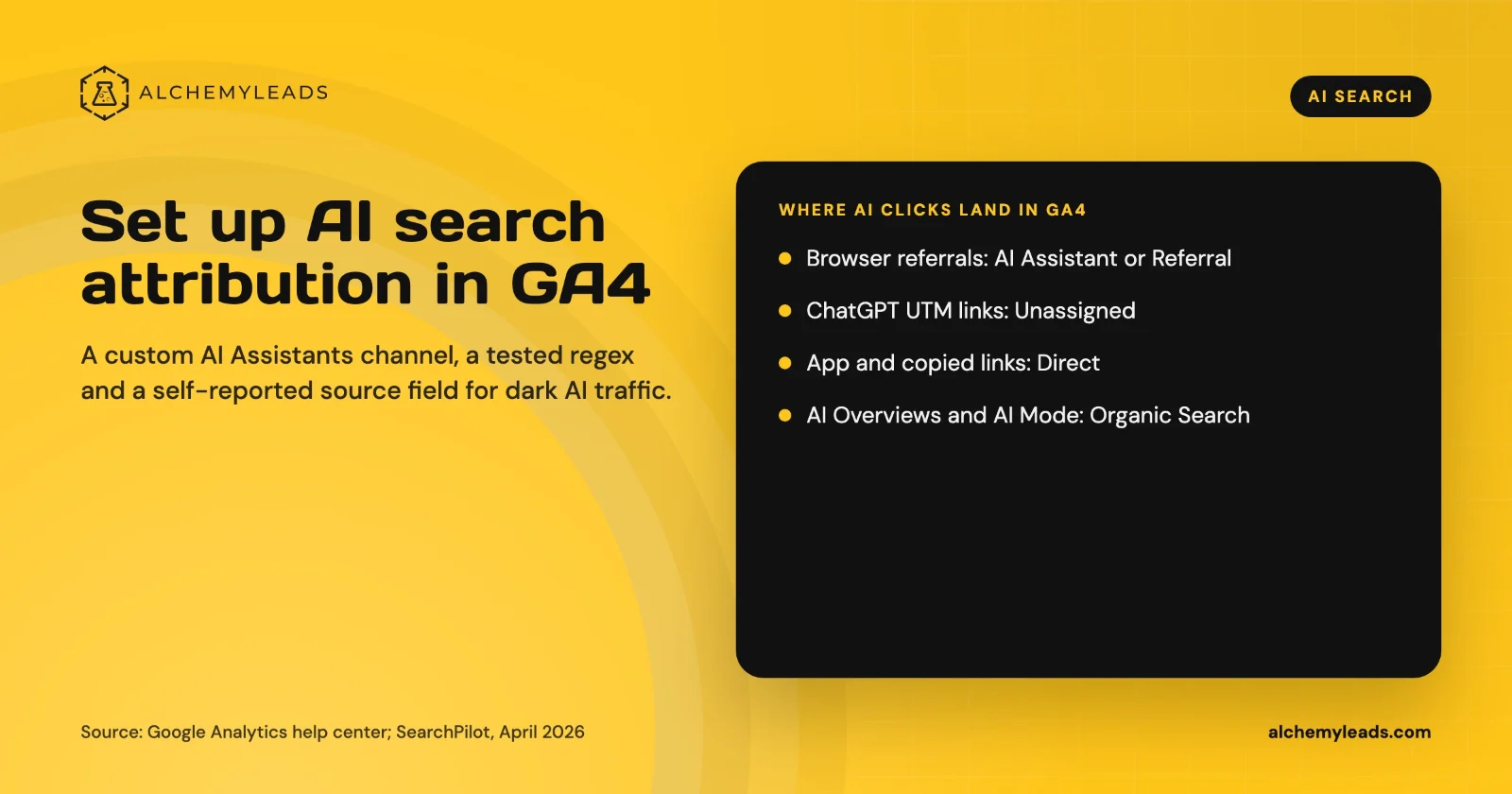
How to Set Up AI Search Attribution in GA4: A Step-by-Step Guide for 2026
Step-by-step GA4 setup for AI search attribution: an AI Assistants channel, a copy-paste regex, ChatGPT UTM fixes and a self-reported AI source field.
October 26, 2026
Voice Search in 2026: How AI Assistants Pick Their Sources
We first wrote about voice search in 2022, when the question was whether “Hey Siri” and “OK Google” would change how people shop. Four years later, voice is back in a bigger form. People now talk to ChatGPT, Gemini, Siri, Alexa+ and Copilot the way they talk to a knowledgeable friend, and those assistants answer by reading the web in
October 17, 2026
Contact us
We value your privacy and won't share your email with others.
We'll only contact you with curated content.
