
You ran the test every marketer runs now. You asked ChatGPT about your category, watched your brand name show up in the answer, and felt good for about ten seconds. Then you checked your traffic. Nothing moved.
Here is the part nobody explains. A mention is not a citation. And a citation is not the same as the page that got read. AI search has three different outcomes for your content, and only one of them sends a click.
Most GEO advice jumps straight to “how to get cited.” That skips the step that actually helps. This post backs up and shows you the machine underneath, with numbers we pulled ourselves from live AI answers.
The Three Outcomes: Fetched, Cited, or Mentioned
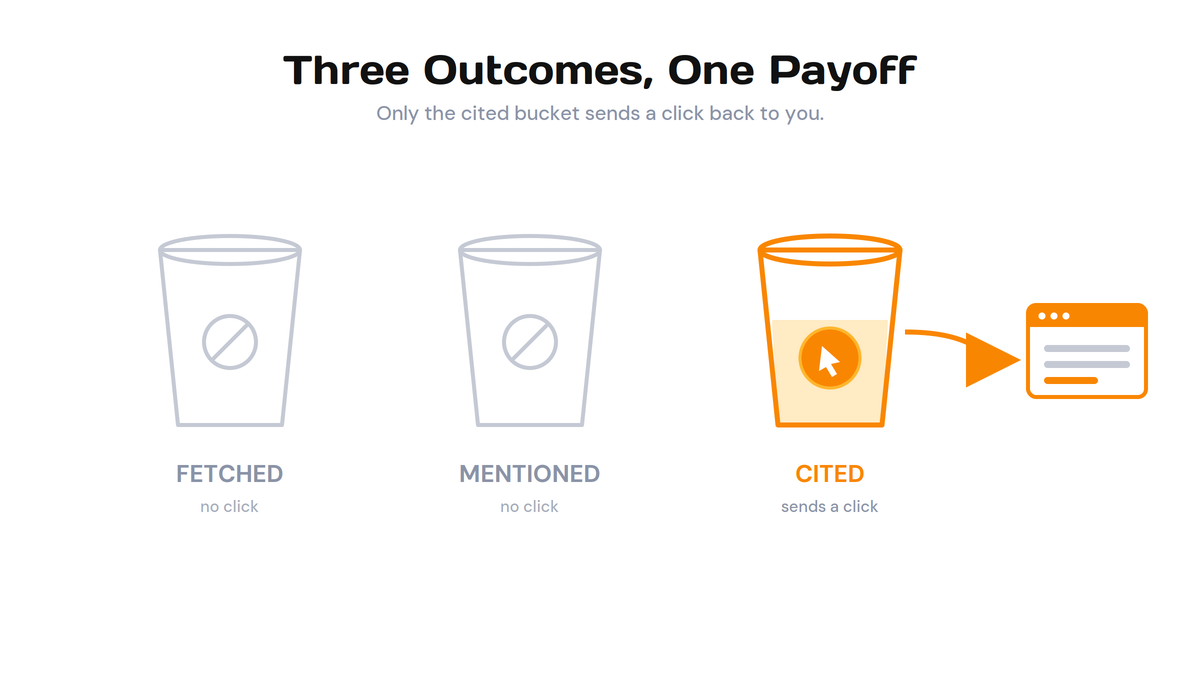
When an AI answer engine handles a query, your content lands in one of three buckets.
| Outcome | What Happens | Sends a Click? |
| Fetched | The model reads your page in private to shape its answer. No footnote, no trace, and the page gets forgotten a second later. | No |
| Mentioned | Your brand name shows up in the answer text, but nothing links back and no claim leans on your page. | No |
| Cited | Your page is tied to a specific sentence with a clickable source, so it sends a reader and tells the model you backed a real fact. | Yes |
Three buckets. One of them pays. The other two feel like progress and do nothing for your pipeline.
A researcher named Suganthan Visagan pulled the raw network traffic behind ChatGPT to see which bucket sites fell into. Reddit got fetched 278 times across his sample and cited just 11 times. YouTube got fetched 201 times and cited zero. The model opened those pages over and over. It almost never gave them credit.
So the goal is not “get read.” Plenty of pages get read and forgotten the same second. The goal is the footnote.
We Tested It: 73% of Citations Skip the Vendor
We ran 15 buyer-style queries through Perplexity and logged every source it cited. For the 8 commercial “best tool” searches, the pattern was hard to miss.
Out of 79 citations, 73% went to third-party pages. Only 27% pointed at the vendors’ own sites. The tools got recommended by name. The credit went to listicles, review sites, and forums that wrote about them.
Ask “best local SEO software” and Perplexity cites Reddit, G2, and Capterra. Ask “best rank tracking software” and it cites roundup blogs, not the trackers themselves. The vendors are in the answer. They are almost never the source.
Read that twice if you sell something. The page that wins the footnote is usually not yours.
The Agency Test That Made It Click
One search hit close to home. We asked Perplexity for the best SEO agency in Los Angeles, our own backyard.
It cited Clutch, Yelp, GoodFirms, TheManifest, and Mayple. Directories, every one. Then it named a handful of agencies in the answer, and not a single one of those agencies had its own website cited. The model trusted the directories to rank them and used the agency sites for nothing.
That is the whole lesson in one query. If you want to show up when a buyer asks AI for a recommendation, your homepage will not get you there. The pages AI already trusts will. We were not even in the answer, which told us exactly where to spend the next month.
Why AI Reads Your Page and Drops It
Now the part you can fix this week. Some pages get fetched and dropped for a dull reason: the model could not read the part that mattered.
We pulled 30 software pricing pages the way a basic crawler sees them, with no JavaScript running. 4 of them showed no price at all in the raw code. The numbers load later, in the browser, after scripts fire. A crawler that reads the HTML first sees a blank space where the price should sit.
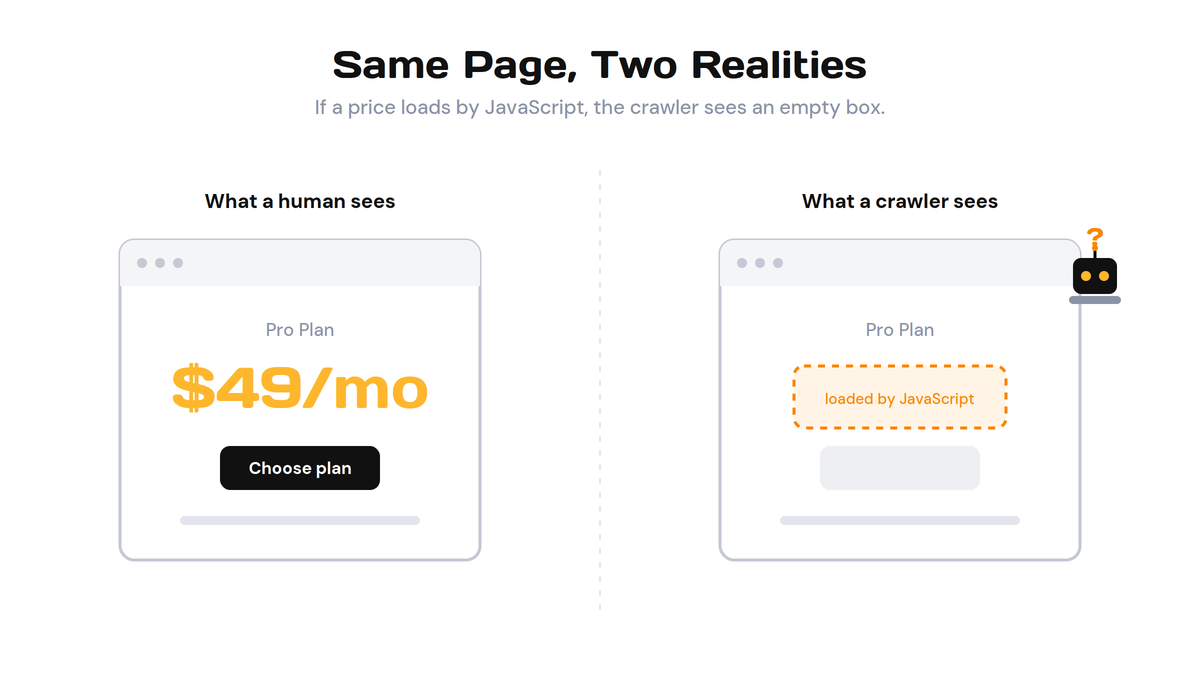
The worst case was Profound, a tool built to track AI visibility. Its pricing page returned 114 bytes of code. Near enough to empty. Suganthan saw the same failure from the other side: when Profound’s price would not load, ChatGPT stopped trying and cited G2 instead.
| Pricing Page | Price in the Raw HTML? |
| profound.ai (114-byte shell) | No |
| peec.ai | No |
| hubspot.com/pricing/marketing | No |
| canva.com | No |
| 26 others (Ahrefs, Semrush, Stripe, and more) | Yes |
The lesson writes itself. If a number matters, put it in plain text. Price, specs, dates, the stat you want quoted. If it only appears after JavaScript fires, treat it as invisible to AI. A human with a browser sees it. The crawler that decides your citation does not. This is the cheapest GEO fix on the list, and most teams skip it since the page looks fine on screen.
The Four Pipes Your Content Travels Through
Citations do not come from one place. ChatGPT routes requests through separate source pipes, and the pipe depends on what you asked.
| Source Pipe | Fires On | Example Sources |
| Licensed publishers | News and reference questions | Reuters, the Guardian, Wikipedia |
| Commercial scraper | Shopping, finance, weather | Retail and market data feeds |
| Regional scraper | Local and regional questions | Local listings and directories |
| Open web | General news | Plain organic results |
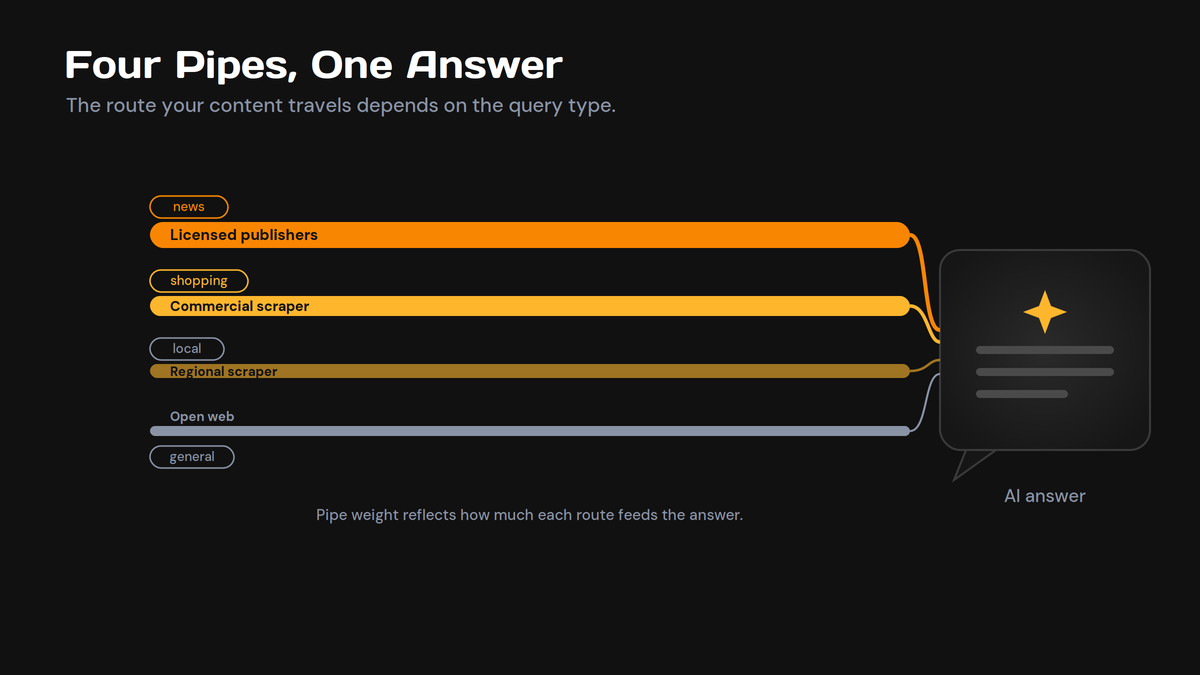
You do not pick the pipe. You pick whether your page survives the trip clean. Picture two pages answering the same question. One states the answer in the first paragraph, in text, with a clear heading. The other buries it under a video, a cookie wall, and a script that loads the real content a beat later. The first page travels through any pipe and arrives readable. The second arrives broken and gets dropped.
The same splitting logic decides how one question becomes many smaller searches behind the scenes. We broke that down in our guide to query fan-out for GEO, and it pairs directly with everything here.
You Cannot Be Your Own Source
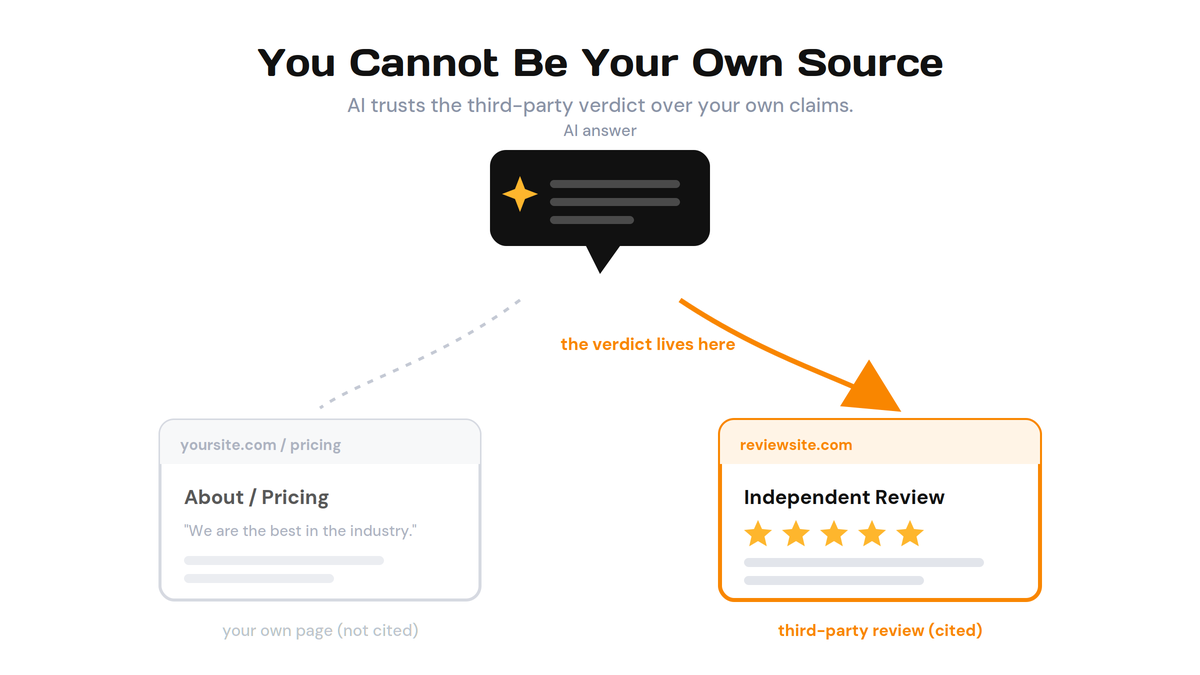
Here is the rule that frustrates founders most. AI will quote your page for your own facts: the price, the spec sheet, the launch date. It will not quote you for the verdict.
“Best,” “most reliable,” “worth the money,” those calls come from somewhere else. A review site. A Reddit thread. A roundup that ranked ten tools and put you third. The model reads your homepage as a sales pitch, which it is, and hunts for a neutral party to settle the judgment.
That is why thin, scattered pages lose. Ten near-identical pages, each saying a little, get collapsed into one weak result or none at all. One strong page that owns a single claim gets read, kept, and cited. We made that argument in our piece on non-commodity content, and AI search keeps proving it right.
So the question shifts. It moves from “how do I rank my page” to “who does AI trust to vouch for me, and am I on that page yet?”
One More Thing the Test Showed
One query out of our 15 got no web sources at all. We asked “what is answer engine optimization,” and Perplexity answered straight from memory. No citations. No links. The model decided it already knew enough.
That matters for planning. Some questions trigger a live search you can win. Others get answered from training data you cannot touch this quarter. Phrasing decides which path runs. A question that sounds current and specific is far more likely to pull live sources than a broad definition the model thinks it memorized years ago. If you want a citation, target the questions that still send the model looking.
A Citation Is a Trust Vote, Not Just a Link
It helps to see the footnote as more than a traffic source. When AI cites you, two things happen at once. A reader can click through, and the model logs your page as a source it trusted for that exact claim.
The second part compounds. Pages that get cited for clean, checkable facts tend to get pulled again for the next related question. A mention fades by the next session. A citation builds a track record the model can lean on later.
That is why we tell clients to treat the first citation in a topic as a beachhead, not a trophy. Win one clean fact, earn the footnote, and the next question in that cluster gets easier to take. Lose it to a review site and you are renting space inside someone else’s authority, paying rent in the form of buyers who never learn your name.
So count the citations and let the mentions go. A wall of brand mentions with no footnotes is a vanity metric. One citation on a question your buyers ask is a foothold you can grow.
How to Move From Fetched to Cited
You cannot force a footnote. You can stack the odds. Here is where we point clients.
- Put facts in plain text. Numbers, prices, and specs belong in readable HTML, not in an image, a PDF, or a script that loads them late.
- Build one strong page per claim. Pick the question you deserve to own and answer it in full on one URL. Retire the thin duplicates that split your authority.
- Get written about. Pitch the review sites, earn the roundup spots, answer the Reddit thread like a human. Third-party pages won 73% of the citations in our test, so that is where the credit lives.
- Structure for meaning. Clear headings, direct answers, and clean entity names help the model match your page to the right question. Our guide to semantic SEO walks through the how.
That last point sits at the center of our AI SEO work. The brands that get cited are rarely the loudest. They are the easiest to read, quote, and trust.
The Honest Caveat
These numbers are a snapshot. Our test ran 15 queries on one tool across a few days. Suganthan’s ran on one account. The pipes, the ratios, the formatting rules, all of it moves week to week, and anyone who tells you the system is fixed is selling something.
The mechanic holds even as the percentages drift. AI fetches widely, cites narrowly, and trusts third parties for the verdict. Build for that and you stay cited through the changes.
So stop chasing the mention. Chase the citation. It is the only one of the three that ever shows up in your traffic report.
Want to see which questions your buyers ask AI, and who gets cited instead of you? Book a call and we will map it for your category.
Related guide: how AI search retrieves, grounds and cites sources.
Suggested
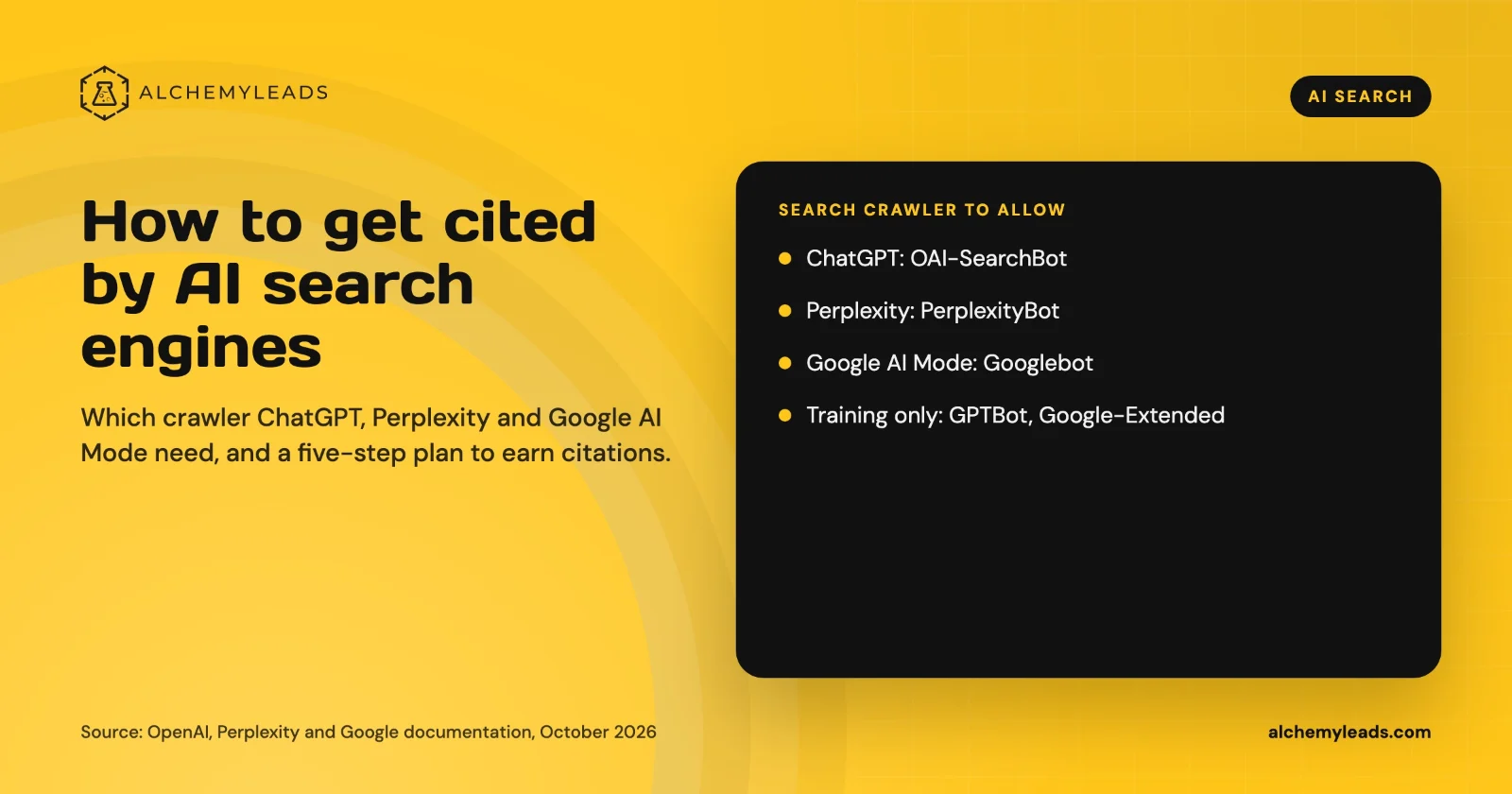
How to Get Cited by ChatGPT, Perplexity and Google AI Mode
How ChatGPT, Perplexity and Google AI Mode choose sources, which crawlers to allow, and a five-step plan to get your company cited, based on official docs.
October 26, 2026
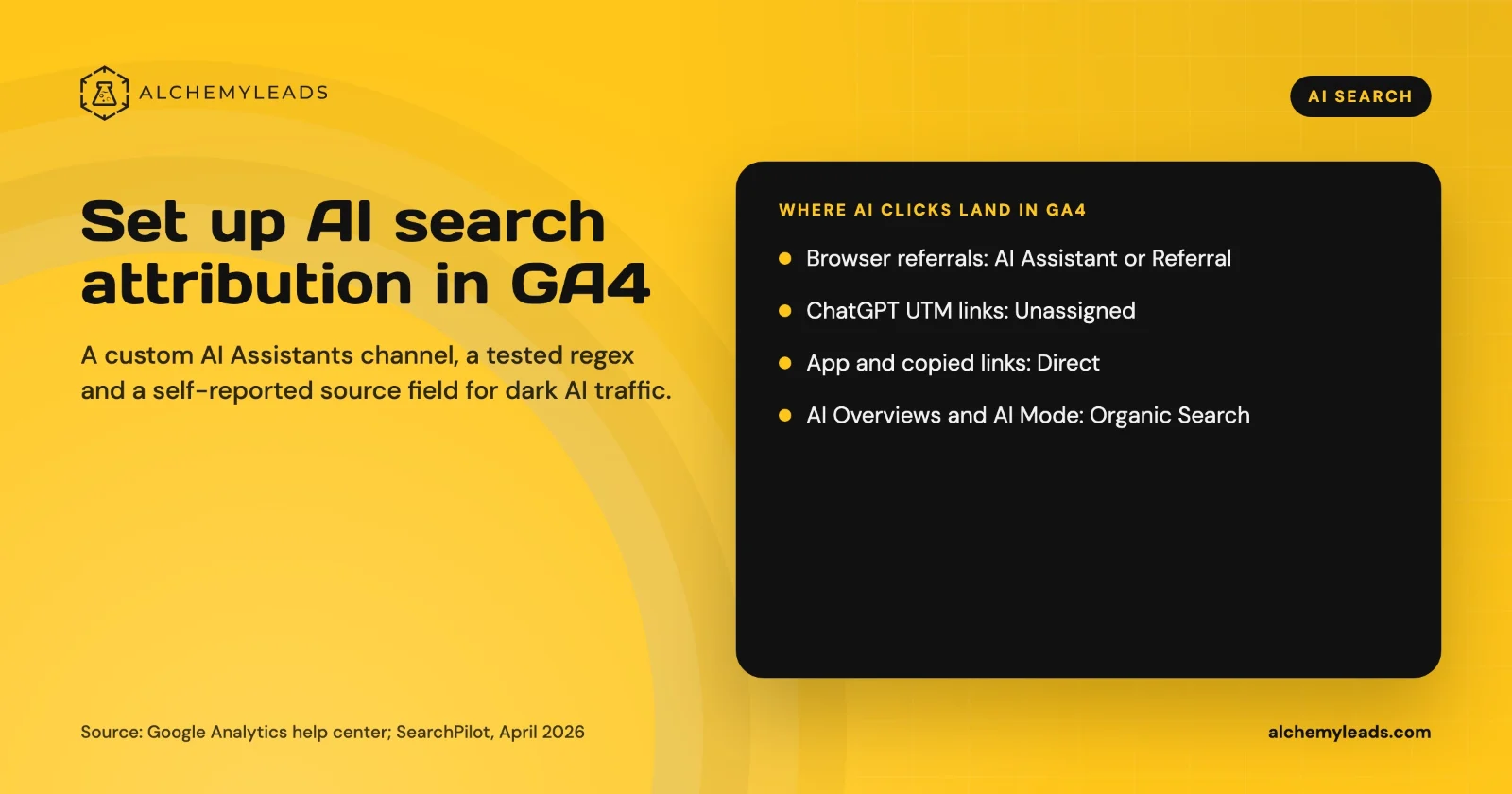
How to Set Up AI Search Attribution in GA4: A Step-by-Step Guide for 2026
Step-by-step GA4 setup for AI search attribution: an AI Assistants channel, a copy-paste regex, ChatGPT UTM fixes and a self-reported AI source field.
October 26, 2026
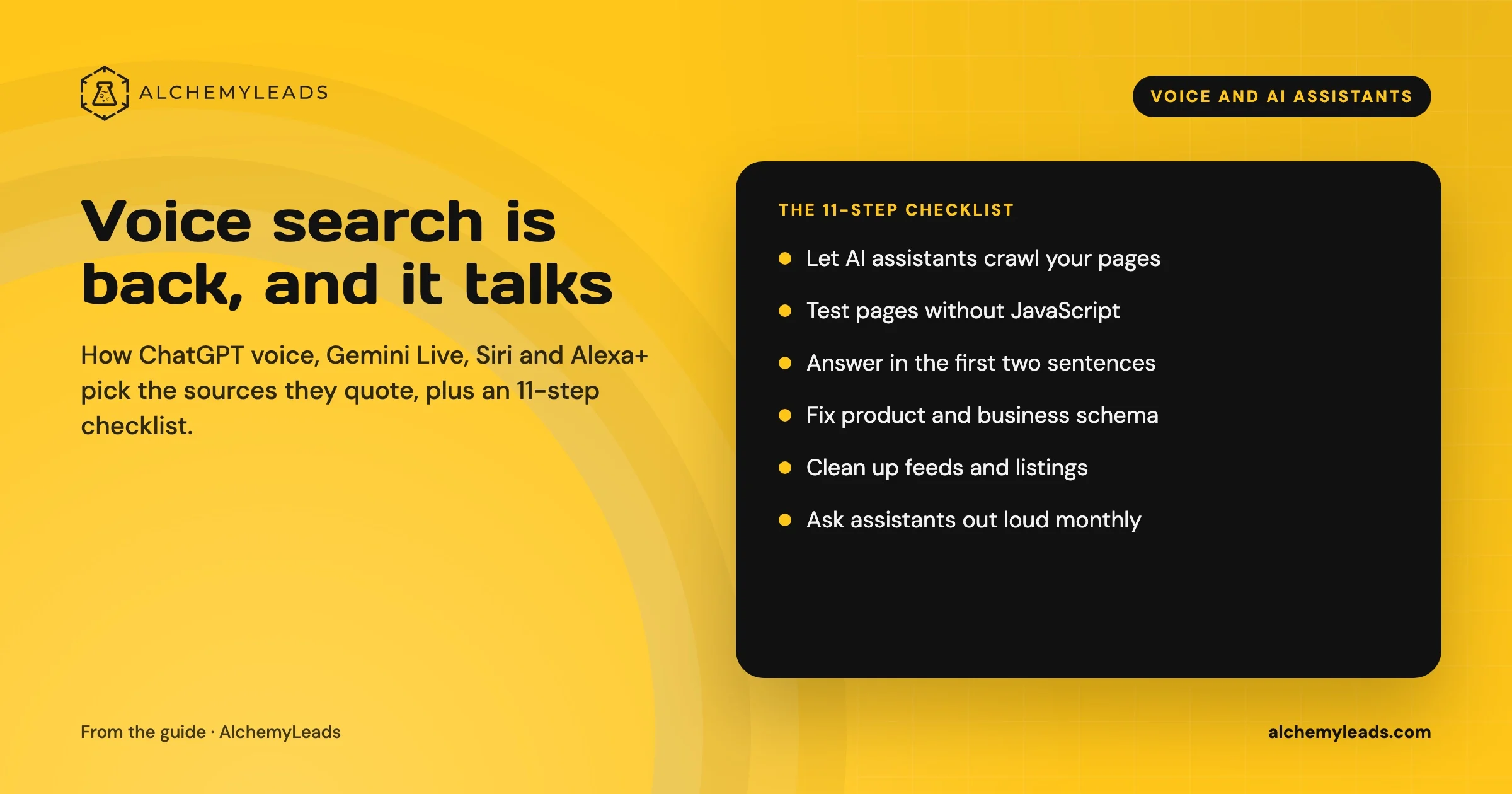
Voice Search in 2026: How AI Assistants Pick Their Sources
We first wrote about voice search in 2022, when the question was whether “Hey Siri” and “OK Google” would change how people shop. Four years later, voice is back in a bigger form. People now talk to ChatGPT, Gemini, Siri, Alexa+ and Copilot the way they talk to a knowledgeable friend, and those assistants answer by reading the web in
October 17, 2026
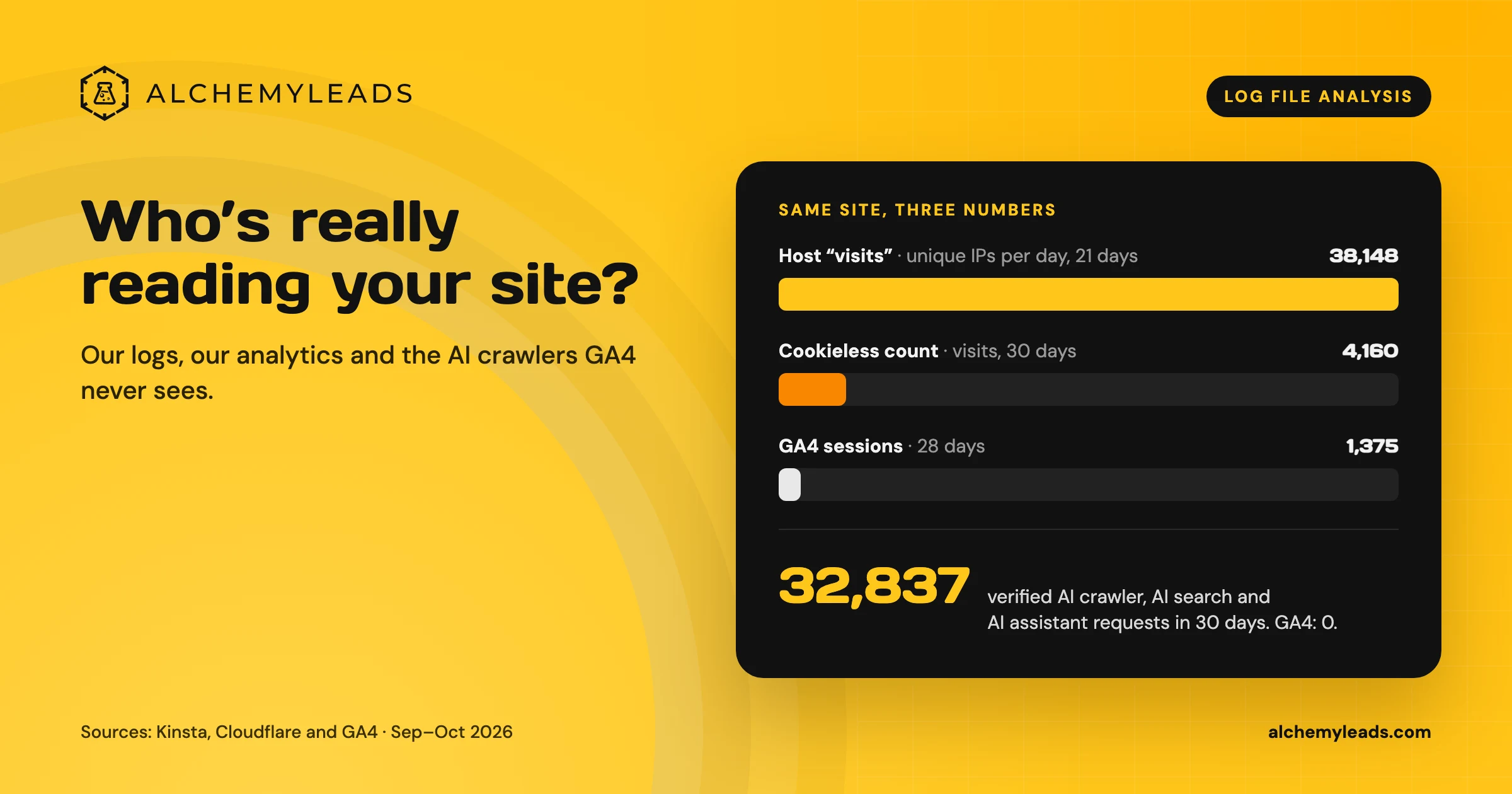
Log File Analysis for AI Search: Our Logs Showed 38,148 Visits. GA4 Showed 1,375.
Our host logged 38,148 visits. GA4 logged 1,375 sessions. We opened the server logs to see who was really there, and what AI crawlers read.
October 16, 2026
Why We Love Cloudflare for AI Search: 7 Ways We Use It for GEO and AEO
How we use Cloudflare DNS, bot rules, Content Signals and Workers to make our sites fast, crawlable and citable for ChatGPT, Claude and Perplexity.
October 16, 2026
Contact us
We value your privacy and won't share your email with others.
We'll only contact you with curated content.
