
Snapchat Tips and Tricks
Put most simply, Snapchat is a messaging app where the messages self destruct after a certain time (or after viewing).
According to Wikipedia:
Using the application, users can take photos, record videos, add text and drawings, and send them to a controlled list of recipients. These sent photographs and videos are known as “Snaps”. Users set a time limit for how long recipients can view their Snaps (from 1 to 10 seconds), after which Snapchat claims they will be deleted from the company’s servers.
Unlike your brand’s Facebook Page, YouTube channel, blog, Twitter feed, and almost everything else on the Internet, Snapchat is not about archiving or preservation.
Because the messages self destruct, users can get creative and imbue their “Snaps” with a sense of immediacy, secrecy, or ultra-honesty — and there’s less pressure on the content to be super high-quality since it won’t be around long anyway.
Snaps don’t usually feel like they’ve created for the eyes of the whole world. They feel more… personal and ephemeral. Which, of course, is the beauty of Snapchat as a digital marketing tool. You can communicate with your fans in a way that doesn’t come off as obvious promotion – Which is something that we all know turns off the coveted millennial generation.
Not only that, but studies have shown that Snapchat users are more engaged with brand messaging than on competing social media services.
One survey even showed that nearly half the users they spoke with would open a Snap from a brand they hadn’t even heard of before.
But before you answer the question for yourself about whether or not you should be using the app to market your business…
How to promote your brand on Snapchat:
Let’s look at some ways you can use Snapchat to communicate with fans:
Tell your audience how you’re feeling at that exact moment:
- Confess.
- Jump for joy.
- Go on a (short) rant.
- Again, because Snaps don’t last forever — unless someone is being tricky on the other end of the message — you can be as real as you want to be in the moment.
In fact, it’s probably best to think of these kinds of Snaps as the most important you create, because the more personal they feel, and the more frequently you make them,the more your followers will be amenable to Snaps that are more obviously promotional in nature.
Share information about exclusive discounts – This is probably the most common commercial usage of Snapchat that I see, from the Chinese restaurant down the street letting customers know what their daily specials are, to a band giving fans a 15%-off coupon code on merch for the day.
Preview new clips – Want to tease a new project you’re working on while you’re still in the office? Want to tease a new demo of a Beta Saas Project?
Or, if you’re in music or fashion – share 10-second clips of every song on your album in the days leading up to its release or a tease a quick preview of your new summer look book? Do it with Snapchat, and add some text or info about where fans can go to pre-order your music or clothing (like Proud2Pay or FBA)
Give your fans a behind the scenes glimpse – Product Development. Product Production. Friday Ping Pong Tournaments at the Office. The White Board filled with Marketing Scribble. Flying out to meet a client or to attend an Industry Conference (Hello, LeadsCon).
Whatever. Get personal. Get silly. It’ll all be a distant memory in 24 hours anyway!
Announce a new product or service – Show us. Or tell us. Or both.
Ask fans to create their snaps about your brand for greater engagement – It could be them at one of your conferences, or in your office, or a happy client promoting your good work, and so on.
You could also snap snippets of business meetings, or a sneak-peak at a new style guide or service your company is currently working on.
Making your Snaps stand out from the noise:
Okay, if you’re saying “Woah, hold on, back up, easy there, I don’t even know how to snap in the first place”, look no further:
You can add emojis, geofilters, drawings, time of day, text, and even your location, and speed in MPH to your snaps (PSA: Please don’t drive and Snapchat)
But there are a few other ways to spice things up on Snapchat, including:
Hidden colors — You can drag your finger across the screen to unlock a wider color palette that can be used in your drawings.
Stories — This feature puts different video and text elements together to create a larger narrative.
Adding music to Snaps — Just what it sounds like. This is done by running an audio app (such as Spotify, Pandora, Apple Music, etc.) at the same time as you’re creating a Snapchat video.
While we’re on the subject, there’s another benefit to letting Snapchat users react and engage with your brand: User-Generated Content (UGC) is huge, and can positively influence the Google Gods.
So make sure your brand ambassadors and fans know that you encourage and will entice them to be an active member in your community and share your brand’s story on Snapchat as much as they can.
Want some Snapchat inspiration?
Take a look at this music video, which was created by compiling a bunch of Snaps.
[contact-form-7 id=”130″ title=”Contact Page form 1″]Suggested
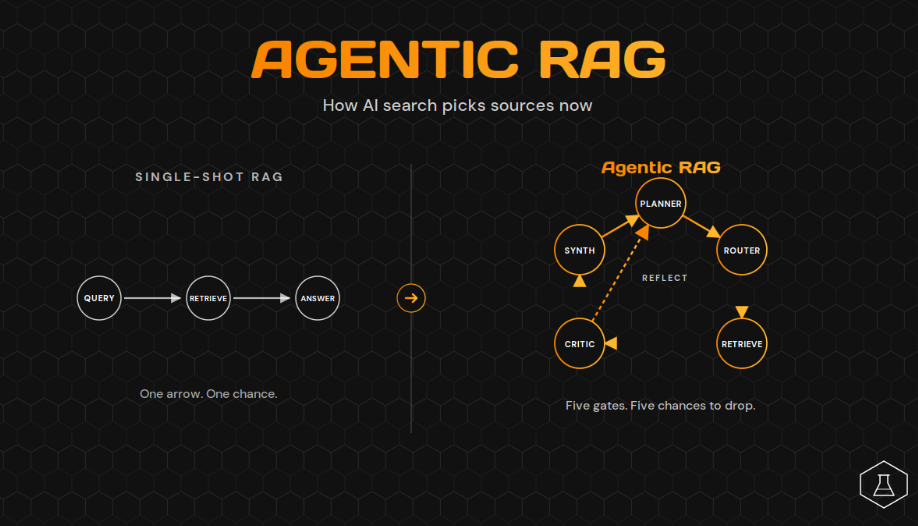
Agentic RAG: How AI Search Picks Sources Now
The retrieve-once-then-generate model that defined the first wave of AI search is over. Every major AI search platform has moved on. Google AI Mode, ChatGPT Search, Perplexity Pro Search, Claude with Computer Use, and the Microsoft Copilot agents all run a different architecture now. They plan. They route between tools. They retrieve, read, then retrieve again. They grade their own
May 22, 2026
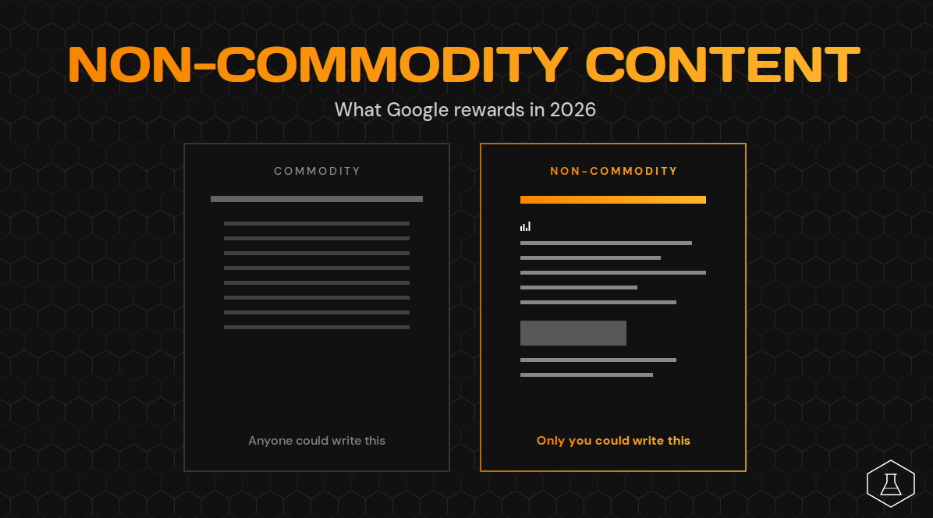
Non-Commodity Content
Google just gave the SEO industry a new term. Non-commodity content. Danny Sullivan introduced it at Search Central Live Toronto in April 2026, and Google’s updated AI Search guide put it in writing in May. The framing is sharp. Commodity content is anything someone with a content brief and an internet connection could write. Non-commodity content is the stuff only
May 20, 2026
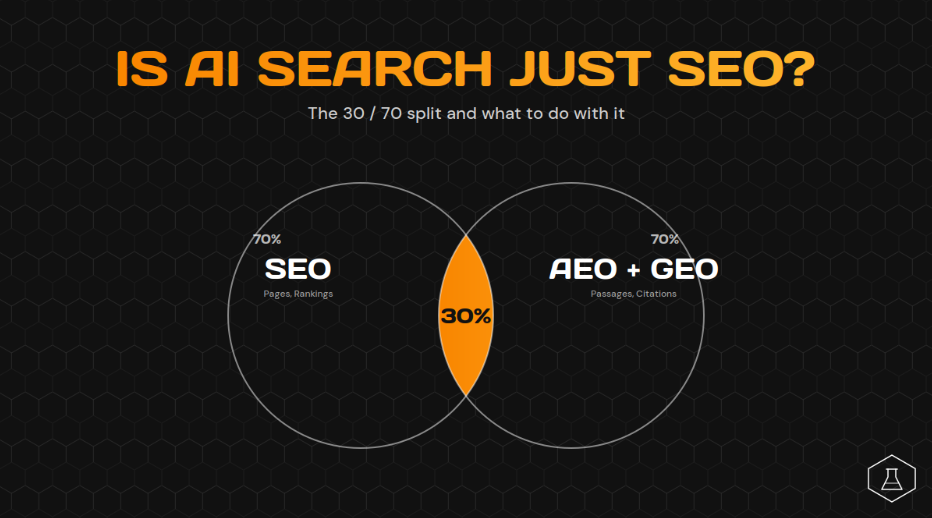
Is AI Search Just SEO? The AlchemyLeads Take
Is AI search just SEO? Half the industry says yes. The other half says no. Google says it’s all still SEO. Microsoft has been publishing posts that call it Generative Engine Optimization. Rand Fishkin at SparkToro pushes back on the new acronyms entirely. Two vendors have probably pitched you “GEO services” this quarter. Here’s the honest answer. Yes and no.
May 20, 2026
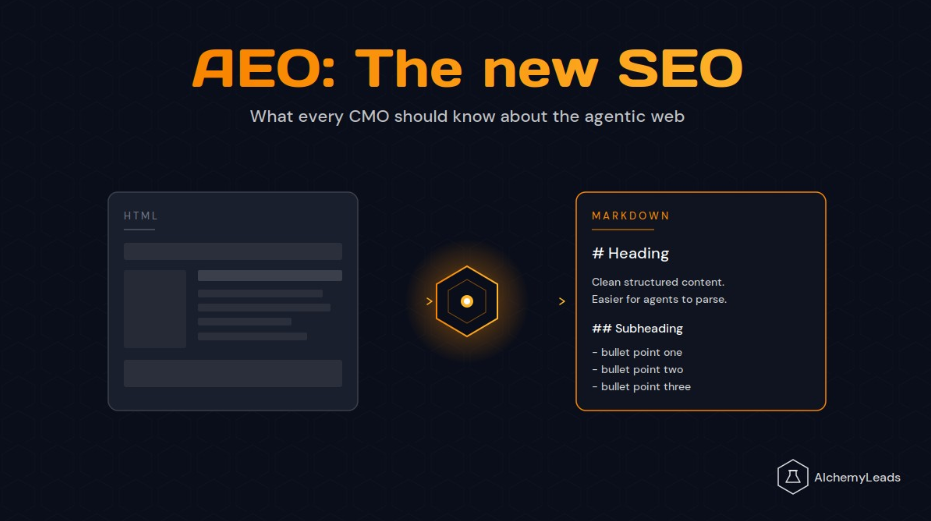
Agentic Engine Optimization: 6 Things Every CMO Should Be Learning Right Now
Every marketing leadership meeting in 2026 ends the same way. Someone says “AI agents.” The room nods. The meeting ends. Nothing on the site changes. That gap is starting to cost real revenue. AI agents are already on your site. They’re reading the docs, parsing the product pages, and deciding which brands to recommend to buyers who never see a
May 19, 2026
Revenue First SEO
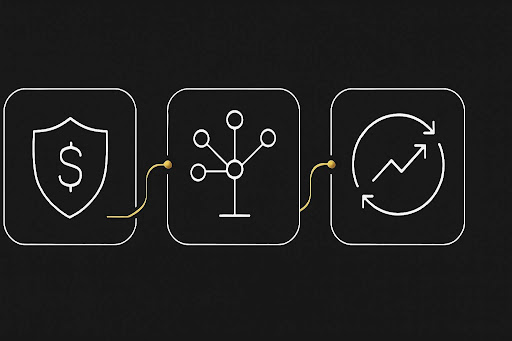
The New SEO Approach for Ecommerce Growth Rising CPCs. Saturated ad platforms. Customer acquisition costs climbing quarter after quarter. For ecommerce and B2B brands, the math on paid media keeps getting harder. And the question more marketing leaders are asking: where does organic search fit into a sustainable growth strategy? Our Founder & CEO addressed many of these questions
February 24, 2026
Contact us
We value your privacy and won't share your email with others.
We'll only contact you with curated content.
